
1 Corinthians 13:4–7 · KJV
What Does 1 Corinthians 13:4–7 Mean?
First Corinthians 13:4–7 describes love through patient, kind, truthful, and enduring conduct. Paul writes these words to a church divided over gifts and status. The KJV calls this love “charity,” and the surrounding chapter makes it the quality that gives the community’s gifts and actions their proper purpose.
Charity suffereth long, and is kind; charity envieth not; charity vaunteth not itself, is not puffed up,
1 Corinthians 13:4, KJV, excerpt

Why is this description placed between chapters about gifts?
Chapter 12 explains the diversity of gifts within one body, and chapter 14 discusses their use in the gathered church. Chapter 13 describes the love through which those gifts serve their purpose. Its opening verses show how impressive speech or sacrifice can lack that quality.
The description is useful in marriage, friendship, and family, but its immediate audience is a community learning to live together. The practical demands speak to rivalry, impatience, self-importance, and the desire to be noticed.
Verse 4. Patience and kindness without envy or boasting
Charity in this passage means love. It suffers long and is kind. These are active responses toward people whose needs or faults may be demanding. Paul then names envy, boasting, and inflated self-importance as patterns that love resists.
The verse invites a reader to examine how they respond when someone else is honored or when patience wears thin. Kindness gives patience an outward expression. Love makes another person’s good a concern within the relationship.
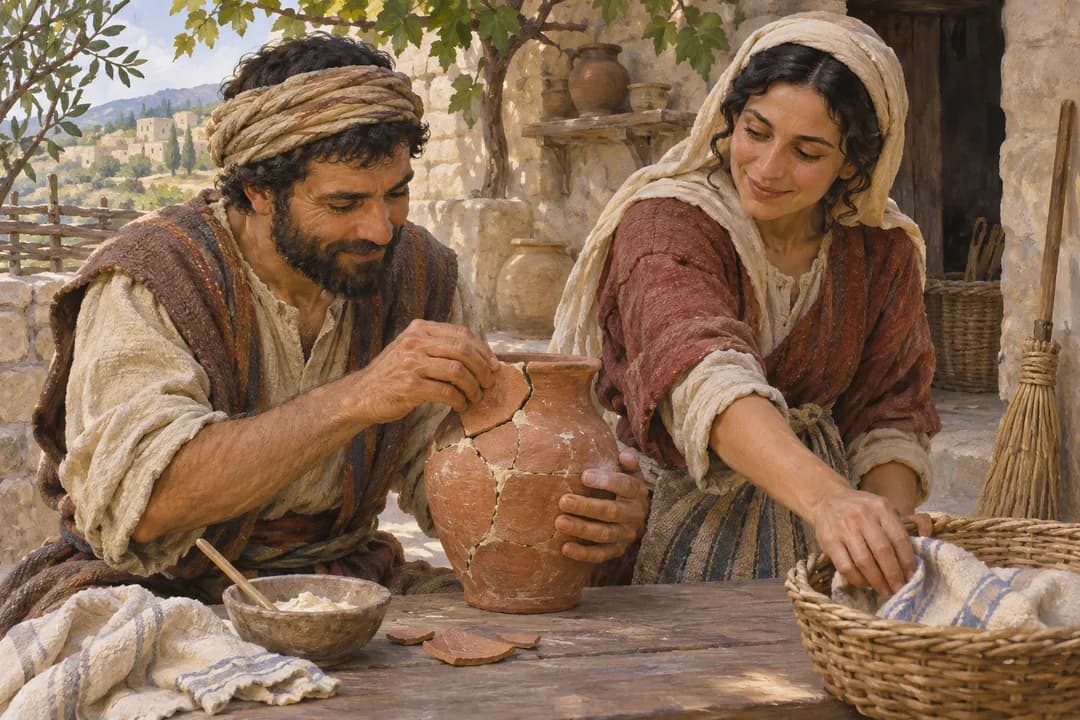
Verse 5. What does love change in ordinary behavior?
Paul describes conduct that is fitting toward others, willingness to seek more than one’s own interest, and restraint when provoked. The KJV also says love thinks no evil. Within the sequence, this turns attention toward the judgments and grievances a person carries.
A community can examine these qualities in its habits of speaking, disagreeing, and making decisions. The verse asks how each person’s way of reacting affects the people around them. Its details make love something that can be practiced and observed.
Verses 6–7. How do truth and endurance belong together?
Love rejoices in truth and takes no delight in wrongdoing. It then bears, believes, hopes, and endures through all things. Reading the two verses together keeps perseverance joined to a commitment to truth and another person’s good.
The description invites patient trust and hope while maintaining a clear view of reality. For one next step, choose a relationship and identify which quality most challenges your usual response. Ask what a truthful, kind, and enduring act of care would look like there today.