
1 Timothy 2:12 · KJV
What Does 1 Timothy 2:12 Mean?
First Timothy 2:12 restricts a woman from teaching or exercising the authority described there over a man. Christians differ over how widely that restriction applies today. The verse needs to be read with the instruction for women to learn in verse 11, the appeal to Adam and Eve and the letter's concern for faithful teaching.
But I suffer not a woman to teach, nor to usurp authority over the man, but to be in silence.
1 Timothy 2:12, KJV, excerpt
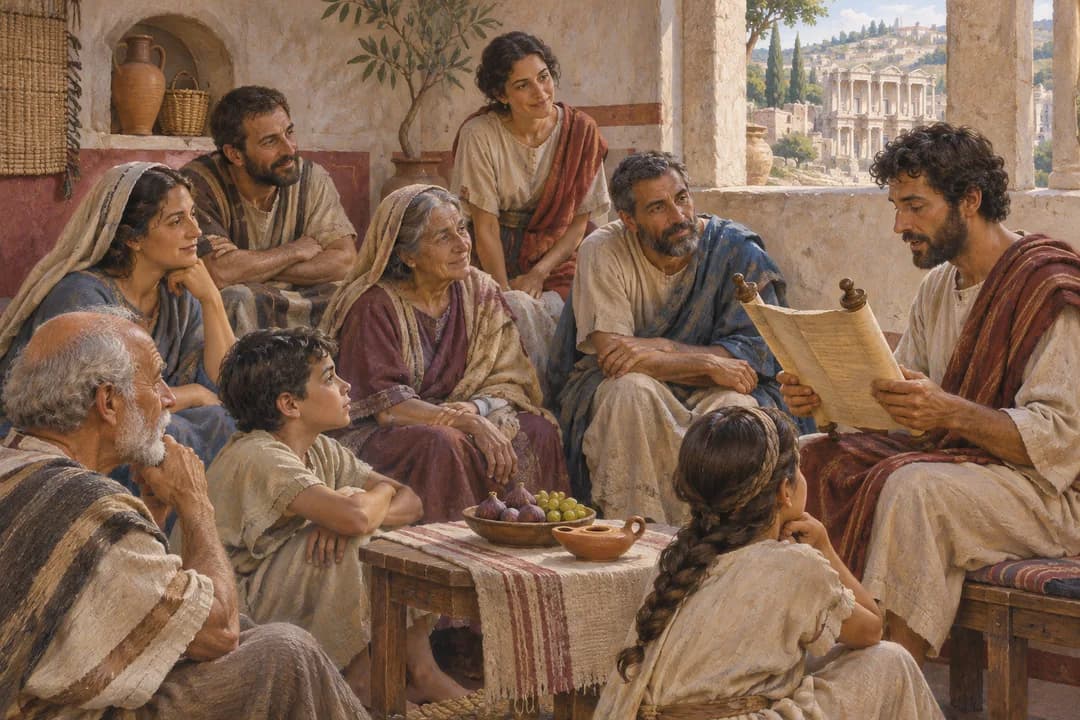
The paragraph and the letter’s teaching concern
First Timothy begins with a charge to address different teaching in Ephesus (1:3–7). Chapter 2 turns to prayer, conduct and the community's life. Verses 8–10 address men and women, including prayer without anger, modest conduct and good works.
Verse 11 says a woman is to learn in quietness and submission. Verse 12 gives the restriction that readers debate. Keeping those lines together makes learning part of the passage's subject. Verses 13–15 then appeal to Adam, Eve and childbearing, creating further questions that affect interpretation of the paragraph.
Verse 12. Teaching and authority in the sentence
The KJV reads, “I suffer not a woman to teach, nor to usurp authority over the man.” In older English, “suffer” here means permit. The line states a restriction, joining teaching with the authority described by the second phrase and a call to quietness.
The scope of the activities and the force of the authority term are disputed. Readers should distinguish the KJV's wording from claims about what a Greek word must mean. Establishing a particular lexical or cultural reconstruction requires evidence beyond an English paraphrase.
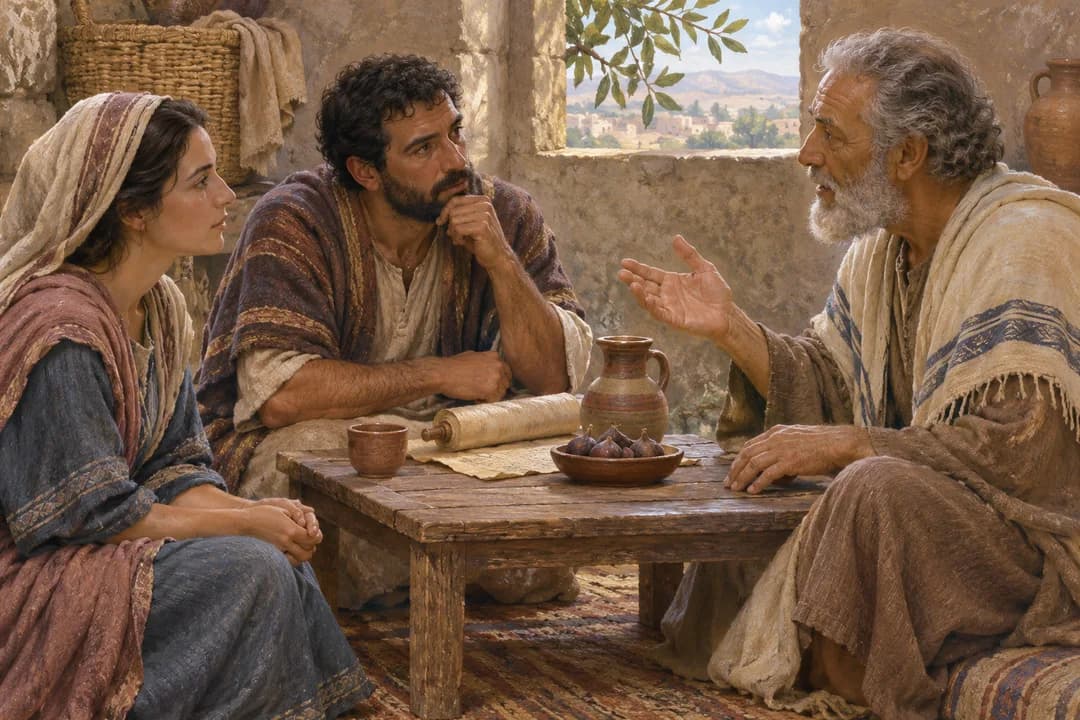
Why Christians reach different applications
Complementarian interpretations generally understand the passage to reserve some governing and teaching responsibilities in the church to qualified men. They give weight to the appeal to Adam and Eve in verses 13–14 as an enduring basis for the instruction.
Egalitarian interpretations generally understand the restriction in relation to the local teaching problem, the people being addressed or the misuse of authority. They read it alongside other passages concerning women praying, prophesying and serving. Both approaches work to relate this paragraph to the rest of Scripture, and both contain differences over details. A responsible discussion identifies the interpretive steps behind an application.
Reading the difficult conclusion with care
Verse 13 names Adam's formation before Eve, and verse 14 recalls the deception in Genesis. Verse 15 introduces being saved in childbearing and continuing in faith, love and holiness. Its meaning is also debated and should be considered before treating the paragraph as simple.
The passage has consequences for the lives and callings of people in churches. Read 1 Timothy 2:8–15 in full, compare how your community explains it and ask how its practice provides for learning, accountable teaching and faithful service. Discuss the differences with attention to the actual text and respect for the people affected.