
Acts 17:24–28 · KJV
What Does Acts 17:24–28 Mean?
Acts 17:24–28 means that the Creator gives life to all people, governs human history, and is near enough to be sought. Paul says this while addressing the people of Athens about the God they do not know. His speech connects human dependence on God with a call to seek him and respond to his revelation.
God that made the world and all things therein, seeing that he is Lord of heaven and earth, dwelleth not in temples made with hands;
Acts 17:24, KJV, excerpt
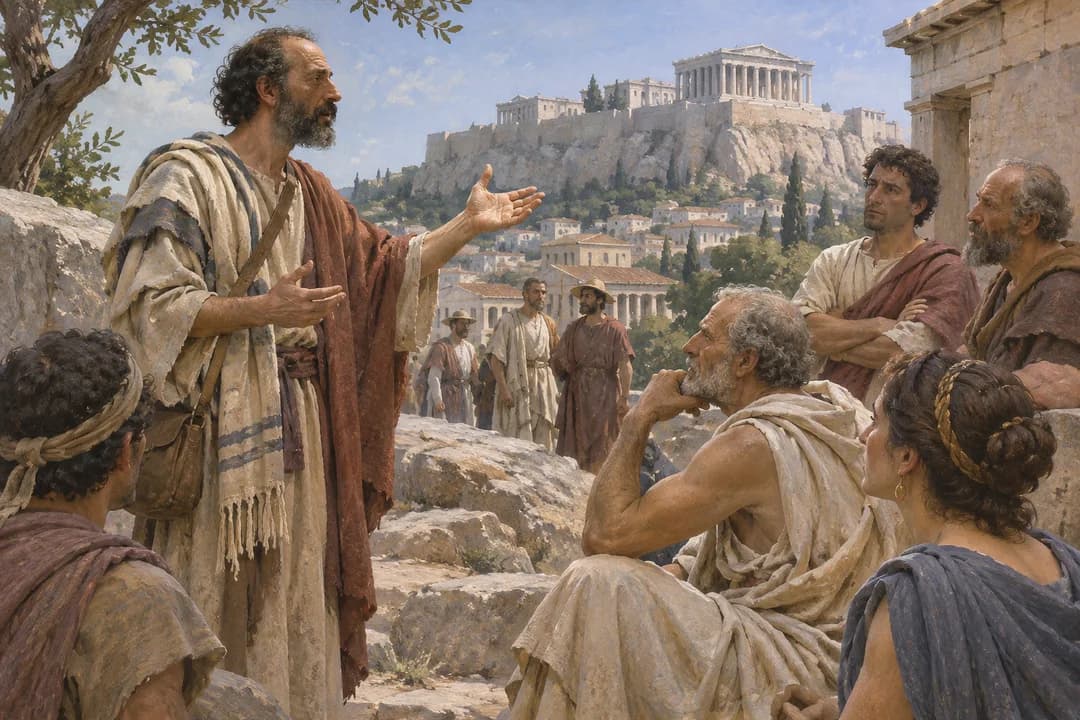
Why does Paul begin with the Creator?
In the story of Paul speaking in Athens in Acts 17:16–34, the city’s idols trouble him and philosophers ask him to explain his teaching. He refers to an altar to an unknown god and announces the Creator.
That setting explains the speech’s starting point. Paul speaks with people whose religious practices and assumptions differ from his own. He begins with the God who made the world, then explains the relationship between that God and everyone who lives in it.
Verses 24–25. Who gives life and breath?
The maker of heaven and earth is Lord over what he has made. Paul says that this God is beyond being housed in human-made temples or supplied by human service as though he lacked something. Every person already receives life and breath from him.
The direction of dependence is central. People approach the giver of life with needs he can meet. They cannot make themselves his providers by constructing a shrine or presenting a gift. The claim asks the audience to reconsider what their religious practices assume about God.
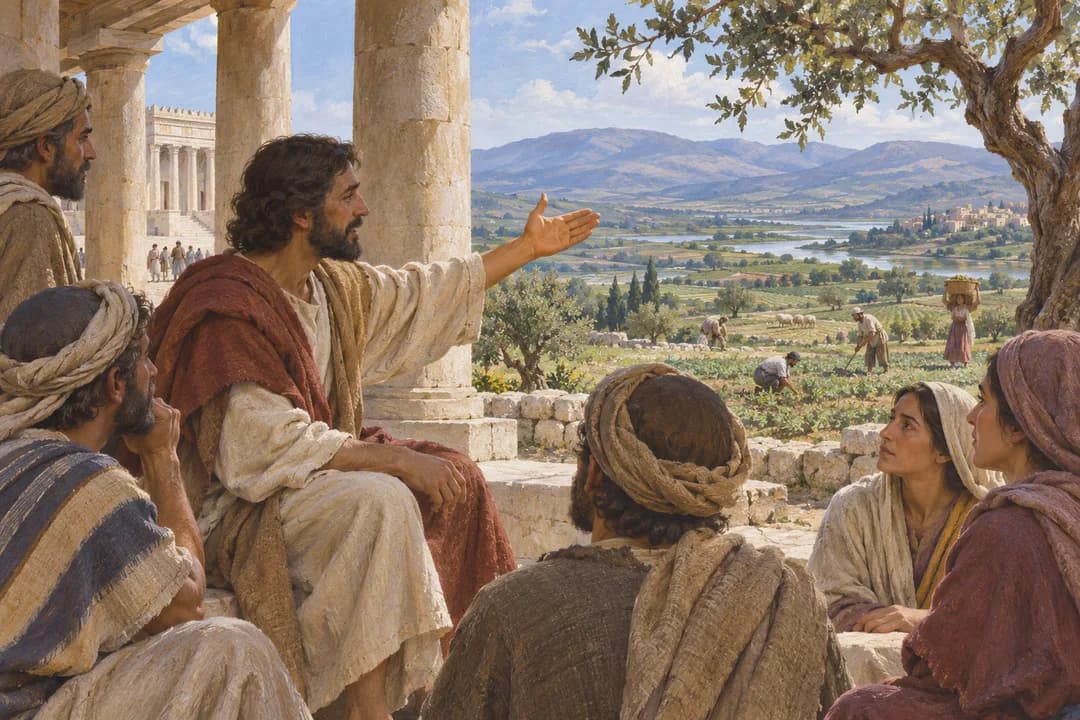
Verses 26–27. What do common origin and seeking God mean?
Paul presents all nations as sharing one origin under the same Creator. Their times and places lie within his rule, and his purpose includes their seeking him. He then adds that God is near to each of them.
The claim holds human unity and divine nearness together. The Athenians belong within the same human family as those beyond their city. Their history and situation can become a place from which they seek the Lord who sustains them.
Verse 28. How do we live and move in God?
Paul describes human existence as continually dependent on God. He draws on words familiar from the audience’s poets, including the idea of being God’s offspring, to illuminate that dependence.
The next verses use the argument to challenge the making of divine images and to call the hearers toward repentance and the risen Jesus. Read through verse 31 to follow that movement. The language of nearness opens a conversation that leads toward response, with the Creator as the source of every person’s life.