
Galatians 6:9 · KJV
What Does Galatians 6:9 Mean?
Galatians 6:9 encourages Christians to continue doing good while waiting for the harvest God promises. The surrounding verses compare life in the Spirit to sowing and urge care for all people. The promise gives perseverance a future even when faithful work has few visible results today.
And let us not be weary in well doing: for in due season we shall reap, if we faint not.
Galatians 6:9, KJV, excerpt
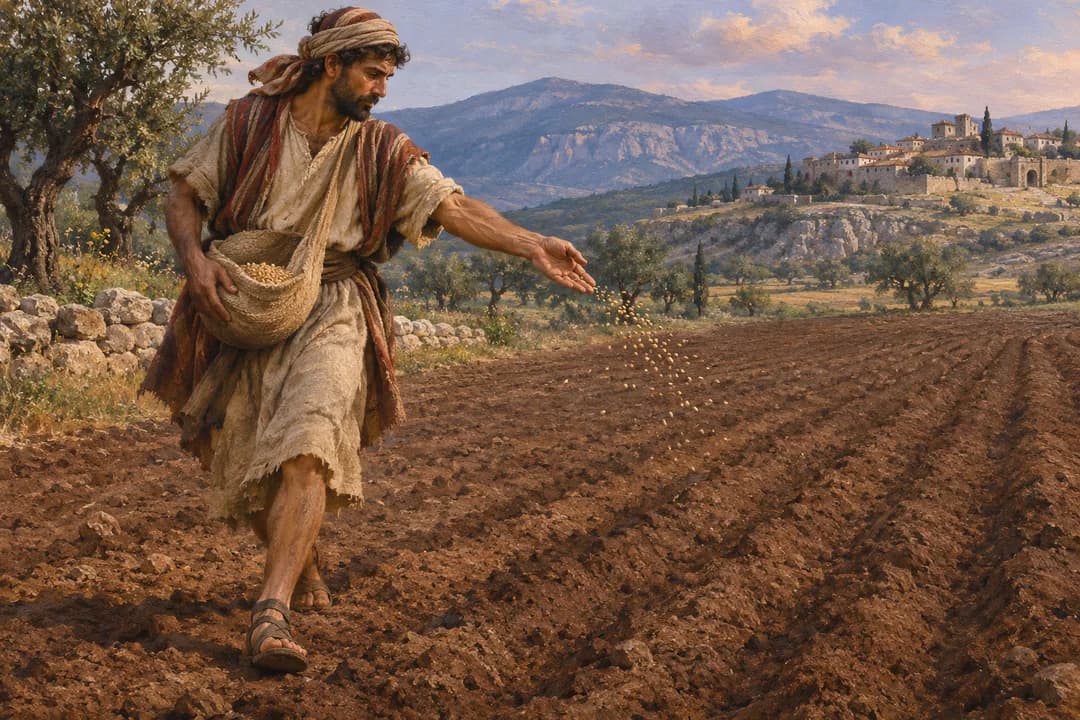
Sowing and reaping in Galatians 6
Verses 7–8 compare the direction of a life with seed planted in a field. Sowing to the flesh leads toward corruption. Sowing to the Spirit is connected with everlasting life. Verse 9 then addresses the weariness of continuing in good work.
The chapter gives that work concrete forms. Earlier verses call for restoring someone gently and bearing burdens. Verse 10 urges doing good whenever there is opportunity, with particular care for the household of faith. This is the life whose slow fruit can test a person's patience.
Verse 9. What does it mean to become weary?
The KJV pairs weariness in well doing with the call to continue. Work that benefits someone else may involve repeated choices, limited resources and little recognition. Paul's exhortation recognizes the temptation to let that work go.
The surrounding instruction to bear burdens gives perseverance a communal setting. A person carrying another's needs can also need help. Sharing a responsibility, receiving encouragement and attending to exhaustion can support the continuing good that the verse commends.
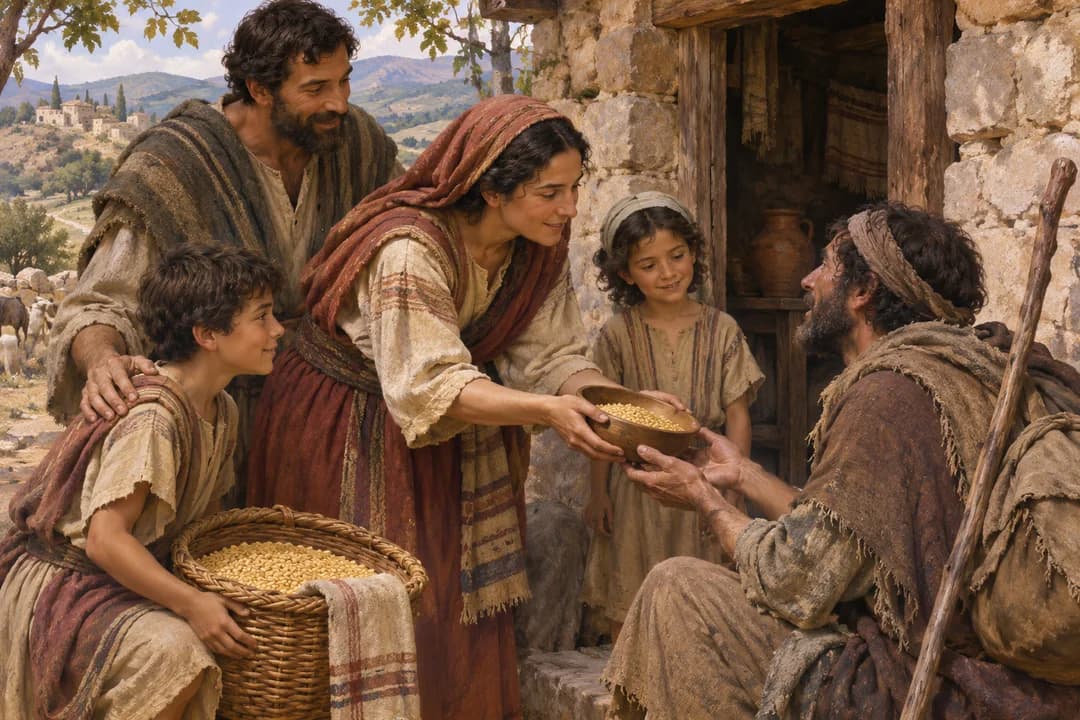
Verse 9. Reaping in due season
Reaping in due season places the harvest in a time the worker does not bring forward simply by wanting it. Verse 8 gives it a horizon in everlasting life, while verse 10 turns the reader back toward present opportunities to serve.
The phrase “if we faint not” calls for persistence in this direction. It gives a reason to stay with good work when immediate results are uncertain. A specific act of kindness may go unrecognized, and a relationship may remain difficult. Paul places those acts within a life whose final significance God holds.
One manageable act of good
Read Galatians 6:1–10 and identify one burden you can help carry. Make the action specific enough to complete, such as bringing a meal, teaching patiently or helping someone attend to a practical need.
If you are already exhausted by that work, ask who could share it. A short prayer can hold persistence and dependence together. God, help me keep doing the good before me. Give me wisdom about my limits, companions for the work and hope while I wait for its fruit.