
Isaiah 41:10 · KJV
What Does Isaiah 41:10 Mean?
Isaiah 41:10 means that God promises to strengthen, help, and sustain Israel when they are afraid. He gives his people two reasons for courage: “I am with thee” and “I am thy God.” The verse makes sense of fear in the face of real opposition and gives Israel a reason to face it with hope.
Fear thou not; for I am with thee
Isaiah 41:10, KJV, excerpt
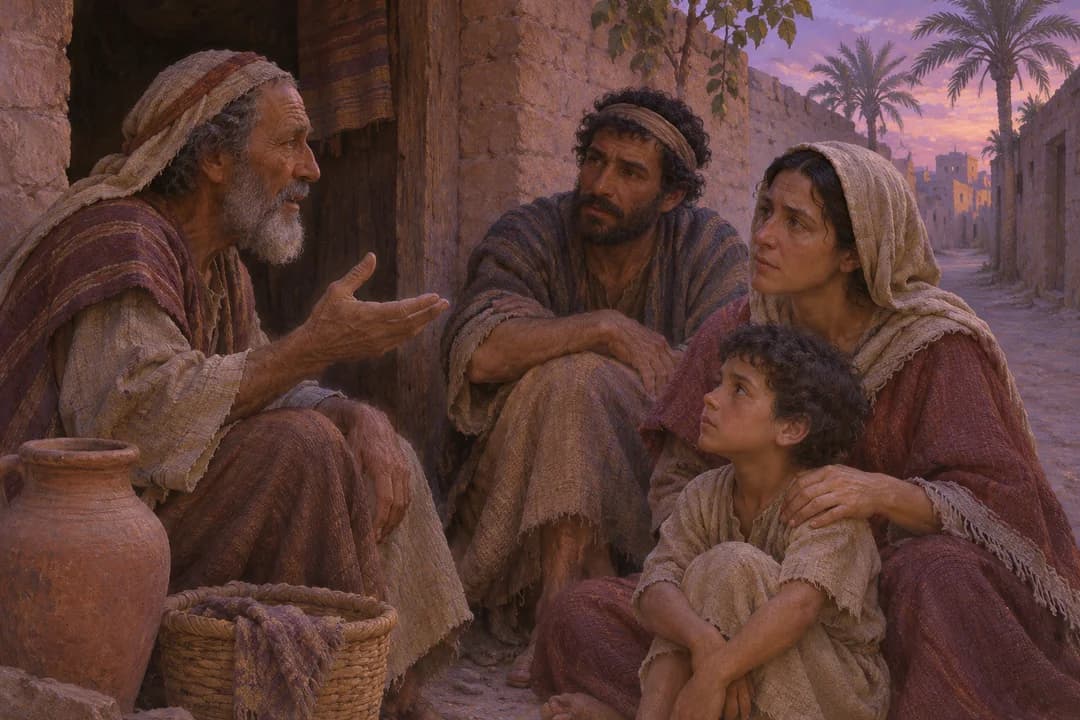
Who is God speaking to in Isaiah 41:10?
In verse 8 God calls Israel his servant, names them as Jacob, and recalls Abraham. In verse 9 he says, “I have chosen thee, and not cast thee away.” That is who “thee” refers to in verse 10. God speaks to the people as one.
The chapter opens with nations trembling as a power rises from the east (41:1–7). People encourage their neighbors, and craftsmen fasten an idol with nails to keep it steady. The promise to Israel gives the image an unexpected turn. In verse 10, God is the one who holds his people steady.
The wider section of Isaiah speaks to the fear of displacement and the hope of restoration. The scene above imagines what exile might have looked like for one family. The passage itself tells us who receives the promise and why they can trust it.
What do “fear thou not” and “be not dismayed” mean?
Both commands come with a reason. God says, “Fear thou not; for I am with thee,” then, “be not dismayed; for I am thy God.” To be dismayed is to lose courage when what lies ahead feels overwhelming. The verse answers that fear by reminding Israel who is with them and whose people they are.
Verses 11–12 address those who contend with Israel. The fear in verse 10 has a real object. God reassures people who face opposition. Readers who feel afraid can begin an honest prayer by naming what they are up against.
What do “strengthen,” “help,” and “uphold” mean?
“I will strengthen thee” speaks to Israel's weakness. “I will help thee” promises God's active aid. “I will uphold thee” pictures the support that keeps someone from falling. The repeated “yea” in the KJV presses the assurances home.
Verse 13 makes the image more intimate. God says he will hold Israel's right hand and help them. In an everyday sense, a hand offered on a difficult path makes the word “uphold” easy to picture. In Isaiah, that support comes from God himself.
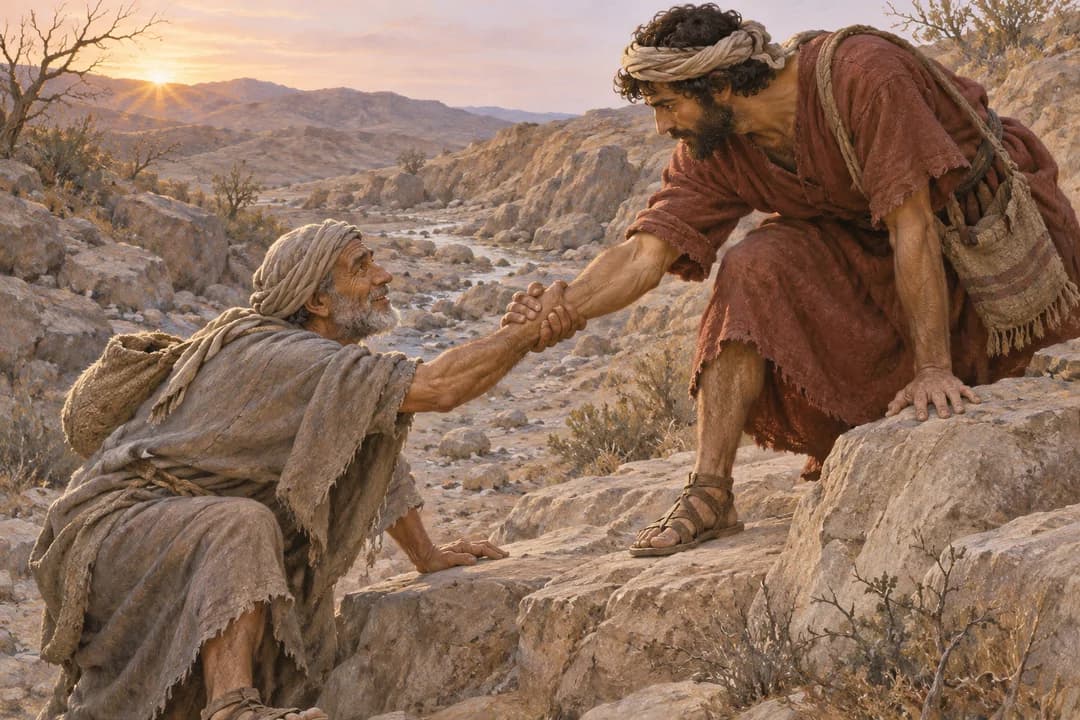
What is “the right hand of my righteousness”?
The right hand pictures power in action. “My righteousness” speaks of God doing what is right. The promise joins the two: the God who has the power to help Israel can be trusted to use it faithfully. The words echo his assurance in verses 8–9 that he has chosen his people and has not cast them away.
How can Christians apply Isaiah 41:10 today?
Begin with Israel as God's servant, the audience Isaiah names. Christians can read this assurance of God's presence alongside Jesus' own promise to be with his followers in Matthew 28:20. Read together, these passages give Christians grounds to ask for courage in the middle of fear.
Try naming the fear as plainly as you can. Ask for strength to take the next faithful step, and look for practical help you can receive today. That might mean accepting a friend's offer to be there for a difficult conversation. You can pray for God's help while the outcome is still uncertain.
God, I feel afraid about what lies ahead. Remind me that you are near. Give me strength for the next step and help me accept the support I need.