
Joshua 1:9 · KJV
What Does Joshua 1:9 Mean?
Joshua 1:9 means that Joshua could lead Israel after Moses' death because God would be with him. His courage had a clear purpose. He was to lead the people across the Jordan and keep following God's teaching under pressure. The verse gives a reason to take the next responsible step even when that step feels daunting.
the Lord thy God is with thee whithersoever thou goest.
Joshua 1:9, KJV, excerpt

What was Joshua being asked to do?
Joshua had served as Moses' assistant. Before his death, Moses commissioned Joshua to lead Israel in front of the community and assured him that God would go with him (Deuteronomy 31:7–8). Joshua 1 opens after Moses dies. God tells Joshua to take Israel across the Jordan into the land he had promised them (1:1–5). In verse 6, he gives Joshua responsibility for the people's inheritance.
“As I was with Moses, so I will be with thee” is the earlier assurance in verse 5. Joshua would face a different set of responsibilities from Moses. He could count on the same presence through that change. The promise reaches Joshua at the moment the work passes to him.
What does it mean to be strong and courageous?
Verse 7 ties courage to following the law Moses taught. Joshua is to stay with that instruction without veering right or left. Verse 8 describes how. He is to keep the law before him, think about it day and night, and do what it says. Those actions give courage a use beyond crossing a river or facing an enemy. Joshua will need resolve to stay obedient once leading becomes difficult.
Verse 9 also tells him to resist fear and dismay. Dismay can leave a person so discouraged that they cannot see how to move forward. Joshua receives no instruction to test whether he feels fearless before he acts. He already knows the task and the instruction that should guide him.
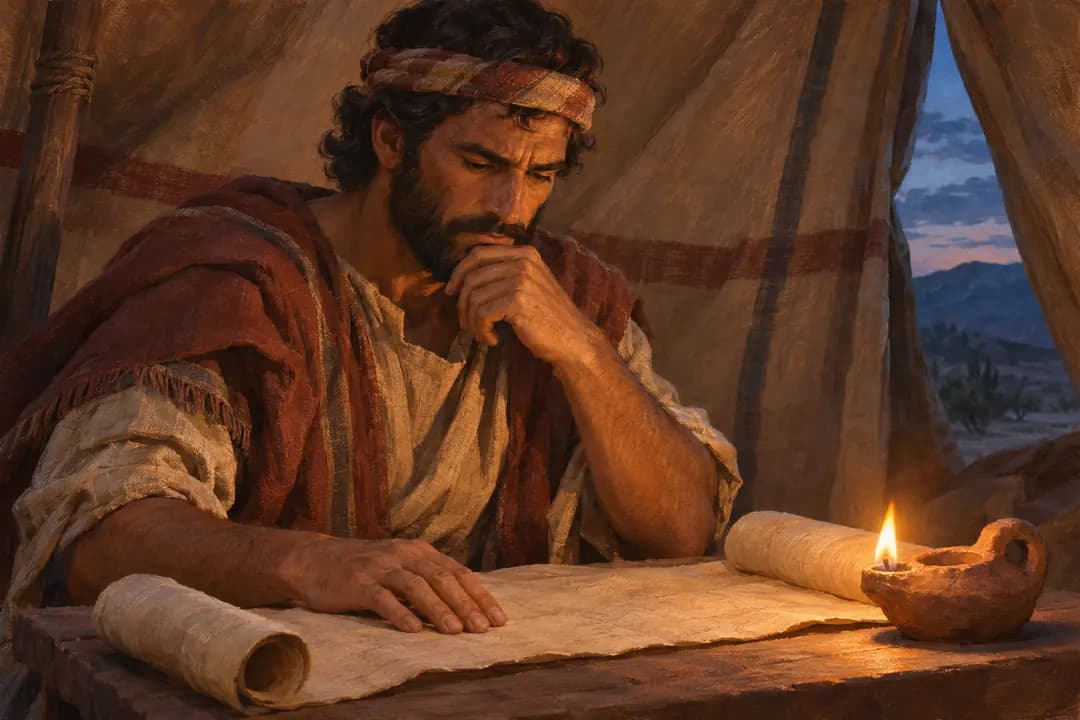
Why does “the Lord thy God is with thee” matter?
The word “for” connects the command to the promise. Joshua has reason to be courageous because God will accompany him. “Whithersoever thou goest” assures him of God's presence wherever this commission takes him. The land promise and the responsibility to lead Israel belong to Joshua's particular charge. A modern reader can learn from his courage without assuming that every personal ambition carries the same promise.
How can you practice that kind of courage?
Think of a responsibility you already know is yours. It could be making an honest decision at work, having a conversation you keep postponing, or taking care of someone when you feel stretched. Ask what would make your next step faithful. Then name the smallest part of that step you can take today.
A simple prayer can help you begin. Lord, show me what obedience looks like in this responsibility. Give me courage to take the next step and patience when it takes longer than I expect.