
Revelation 21:1–5 · KJV
What Does Revelation 21:1–5 Mean?
Revelation 21:1–5 portrays God's renewal of creation as a world where he dwells with his people and removes death, grief, and pain. John sees the new Jerusalem coming from God and hears the throne declare that all things are being made new. The vision gives suffering readers a future shaped by God's presence.
And I saw a new heaven and a new earth: for the first heaven and the first earth were passed away; and there was no more sea.
Revelation 21:1, KJV, excerpt
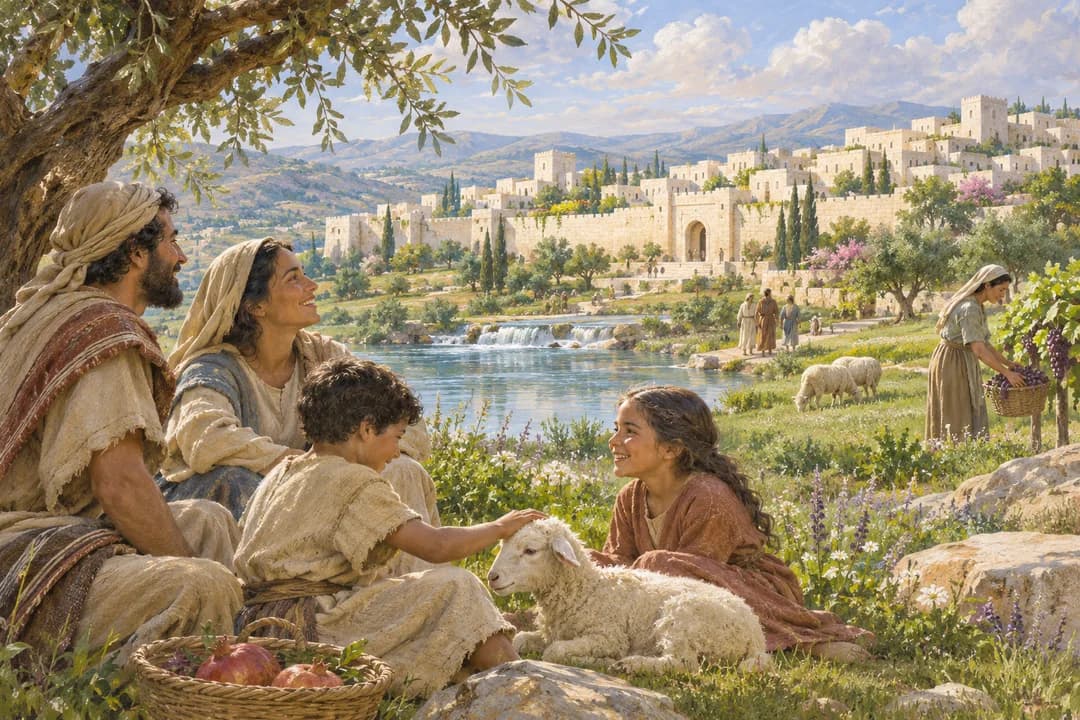
Verse 1. New heaven, new earth, and no more sea
The vision follows the judgment scene of Revelation 20 and opens onto a transformed creation. The sea has carried images of danger and opposition elsewhere in the book, including the beast's emergence in chapter 13. Its disappearance here fits the vision's removal of threatening disorder. Readers differ on how the imagery relates to the physical geography of new creation. The passage's main direction is the passing of the old order and God's decisive renewal.
Verse 2. Why is a city pictured as a bride?
The holy city comes down from God, prepared like a bride for her husband. The combined images describe a place of shared life and a people entering a relationship of belonging. The city is received from God. Later in the chapter, its walls, gates, and light develop that picture in detail. Verse 2 begins with beauty and readiness, preparing for the announcement that God will dwell with his people.
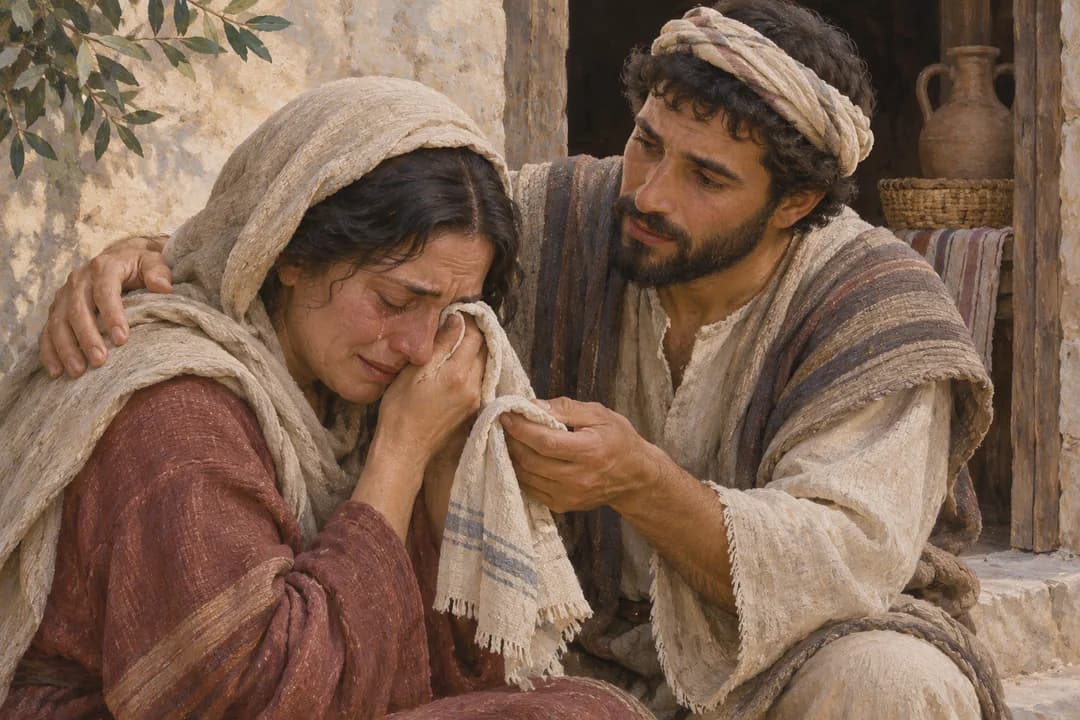
Verses 3–4. The center of the promise
The loud announcement makes God's presence central: he will dwell with humanity, they will be his people, and he will be their God. This covenant language gives the comfort in verse 4 its source. God wipes tears away, and death, sorrow, crying, and pain pass away with the former order. These are concrete losses and wounds named as being overcome. The vision speaks to people who already know their weight.
Verse 5. Why the words can be trusted
The one seated on the throne declares the renewal and instructs John to write because the words are true and faithful. The promise rests in God's authority and reliability. A reader can hold that future before a present grief without pretending the grief has already ended. Consider which loss makes verse 4 especially meaningful, and bring it into prayer. The vision provides language for hope while the community continues to care for those who suffer now.