
Genesis 1:26 · KJV
What Does Genesis 1:26 Mean?
Genesis 1:26 introduces humanity as made in God's image and entrusted with responsibility over living creatures. Verse 27 immediately applies that image to male and female together. The verse gives human beings a distinctive role within God's good creation and ties their authority to the creator who grants it.
Let us make man in our image, after our likeness
Genesis 1:26, KJV, excerpt
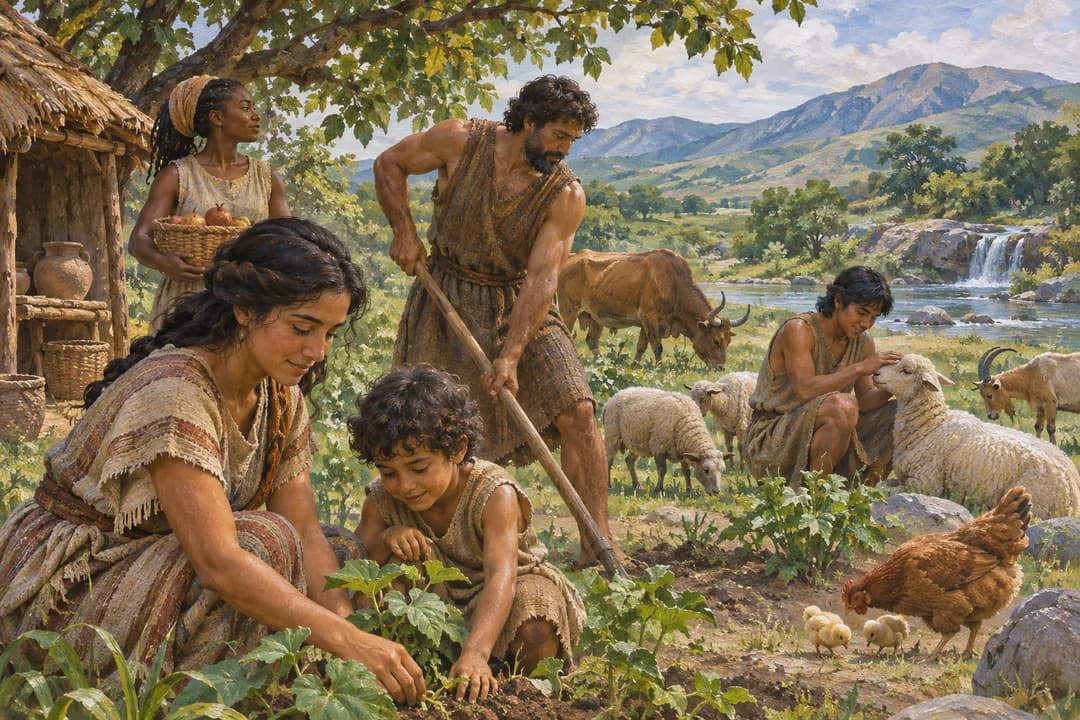
A distinctive moment on the sixth day
Genesis 1:24–31 places the human commission within the creation of land animals and the concluding judgment that the whole world is very good. Verses 24–25 describe the animals according to their kinds. Verse 26 then announces the making of humankind in God's image and likeness. Verse 27 repeats that identity as God creates male and female.
The account moves from the shared world of living creatures to a specific human calling. The blessing and commission of verse 28 develop it through fruitful life and responsibility for the earth. Reading the three verses together keeps the image attached to the people who bear it and the task they receive.
The creation story follows the same sequence in narrative form, placing humanity among the living creatures and within the blessing of the whole account.
Verse 26. Image and likeness
The words “our image” and “our likeness” express humanity's special relation to God. Within the sentence, they are followed by a charge to exercise dominion. That connection gives the image a representative dimension, with human beings acting in a world that belongs to their creator.
The verse does not supply an inventory of human capacities that defines the image. Verse 27 instead names humanity, male and female, as its bearers. A careful reading can affirm shared human dignity while recognizing that the wider theological question of the image has received several explanations.
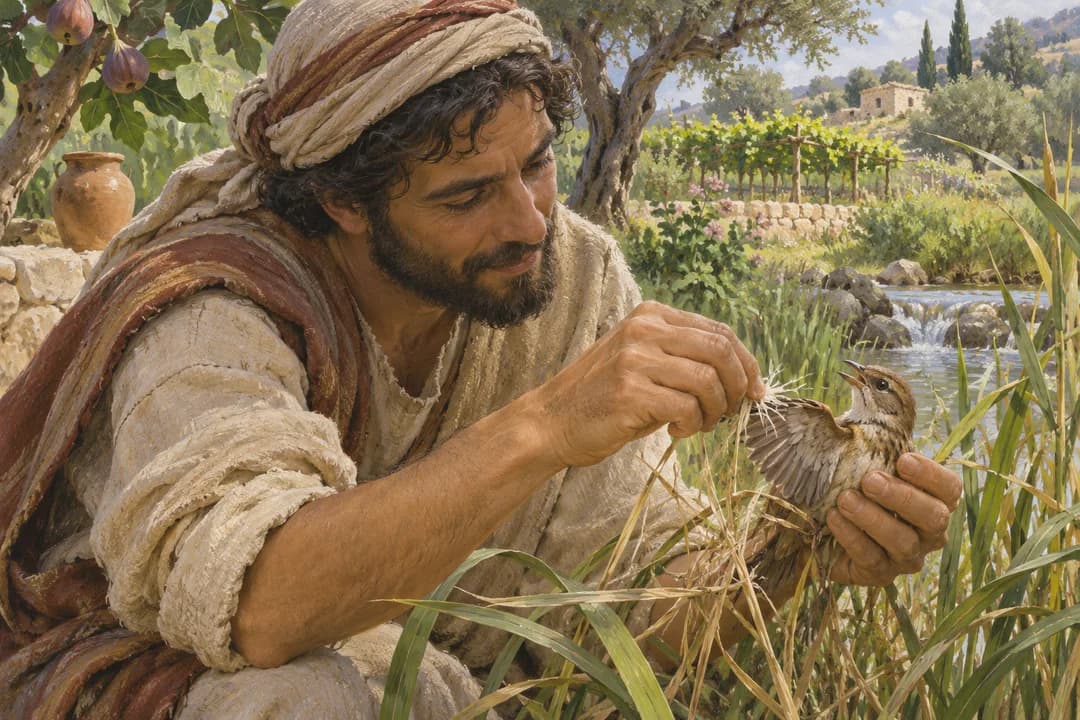
Verse 26. Why does God say “let us”?
The shift to plural speech has prompted different interpretations. Christian readers often hear it in relation to the Trinity revealed more fully in later Scripture. Other interpreters understand divine address within a heavenly setting or a form of divine deliberation.
Verse 27 returns to singular description, saying God created humanity in his own image. That sentence keeps the action centered on God. Genesis 1:26 introduces the plural wording without explaining its participants, so a reading should distinguish what the line states from the larger interpretations brought to it.
Verse 26. Dominion as a received responsibility
The authority over creatures is given by God within a world he has repeatedly called good. Verses 28–30 develop human responsibility alongside blessing and provision. The picture invites attention to both the reach of the commission and its dependence on the giver.
A person can ask how their use of land, food and animals reflects care for a world entrusted to them. The full Genesis 1 page follows all six days. This verse-level reading focuses on the identity and responsibility of the human beings who enter the account near its conclusion.