
Genesis 1:6 · KJV
What Does Genesis 1:6 Mean?
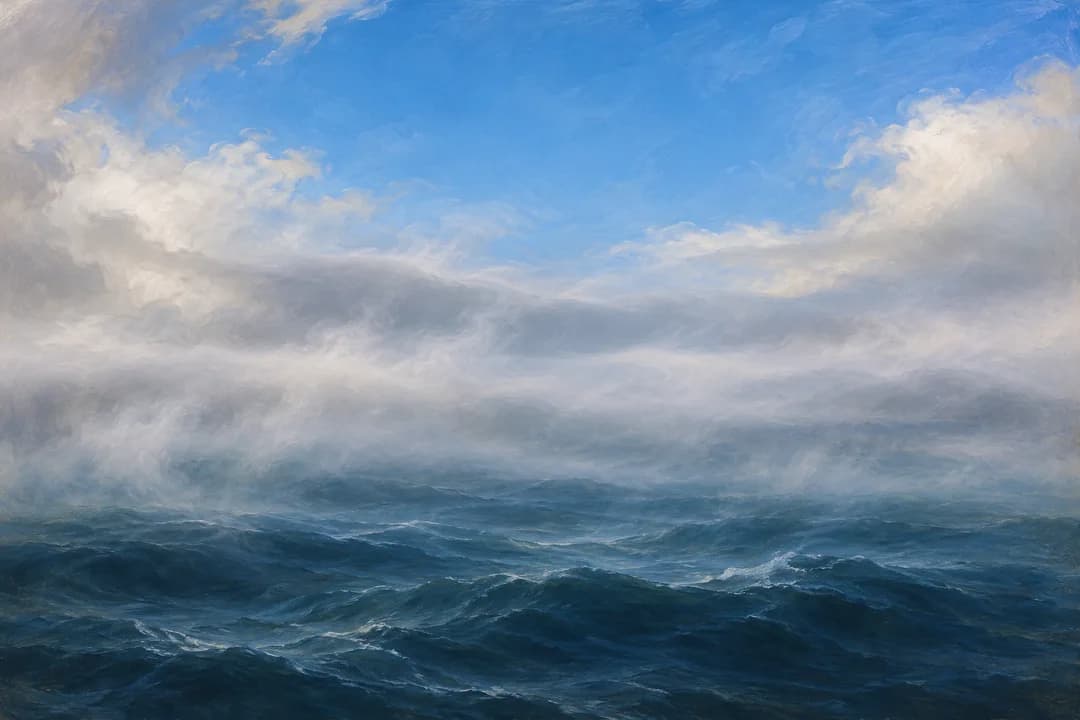
Genesis 1:6 introduces the firmament that separates waters above from waters below. Verses 7–8 describe God making that separation and naming the firmament Heaven. The command belongs to the second day, as the creation account gives the world distinct regions before filling them with life.
And God said, Let there be a firmament in the midst of the waters, and let it divide the waters from the waters.
Genesis 1:6, KJV, excerpt
Why the account turns to the waters
The opening scene in Genesis 1:2 includes darkness over the deep and the Spirit of God over the waters. Verses 3–5 describe light, darkness and the first day. Verse 6 then turns to a separation within the waters.
The chapter proceeds through a series of distinctions and named places. The first day distinguishes light and darkness. The second describes the firmament, while the third will gather waters and reveal dry land. Reading the sequence helps a reader see the role of this command in an account moving toward an inhabited world.
Verse 6. What does the firmament do?
The verse places the firmament in the midst of the waters and assigns it the function of dividing waters from waters. Verse 7 repeats the separation as something God makes. Verse 8 names the firmament Heaven.
The KJV word can sound unfamiliar because readers rarely use it today. Its immediate meaning in the passage can be followed through its stated function and name. It describes the expanse associated with the heavens, located between the waters the account places above and below.

Verse 6 in its ancient description of the world
Readers have discussed how the waters and firmament relate to ancient ways of picturing the sky. The passage itself uses visible-world imagery and the language of God's command, separation and naming. A claim about the exact physical composition of the firmament goes beyond what the verse explicitly explains.
Later in the chapter, the lights are set in the firmament of heaven and birds fly across the open firmament (1:14–20). Those uses help show how the narrative fills the spaces it has already introduced. They also make it useful to read verse 6 within the whole chapter before assigning it a modern technical equivalent.
How the second day serves the whole chapter
Genesis 1:6–8 forms a complete unit ending with evening and morning on the second day. The next unit turns to dry land, seas and plants. Each stage contributes to the world the chapter will finally call very good.
The full Genesis 1 page follows all six days and their conclusion in the seventh-day rest. This verse study concentrates on what the firmament does in the sentence. Read the commands, actions and naming in verses 6–8, then trace that same pattern in the next day.
Reading the story of creation alongside this passage can help you picture the second day in relation to the lights, birds and living things that fill the account afterward.