
Proverbs 16:9 · KJV
What Does Proverbs 16:9 Mean?
Proverbs 16:9 holds human planning and God's direction together. A person considers a way forward in the heart, while the LORD directs the steps actually taken. The proverb encourages thoughtful plans held with humility before God, whose guidance can reach beyond what a planner sees.
A man’s heart deviseth his way: but the Lord directeth his steps.
Proverbs 16:9, KJV, excerpt
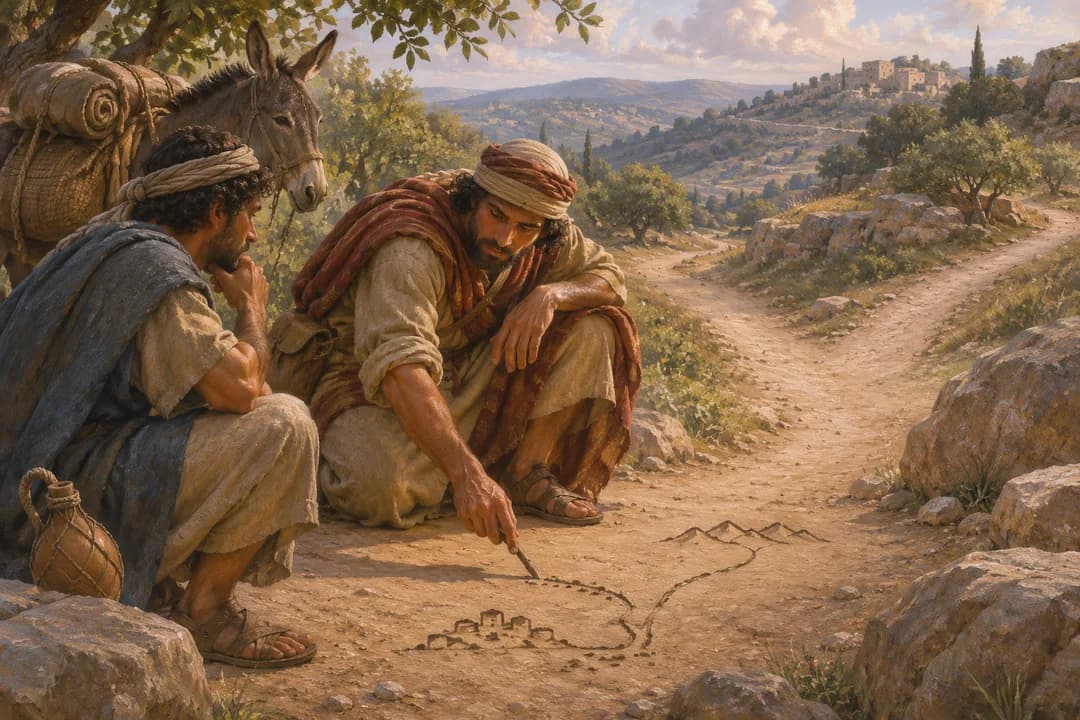
Where the saying fits in Proverbs 16
The opening sayings of Proverbs 16 return to human plans, motives and God's judgment. Verse 2 describes people seeing their own ways as clean while the LORD weighs the spirits. Verse 3 calls for committing one's work to the LORD.
Verse 9 belongs within that concern for plans examined before God. It recognizes the human heart as a place of deliberation. The comparison directs attention toward the LORD's role in what unfolds. The proverb teaches a posture toward planning, responsibility and the limits of personal perspective.
Verse 9. A heart that devises a way
To devise a way is to consider a course of action. A plan expresses what someone hopes to do and how they think it might happen. The saying treats this activity as part of human life.
Other sayings in the same book commend counsel, foresight and diligence. Reading verse 9 with those themes allows planning to remain a real task. The heart needs examination because a carefully arranged plan can still follow a poor motive or overlook another person's good. Wisdom asks about the purpose as well as the method.

Verse 9. The LORD directs the steps
The second half brings the LORD into the details of movement. Steps are the actual course a person walks, with the limits and opportunities met along the way. The saying invites confidence that God's direction reaches that lived path.
A change of circumstances may require a plan to be revised. The proverb supplies a reason to seek wisdom in the change, though it gives no instruction for decoding every closed door as a private message. Readers can pray, weigh counsel and examine the consequences of the options before them.
Holding a plan with humility
Write down one plan and the reason you want it. Then ask what you know, what you still need to learn and whose life the decision will affect. Bring that account to God before taking the next responsible step.
A useful prayer can reflect both halves of the proverb. Lord, help me plan honestly and listen to correction. Guide the steps I can take today, and give me patience when the path changes. Revisit the plan when new information arrives, especially if it reveals a cost someone else would bear.