Bible Note is our first daily-devotional recommendation for a reader who wants Scripture, reflection and prayer in one routine, with a listen option when reading is inconvenient. It also turns notes from authorized teaching into a separate midweek devotional path. Our Daily Bread remains a strong short-reading format to inspect, First15 offers a more set sequence, and Glorify offers guided audio and reflection. The best editorial voice still depends on the actual entry, its cited passage and your church context; no app guarantees a faithful interpretation.
How we evaluated these apps
We used Semrush search research to identify the daily-devotional choices readers are weighing, then read available publisher information and app listings for the named options. We grouped the apps by the kind of morning they serve: a short written reflection, a set devotional sequence, guided audio, or a Bible passage and plan. Scripture visibility, a named editorial voice, theological fit, and access to the entry you want matter more here than a single overall ranking. Official descriptions show the formats publishers offer; read an actual entry and check its author, passage, and current access terms before making it your regular source.
Quick picks
Bible Note: daily Scripture, reflection, prayer and listening, with a separate note-based follow-up path.
Our Daily Bread: listing-led short daily devotions with plans and saved content.
First15: publisher-described structured daily devotional from Denison Ministries.
Glorify: publisher-described guided devotional, prayer and meditation format.
YouVersion: Bible passage and plan first, with notes for a return visit.
How to judge the devotional itself
Before deciding which interface feels calmest, open one complete day's entry. Find the name of the writer or publisher, the Bible passage it uses, and any indication of the tradition from which its teaching comes. A familiar publisher name is a starting point, not a guarantee that every contributor will read a passage as your church does. If an entry gives only a verse fragment, open the surrounding paragraph in a Bible. Ask what the passage says in its own setting, what the devotional writer draws from it, and which part is the writer's proposed application. Those are three different things.
Consider a reflection that turns a line from a psalm into a promise that every anxious circumstance will improve today. The psalm may indeed give language for prayer; a guaranteed outcome is a further claim. The useful response is to read the whole psalm, notice who is speaking and what sort of hope it describes, and bring a difficult interpretation to a trusted teacher. This check matters more than a streak counter. It also works when you like the author's voice: a warm reflection can still move too quickly from text to conclusion.
Look at the practical form of the entry as well. Can you see the passage without hunting through other screens? Is the reflection attributed? Can you tell which Bible translation appears and open more context? If an audio track does not state the reference clearly, keep a Bible available for a second reading. These are questions to test in the current app; the publisher listings in this review do not verify every daily entry, contributor, or audio script. A reader seeking one church's devotional tradition should check the present publisher and author for the particular series before making it a daily source.
Match the format to an ordinary morning
At a kitchen table with five quiet minutes, Bible Note's Daily Devotional is the first routine to try: read its passage, then its reflection and prayer, and write down one question that sends you back to the text. Our Daily Bread is a distinct short-form publisher to inspect if you want that editorial voice. First15 offers a more defined sequence of Scripture, prayer and worship. A fixed fifteen-minute design helps only if it fits the time you actually have; when it does not, a shorter entry and the passage itself may serve better.
For a commute or walk, Bible Note's devotional listen option can carry Scripture, reflection and prayer into a quieter moment; return to the cited text when you can read attentively. Glorify's broader guided audio, music and meditation format is another candidate if that is the experience you seek. If its layers make the biblical text hard to distinguish from the writer's reflection, use a simpler reading path. YouVersion is useful when you prefer to choose the Bible passage or plan yourself before adding a devotional voice.
These are format judgments, not a claim that one publisher forms a stronger faith. Check what is currently available without payment before committing to a particular series. A good morning practice should survive a missed day without making the reader feel that a badge or subscription has become the point.
Product reviews
Bible Note
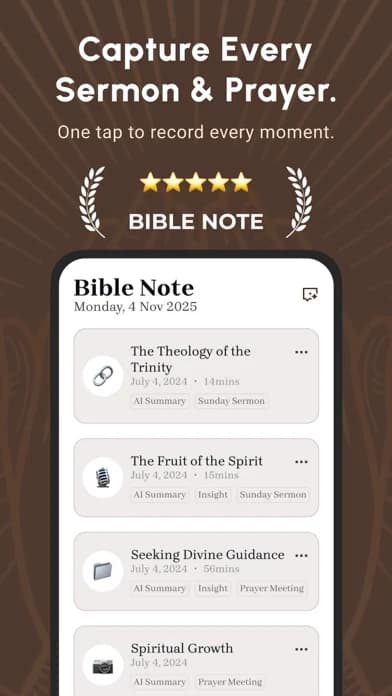
Best for: a daily Scripture, reflection and prayer practice that can continue in audio or grow from an authorized teaching note.
What the evidence supports: First-party product materials show a Daily Devotional with Scripture, reflection, prayer and read/listen modes. A separate note-based devotional plan can revisit points from a sermon or study session. The product also offers Scripture questions and organized teaching notes.
Strengths: On an ordinary morning, begin with the day's passage, read or listen to the reflection, and use the prayer as a prompt for your own response. If a phrase raises a question, Bible Study Chat offers a way to explore it while keeping the Bible open. After a sermon or class you had permission to record, sermon notes can preserve the references and questions; a note-based plan can return to one point during the week. These are two devotional paths, not a claim that the app publishes every outside devotional series.
Limitations and conditions: Check the cited passage, translation and application before adopting generated guidance. The current evidence does not establish the same Daily Devotional access on every device or an independent theological review of each entry. It does not replace a church's teaching or a publisher's particular tradition and catalogue.
Fit verdict: Start with Bible Note for an integrated daily practice and a route back to your own study and teaching notes. Choose a named devotional publisher when you need that publisher's voice, series or liturgical tradition. Review the feature overview for the broader product path.
Our Daily Bread
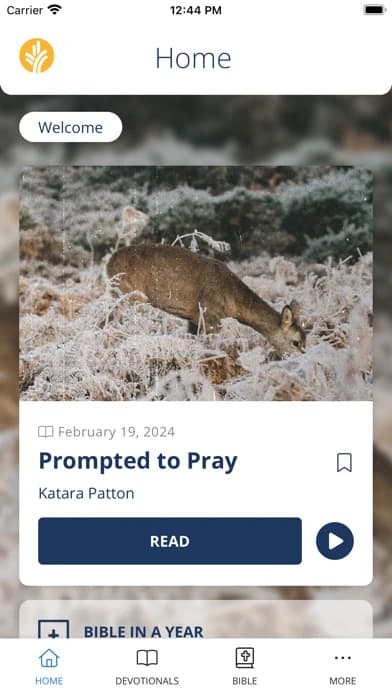
Best for: a familiar devotional-reading routine.
What the evidence supports: RBC Ministries’ current US iOS listing describes a short daily devotion that can be read or heard, with a reflection question and guided prayer, plus saved material and reading plans.
Strengths: Its broad devotional-reading path fits someone who wants one short reflection to open the day. Keep the cited Scripture visible and check the current US app or edition before building a routine around it.
Limitations and conditions: The US iOS listing does not establish the theological fit of every contributor, Android parity, or all access terms. Read the cited passage before adopting a devotional application.
Fit verdict: Reading pick for a short daily reflection; verify the current devotional edition and authorship if your church needs a specific tradition.
First15
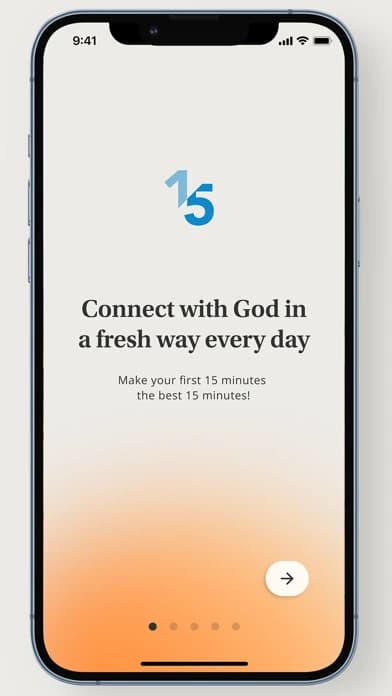
Best for: a structured devotional sequence.
What the evidence supports: Denison Ministries’ current US iOS listing identifies First15 as a daily devotional framed around a fifteen-minute practice. The publisher’s spiritual promises are not independently verified outcomes.
Strengths: A sequence that combines Scripture, teaching, prayer, and worship can suit a reader who wants a fixed morning order instead of assembling resources each day.
Limitations and conditions: The listing establishes the devotional format, not guaranteed spiritual results, subscription details, or theological agreement with every reflection.
Fit verdict: A named fifteen-minute morning devotional option, not a comparative winner: the accessible listing establishes its stated daily format but too little detail for a scored feature comparison.
Glorify

Best for: audio devotional, prayer, and meditation prompts.
What the evidence supports: The current US iOS Glorify listing describes a Bible passage followed by a devotional and guided prayer or meditation content.
Strengths: Audio devotionals, prayer, meditation, and music make this a natural candidate when the reader needs a guided, screen-light start. The experience is broader than a short Bible reading and should be assessed for theological fit.
Limitations and conditions: The US iOS listing describes a quote, Bible passage, devotional, and guided reflection, with an optional auto-renewing subscription. It does not establish that every feature is free, a suitable theological fit for every reader, or Android parity.
Fit verdict: Choose this for a guided devotional and prayer sequence; use the passage itself to test the reflection’s claims.
YouVersion
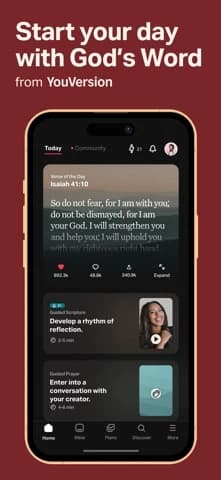
Best for: starting a daily practice with a chosen Bible passage and plan.
What the evidence supports: Life.Church’s US iOS listing describes reading plans, audio Bibles, and notes, so a reader can begin with Scripture and keep a question for later.
Strengths: Plans, audio, notes, and highlights work when the devotional habit begins with a Bible passage and the reader wants to return to it later. It is less curated as a single devotional voice.
Limitations and conditions: Plan authors and devotional content vary. Inspect the writer and cited passage in the specific plan you choose; the Bible app's breadth does not give you one consistent devotional voice.
Fit verdict: Choose YouVersion for Scripture-first flexibility; use a dedicated devotional publisher when a consistent author and daily format matter most.
Which devotional format should you choose?
Choose the format that lets you return to the biblical passage when real life interrupts the entry. The earlier morning examples compare the publishers' described formats. A second question is whether that format still serves you on the day you cannot finish it in one sitting.
If you stop halfway through a reflection, keep the cited passage and the writer's claim together. When you return, read the passage again before resuming the application; a half-remembered conclusion can outlive its context.
If a guided sequence runs longer than your available attention, you can use its opening passage as the day's reading and leave the remaining prompts for another time. Completing every segment is not the measure of a sound devotional practice.
If you prefer to choose the passage yourself, start with a Bible plan and decide afterward whether a publisher's reflection adds clarity. This gives you control over the text and editorial voice without making any one app the default for every day.
For a parent interrupted by a morning task, the best entry may be the one whose Scripture reference and authorship are easy to recover later. That is a question to answer with a real entry in the current app, not a feature we have verified across these products. Favor a routine that lets you finish attentively or resume honestly, with the passage still in view.
When should you change devotional sources?
Change sources when the content repeatedly asks you to accept an application you cannot trace back to its passage, when you cannot identify its editorial voice, or when the entry you need is behind an access condition that changes the routine. One difficult day's reading need not end a practice, but it is a reason to slow down and inspect the source.
Suppose a reflection turns a single line from a psalm into a guaranteed outcome for the reader. Read the whole psalm before carrying that claim into prayer or teaching. If the wider passage does not support it, keep the biblical text and leave that application aside. If this pattern recurs, use a different devotional series or a plain Bible reading plan for a while. You can preserve the time you set aside without remaining loyal to a source that no longer serves it.
A sermon or class you are authorized to record creates a second Bible Note path: organize its teaching and questions into notes and a midweek devotional plan. Keep that note-based plan distinct from the Daily Devotional's current entry. Neither path excuses a doubtful interpretation; return to the cited passage and bring unresolved questions to a trusted teacher or study group.
Summary: Start with one entry and its passage
Start with Bible Note if you want one daily path from Scripture to reflection and prayer, with audio when listening better fits the moment. Read the whole cited passage before applying the entry, and use Bible Study Chat for a question worth pursuing. Our Daily Bread, First15 and Glorify remain useful when a particular publisher's voice or format is what you seek. A note-based Bible Note plan is a separate way to revisit authorized teaching during the week; judge each reflection against Scripture and your church's teaching.
Editorial status
Written and edited by Hans Keller for Bible Note. Sources, Scripture context, dates, and practical limitations are checked before publication.

About the author
Hans Keller
Editorial & Content Lead
Bible Study & Sermon Learning Content Editor
Hans helps Christians turn sermons and Scripture study into clear notes, thoughtful questions, and faithful next steps.
His work helps listeners and group leaders carry a sermon or study beyond the meeting: back to the passage, into clearer questions, and toward one practical response for the week.
Read with Scripture open
Use this guide alongside the full biblical passage and the practices of your local church. Interpretive details can differ across Christian traditions.
See more Bible Note on Google
Add Bible Note as a preferred source to help find our Bible study guides more easily in Google Search.