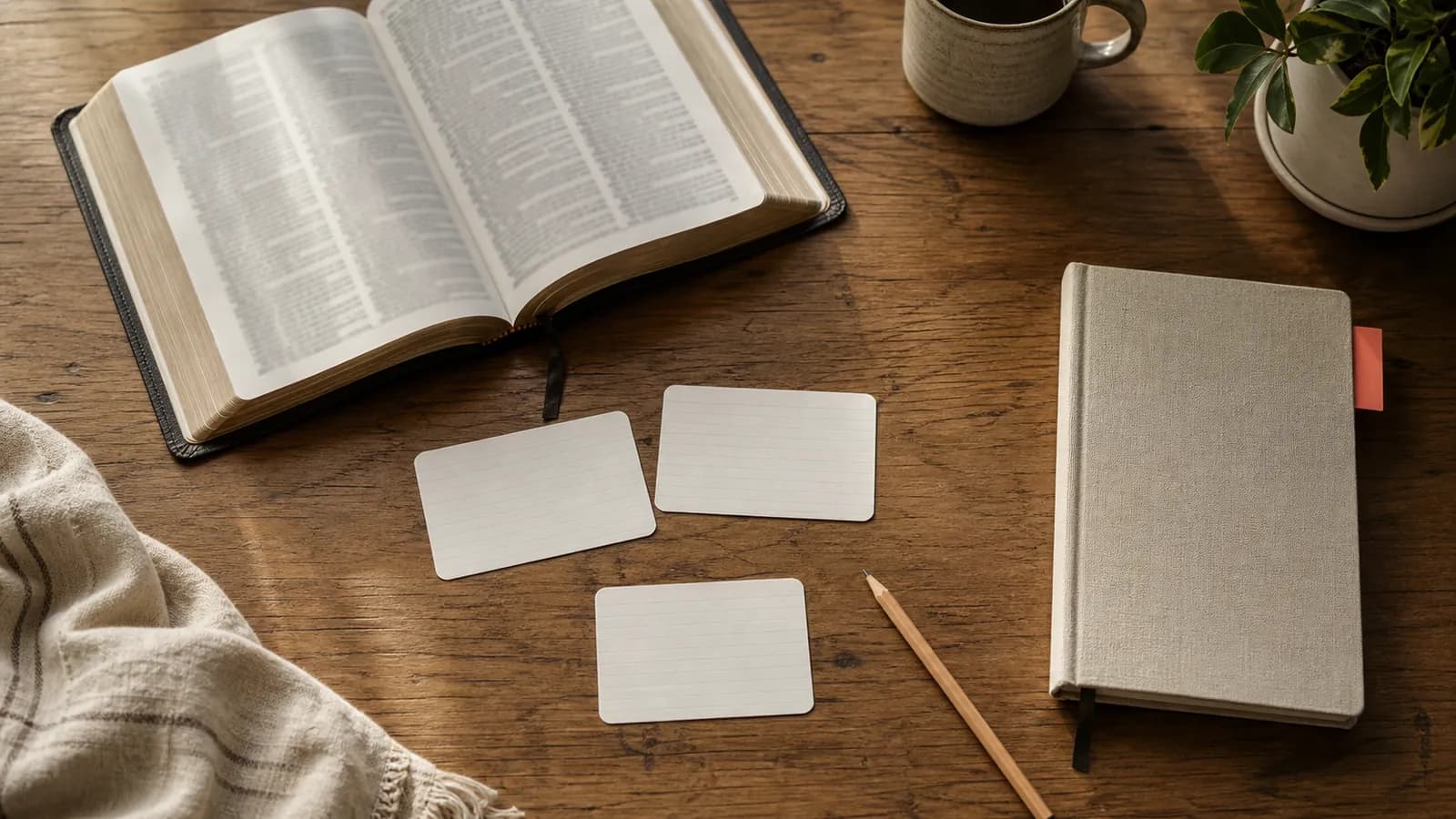
A kitchen table before the house wakes up. A Bible open to a short psalm, a pencil, and a plain notebook with nothing written in it yet. That small arrangement is enough to begin Bible journaling.
Bible journaling can begin with one short passage and an ordinary place to write. You read the whole unit slowly, record one observation and one honest response, and return to the entry later. Creative marks in the margins are optional; plain sentences in a plain notebook carry the whole practice. The point is a written trail that leads you back to the text.
What Bible journaling is and how to begin
Bible journaling is the practice of writing alongside your reading. It can look like written reflection, honest questions, notes in the margin of a Bible, or optional creative marks such as underlining, lettering, or small sketches beside a passage. Some people keep every entry in words; others add color when a verse deserves a second look. Both belong to the same habit: reading attentively and leaving a record you can revisit.
Beginners sometimes assume the practice requires artistic skill, a special Bible, or an hour of quiet. It requires far less: a short passage, something to write with, and a willingness to say plainly what you see and feel. "This verse comforts me, and I do not yet know why" is a complete and truthful entry.
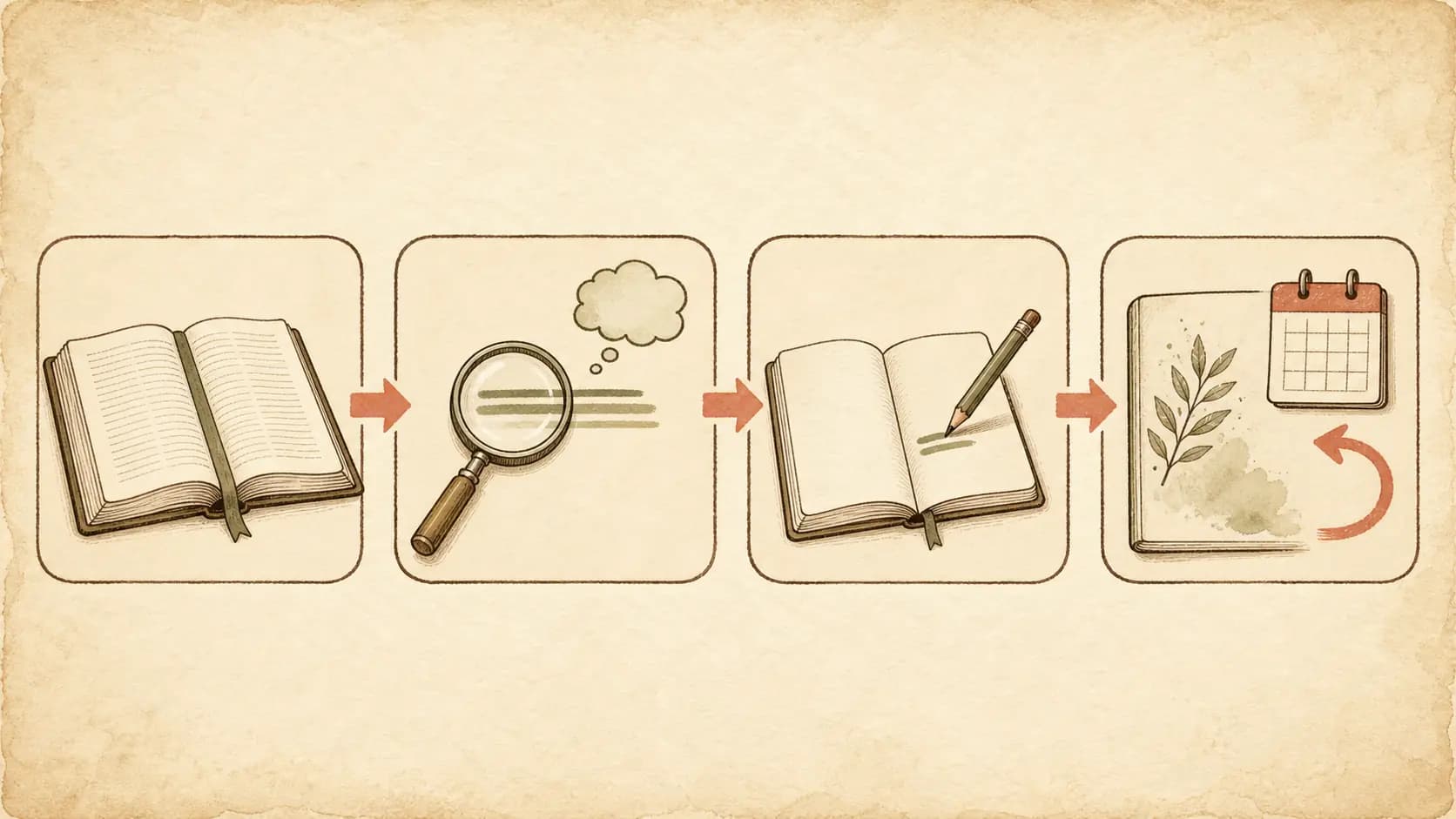
The shape of a session is simple. Read the whole passage. Write one observation about what the text says. Write one honest response — a reaction, a question, or a short prayer. Then stop. Later in the week, read the entry beside the passage again. That return turns a single moment of attention into an ongoing conversation with the text.
Choose a Bible journaling format you will use
The best format is the one that survives an ordinary Tuesday. Consider how you already read and where a journal would naturally sit; a format that fits your existing reading will gather entries without effort.
Margin notes, a notebook, or a digital note
Margin notes keep your words closest to the text. A wide-margin Bible, sometimes called a journaling Bible, gives you ruled or blank space beside each column, so an observation can live next to the verse itself. This format suits readers who like watching their history with a passage accumulate in one physical book.
A separate notebook gives you room to think at length: copy a phrase, write a full paragraph of response, let a question spread across several lines. It also keeps personal reflections private when the family Bible stays on the shelf. Many journalers keep both — short marks in the margin, longer entries in the notebook.
A digital note works the same way on a phone or computer and adds search: every entry on a theme is findable, and your journal is with you when a passage comes up. Choose it if typing feels natural and you already read on a device. Whichever format you pick, write the passage reference at the top of each entry so your words stay anchored to the text that prompted them.
Read a short passage before you write
Journaling works best when the reading comes first and the writing serves the reading. Pick a short, complete unit: one psalm, one paragraph from a Gospel, or a brief narrative scene. A unit with a clear beginning and end gives you something whole to respond to within ten or fifteen minutes.
Read the passage twice before you write anything. On the first reading, follow the words: what happens, who speaks, what is actually said. On the second, slow down and let one verse or phrase draw your attention; that phrase usually becomes the center of your entry. Keep the Bible open while you write so you can check the exact words at any moment.
For more unhurried, prayerful attention before the pencil moves, a Bible meditation practice pairs naturally with journaling as the quiet first half of the session.
Use four prompts to shape a truthful entry
The most common beginner question is what to write once the page is open. Four prompts remove that pressure by giving your eyes somewhere to look and your pen somewhere to start.
Four prompts for a first entry
What stayed with me? Name the verse or phrase that kept your attention, and copy a few of its words into the journal. This anchors the entry in the text.
What does the passage actually say? Write one observation in your own words — who speaks, what happens, what the verse plainly states — separate from how you feel about it.
What is my honest response? Record the reaction that is really there: comfort, resistance, confusion, gratitude, or a question you cannot answer yet. Honesty matters more than polish.
What will I carry into today? Close with one small response — a short prayer, a person to encourage, a habit to watch, or a question to bring to a pastor or friend.
An entry built from these four prompts can be as short as four sentences. A truthful paragraph you will reread next week serves you better than a long page written to fill space.
If a session leaves you wanting a fuller record — more context, more questions, more structure — the Bible note method offers a framework that journal entries can grow into.
Try a gentle seven-day Bible journaling practice
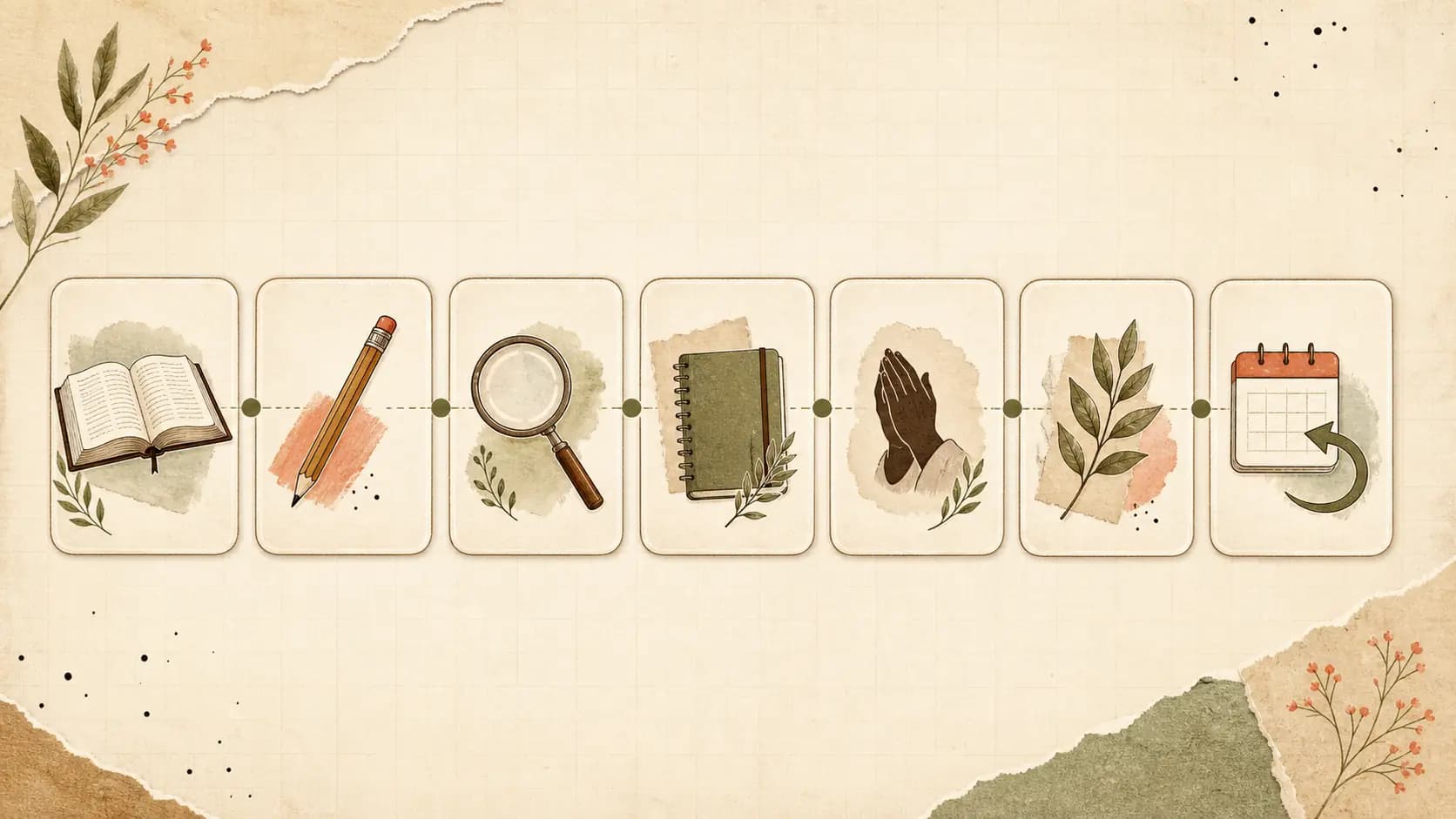
A defined first week lowers the barrier to starting: ten minutes a day, short passages of your choosing, and two days of returning so review is part of the habit.
A week that leaves room to return
Day one: read one psalm and write a first entry using the four prompts, under half a page.
Day two: read a single Gospel paragraph. Write one observation and one honest response, then stop.
Day three: return to day one's entry; read the psalm again and add one new line beneath it.
Day four: read a short narrative scene. Journal one question the passage raises, even if you cannot answer it.
At this point, leave the first half of the week alone for a moment. The final three days make room to write, revisit, and rest.
Day five: read a psalm you did not choose earlier. Write the entry as a short, honest prayer.
Day six: reread the week's entries beside their passages and mark the line you most want to remember.
Day seven: rest from writing. Reread the passage behind that marked line and let the week settle.
If you miss a day, pick up the next one. The rhythm matters more than the streak; the goal is a practice you can still be keeping in a year.
Keep the habit honest and easy to revisit
A journal earns its keep when you return to it. Date every entry and put the passage reference at the top, so a future reading can place it beside its text. Keep entries short enough that writing never feels like a debt. Let unfinished questions stay unfinished; a question marked "still wondering" gives your next return something to pick up.
Honesty also means letting the text correct the entry. When you reread an old page and see your first reading missed something, add the correction beneath the original words and date it. That growth — first impression, later correction — is one of the most encouraging things a journal holds.
When journaling raises questions that need a more structured framework — context, cross-references, genre, interpretation — explore these Bible study methods as a companion to the reflective habit.
Use Bible Note to keep a passage and reflection together
A paper journal holds reflections, and some readers want help with the questions that arise. That is where Bible Note fits. Its Bible Study Chat can begin from an open passage or a sermon note, displays Scripture references with their translations, labels Scripture, interpretation, and AI inference separately, and can save a useful answer to a Note. When an entry ends with a question you cannot answer — what a word means, where else a theme appears — you can ask it there and keep the passage and reflection within reach of each other.
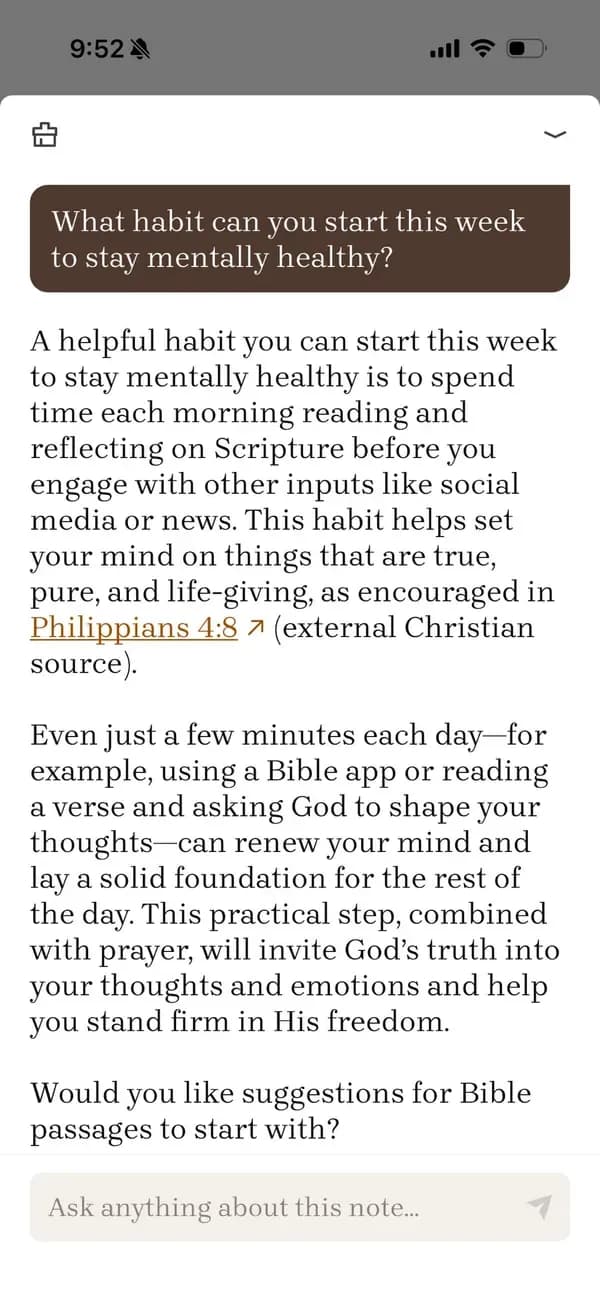
Bible Note Bible Study Chat is a study companion, and it deserves the same honesty you bring to the journal itself. Its AI can be wrong, so check every cited passage in context in your own Bible, and take weighty questions to Scripture and to trusted people in your church community. Used that way, the text stays primary, your written response stays yours, and the answers you keep stay open to verification.
Frequently asked questions
Do I need a journaling Bible to start Bible journaling?
No. A plain notebook beside any Bible you already own works just as well. Add a journaling Bible later only if you want your notes to live in the margins.
What should I write when my mind goes blank?
Use the four prompts: copy the phrase that stayed with you, write one observation about what the passage plainly says, name your honest reaction even if it is confusion, and close with one small response. Four short sentences make a complete entry.
Can drawing or lettering be part of Bible journaling?
Yes. Creative marks are welcome and optional; they serve the same purpose as words — slowing you down beside a passage. If art helps you linger, include it; if it distracts you from the text, plain sentences carry the practice.
Is a digital note acceptable for Bible journaling?
Yes. A digital journal keeps the same discipline — passage reference, observation, honest response — and adds search and portability. Many readers keep digital entries for daily reading and paper for slower seasons. The medium matters less than returning to what you wrote.
Sources
Editorial status
Written and edited by Hans Keller for Bible Note. Sources, Scripture context, dates, and practical limitations are checked before publication.

About the author
Hans Keller
Editorial & Content Lead
Bible Study & Sermon Learning Content Editor
Hans helps Christians turn sermons and Scripture study into clear notes, thoughtful questions, and faithful next steps.
His work helps listeners and group leaders carry a sermon or study beyond the meeting: back to the passage, into clearer questions, and toward one practical response for the week.
Read with Scripture open
Use this guide alongside the full biblical passage and the practices of your local church. Interpretive details can differ across Christian traditions.
See more Bible Note on Google
Add Bible Note as a preferred source to help find our Bible study guides more easily in Google Search.