
Read the story
Context
The good news about Jesus had first been proclaimed among the Jewish people. Their way of life included firm distinctions between what was clean and unclean, and close association with Gentiles—people from other nations—was often restricted.
Peter was a Jewish follower of Jesus and one of the witnesses chosen to tell others about him. Cornelius was a Gentile and an officer in the Roman army. Though he honored God, the distance between their communities was real. Before these two men ever met, God began preparing each of them to cross that divide.
Story
In the coastal city of Caesarea lived Cornelius, a centurion in the Italian Regiment. He was devoted to God, as was his household. He gave generously to people in need and prayed regularly.
One afternoon, at about three o’clock, Cornelius clearly saw an angel of God in a vision. Afraid, he asked what the angel wanted. The angel told him that God had taken notice of his prayers and gifts. He was to send men to Joppa and bring back Simon, who was also called Peter. Peter was staying with another Simon, a tanner whose house was by the sea.
As soon as the angel left, Cornelius called two household servants and a devout soldier who attended him. He explained what had happened and sent the three men to Joppa.
The next day, while they were approaching the city, Peter went onto the roof of the house to pray. It was around noon, and he became hungry while a meal was being prepared. Then he fell into a trance. He saw heaven opened and something like a large sheet being lowered by its four corners. Inside were all kinds of four-footed animals, reptiles, and birds.
A voice told Peter to get up, kill, and eat. Peter refused. He had never eaten anything considered impure or unclean. But the voice told him not to treat as unclean what God had made clean. This happened three times, and then the object was taken back into heaven.
Peter was still trying to understand the vision when the men sent by Cornelius arrived at the gate and asked for him. The Spirit told Peter that three men were looking for him. He was to go with them without hesitation because the Spirit had sent them.
Peter went downstairs and asked why they had come. They told him about Cornelius, describing him as a God-fearing man who was respected by the Jewish people. An angel had instructed Cornelius to invite Peter into his home and listen to what Peter had to say.
Peter welcomed the men and gave them lodging for the night. The next day he left with them, accompanied by several believers from Joppa.
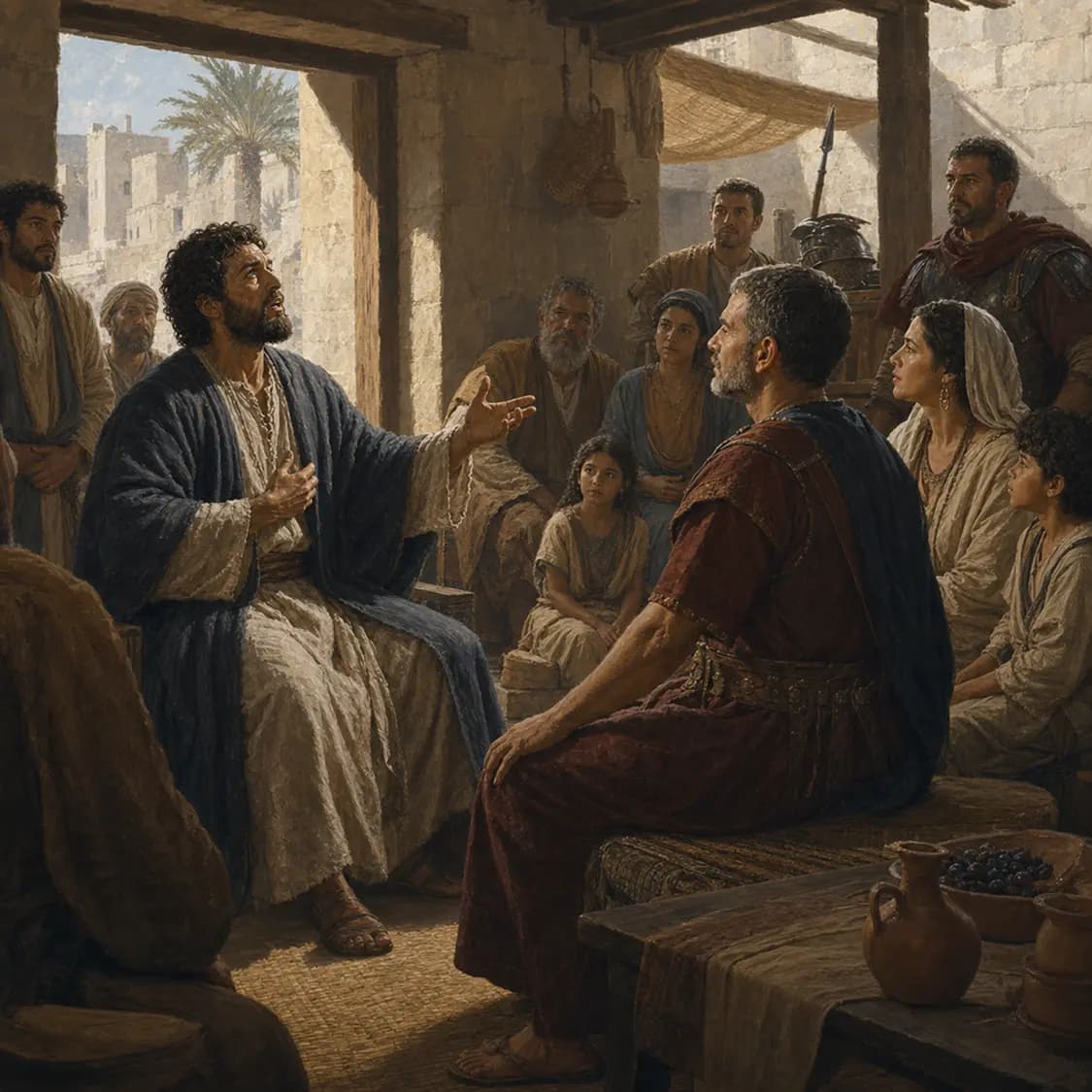
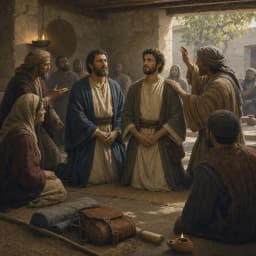
Cornelius was waiting in Caesarea. He had gathered his relatives and close friends so that they could hear Peter too. When Peter entered, Cornelius met him and fell at his feet in reverence. Peter immediately helped him up and told him to stand, because Peter himself was only a man.
Inside, Peter found a large gathering. He explained that Jewish practice did not ordinarily allow him to associate closely with a Gentile or enter a Gentile home. Yet God had shown him that he must not call any person impure or unclean. That was why he had come without objection. Then he asked Cornelius why he had sent for him.
Cornelius described his vision and repeated the angel’s instructions. He told Peter that everyone had gathered in God’s presence, ready to hear everything God had commanded Peter to say.
Peter now understood more fully what God was doing. God does not show favoritism, he said. In every nation, God welcomes those who fear him and do what is right.
Then Peter told them the good news of peace through Jesus Christ, who is Lord of all. He spoke about how Jesus’ work had become known throughout Judea, beginning in Galilee after John preached about baptism. God had anointed Jesus of Nazareth with the Holy Spirit and power. Jesus went about doing good and healing those oppressed by the devil, because God was with him.
Peter and the other chosen witnesses had seen what Jesus did. Jesus had been killed by being hung on a tree, but God raised him on the third day and allowed the chosen witnesses to see him. They had even eaten and drunk with Jesus after he rose from the dead.
Jesus had commanded them to preach and testify that God had appointed him as judge of the living and the dead. The prophets also testified about him: everyone who believes in Jesus receives forgiveness of sins through his name.
While Peter was still speaking, the Holy Spirit came upon everyone who was listening. The Jewish believers who had traveled with Peter were astonished that God had poured out the gift of the Holy Spirit on Gentiles too. They heard them speaking in tongues and praising God.
Peter asked whether anyone could withhold water from people who had received the Holy Spirit just as they had. He then commanded that they be baptized in the name of Jesus Christ. Afterward, Cornelius and the others asked Peter to stay with them for several days.
What We Learned
- God took the initiative on both sides of the divide: he heard Cornelius, prepared Peter, directed the messengers, and brought the two households together.
- Peter’s vision changed how he regarded people. No nation or community is to be dismissed as impure when God is drawing people to himself.
- Cornelius’s devotion led him to listen, but Peter still proclaimed the heart of the good news: Jesus died, rose again, is Lord of all, and gives forgiveness to everyone who believes in him.
- The Holy Spirit’s coming upon the Gentile listeners showed the Jewish believers that God had received them. Their baptism openly recognized what God had already done.
Story background
Peter and Cornelius is read in Acts 10:1-48. Cornelius, a Roman centurion in Caesarea who fears God, gives generously, and prays, receives a vision directing him to send for Peter in Joppa. The account also draws attention to God shows no favoritism and Gentile inclusion. Its named people, setting, and sequence matter, while details not stated in the passage should remain open rather than being supplied from later retellings. Read the scene in its surrounding movement: notice what prompts the action, how the central figures respond, and what the final words leave with the hearer. This background keeps the story close to its explicit claims while making room for careful reflection on God shows no favoritism, Gentile inclusion, and the other themes named here. The passage can be revisited slowly, with its questions and tensions intact.
People in the story
- Peter — Receives the vision, enters a Gentile home, proclaims Jesus, and orders baptism
- Cornelius — Roman centurion who receives an angelic vision, sends for Peter, and gathers people to hear him
- Holy Spirit — Directs Peter and falls on the Gentile listeners
- Angel of God — Appears to Cornelius and tells him to send for Peter
- Jewish believers from Joppa — Accompany Peter and are astonished that the Spirit's gift is poured out on Gentiles
Themes to notice
God shows no favoritism
The passage brings God shows no favoritism into focus through its named people, actions, and ending.
Gentile inclusion
The passage brings Gentile inclusion into focus through its named people, actions, and ending.
Jesus' resurrection and forgiveness
The passage brings Jesus' resurrection and forgiveness into focus through its named people, actions, and ending.
Holy Spirit and baptism
The passage brings Holy Spirit and baptism into focus through its named people, actions, and ending.
Questions for reflection
- What stands out to you about God shows no favoritism in this passage?
- How do the people in the story respond to Gentile inclusion?
- Which detail would you want to read again in its wider context?
- What question does this account leave you carrying?
Related stories
Carry the story with you
Save your reflections on peter and cornelius and revisit them as you continue through Scripture.