
Read the story
Context
Jesus’ followers were sometimes known as those who belonged to “the Way.” By the time this story begins, disciples were living in Damascus, a major city north of Jerusalem, and gathering among its Jewish community.
Opposition was spreading too. Saul was already known for the harm he had done to believers in Jerusalem. Official letters from the high priest would allow him to extend that campaign to Damascus, placing both men and women who followed Jesus in danger.
Story
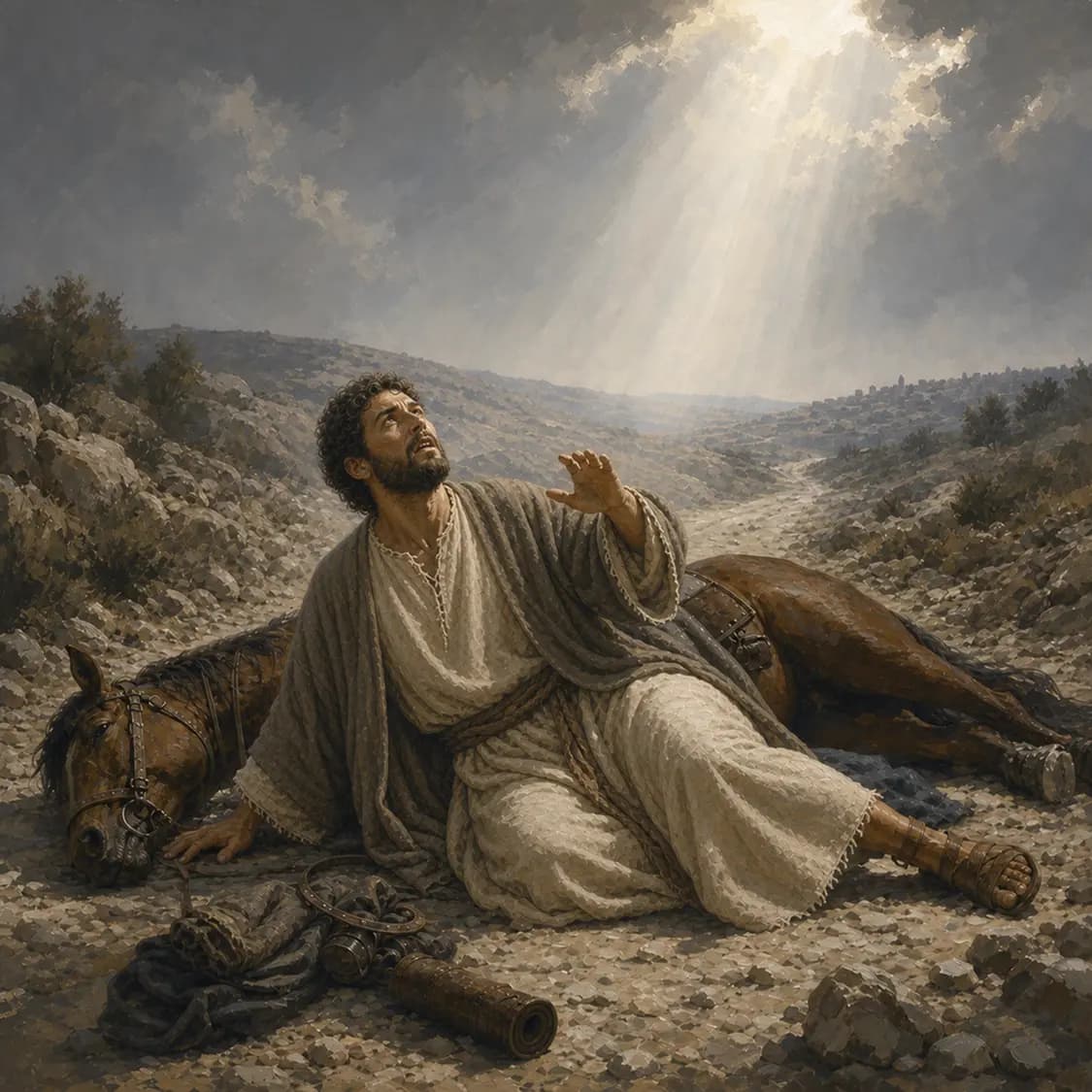
Saul went to the high priest while still breathing threats of violence against the Lord’s disciples. He requested letters addressed to the synagogues in Damascus. If he found anyone there who belonged to the Way, whether men or women, he intended to arrest them and bring them bound to Jerusalem.
As Saul approached Damascus, a light from heaven suddenly flashed around him. He fell to the ground and heard a voice call his name.
“Saul, Saul, why do you persecute me?”
Saul asked who was speaking. The answer came: it was Jesus, the one Saul was persecuting. Jesus told him to get up and enter the city, where he would be told what to do.
The men traveling with Saul stood speechless. They heard the sound but saw no one. When Saul rose and opened his eyes, he could see nothing. The man who had planned to lead prisoners back to Jerusalem now had to be led by the hand into Damascus.
For three days Saul remained blind. He did not eat or drink.
In Damascus, the Lord spoke in a vision to a disciple named Ananias. The Lord directed him to Straight Street and told him to ask at the house of Judas for Saul of Tarsus. Saul was praying, and he had seen a vision of Ananias coming to lay hands on him so that he could see again.
Ananias answered honestly. He had heard from many people about the harm Saul had done to the Lord’s people in Jerusalem. He also knew that Saul had come to Damascus with authority from the chief priests to arrest everyone who called on Jesus’ name.
But the Lord told Ananias to go. Saul had been chosen to carry Jesus’ name before the Gentiles—the non-Jewish nations—as well as kings and the people of Israel. Saul would also be shown how much he must suffer for Jesus’ name.
Ananias obeyed. He entered the house, placed his hands on Saul, and addressed him with two unexpected words: “Brother Saul.” He explained that Jesus, who had appeared to Saul on the road, had sent him so that Saul could regain his sight and be filled with the Holy Spirit.
Immediately, something like scales fell from Saul’s eyes, and he could see again. He got up and was baptized. After eating, he regained his strength and spent several days with the disciples in Damascus—the very people he had come to arrest.
Without delay, Saul entered the synagogues and proclaimed that Jesus is the Son of God. Everyone who heard him was astonished. They knew why he had come to Damascus, and they remembered what he had done in Jerusalem. Yet now, instead of silencing those who called on Jesus’ name, Saul was joining them.
Saul grew stronger in his proclamation. He left his Jewish hearers in Damascus amazed as he showed that Jesus is the Messiah, God’s promised King. The man who had entered the city intending to stop the message was now declaring that Jesus is the Son of God.
What We Learned
- Jesus identifies closely with his people: Saul’s persecution of the disciples was persecution of Jesus himself.
- Saul’s transformation began with Jesus’ initiative, not with personal ambition or self-improvement. He was stopped, made dependent, and called into a new allegiance.
- Ananias spoke honestly about the danger, but he still obeyed the Lord and welcomed Saul as a brother.
- Saul’s calling was not a promise of comfort or success. He was chosen to carry Jesus’ name widely and to suffer for that name.
- Saul’s new message centered on Jesus: the Son of God and the promised Messiah.
Story background
Saul’s Conversion is read in Acts 9:1-22. Saul obtains letters to arrest followers of the Way in Damascus. The account also draws attention to Jesus' initiative and conversion and calling. Its named people, setting, and sequence matter, while details not stated in the passage should remain open rather than being supplied from later retellings. Read the scene in its surrounding movement: notice what prompts the action, how the central figures respond, and what the final words leave with the hearer. This background keeps the story close to its explicit claims while making room for careful reflection on Jesus' initiative, conversion and calling, and the other themes named here. The passage can be revisited slowly, with its questions and tensions intact.
People in the story
- Saul — Persecutes Jesus' followers, encounters the risen Jesus, is baptized, and begins proclaiming Jesus
- Jesus — Confronts Saul, identifies with the persecuted disciples, and appoints Saul for a wide-ranging witness
- Ananias — Receives the Lord's instruction, voices his concern, welcomes Saul, and restores his sight
- Men traveling with Saul — Accompany Saul and lead him by the hand after he is blinded
- Disciples in Damascus — Are the people Saul intended to arrest and later receive him among them
Themes to notice
Jesus' initiative
The passage brings Jesus' initiative into focus through its named people, actions, and ending.
Conversion and calling
The passage brings conversion and calling into focus through its named people, actions, and ending.
Reconciliation
The passage brings reconciliation into focus through its named people, actions, and ending.
Witness amid suffering
The passage brings witness amid suffering into focus through its named people, actions, and ending.
Questions for reflection
- What stands out to you about Jesus' initiative in this passage?
- How do the people in the story respond to conversion and calling?
- Which detail would you want to read again in its wider context?
- What question does this account leave you carrying?
Related stories

Carry the story with you
Save your reflections on saul’s conversion and revisit them as you continue through Scripture.