
James 2:14–17 · KJV
What Does James 2:14–17 Mean?
James 2:14–17 challenges a claim to faith that leaves a hungry or poorly clothed neighbor unaided. James says such faith is dead when it stands alone. His example tests whether a profession of belief is alive in the way a person responds to another's real need.
What doth it profit, my brethren, though a man say he hath faith, and have not works? can faith save him?
James 2:14, KJV, excerpt
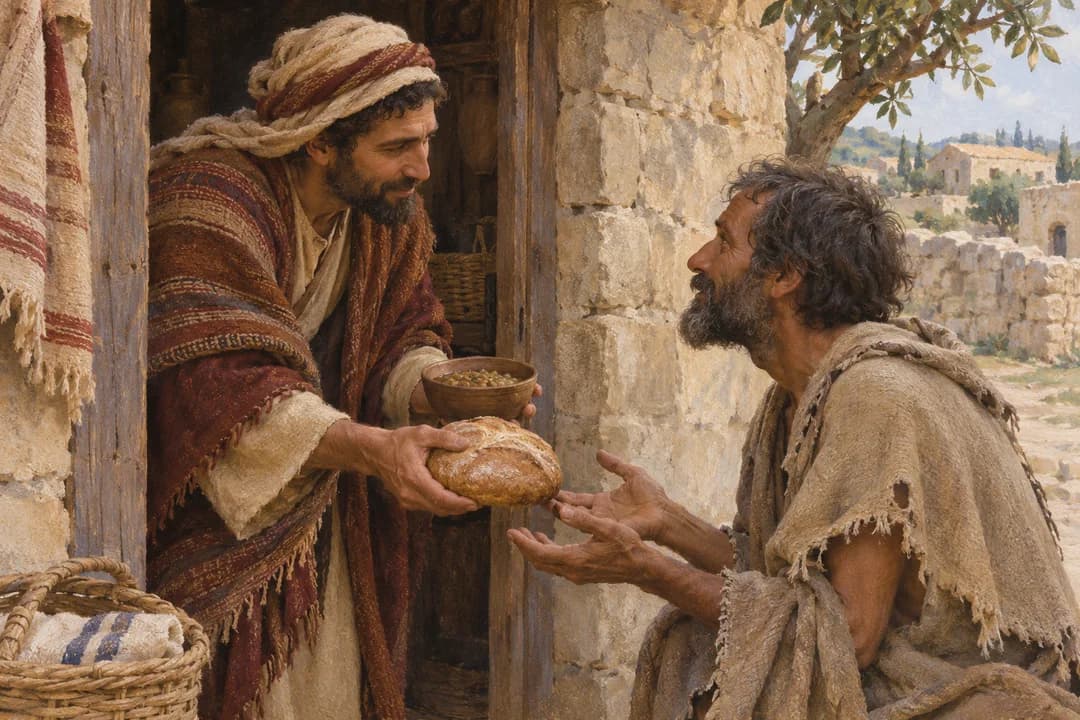
Verse 14. What sort of faith is being questioned?
James begins with someone who says that he has faith but has no works. The word “say” makes the claim important. The chapter has already confronted favoritism toward the wealthy and spoken of mercy. The question about salvation brings that concern to a point: what good does this claim do when the life attached to it shows no mercy? James then gives a situation that the whole community can recognize.
Verses 15–16. The neighbor who needs food and clothing
A brother or sister lacks adequate clothing and daily food. Someone offers peaceful words and wishes that they be warm and filled, while leaving their bodily need unanswered. James repeats his question about profit. The example exposes the gap between a sympathetic statement and the practical help the speaker could provide. Works here include the ordinary acts of mercy the situation calls for. The hungry person remains at the center of the illustration.
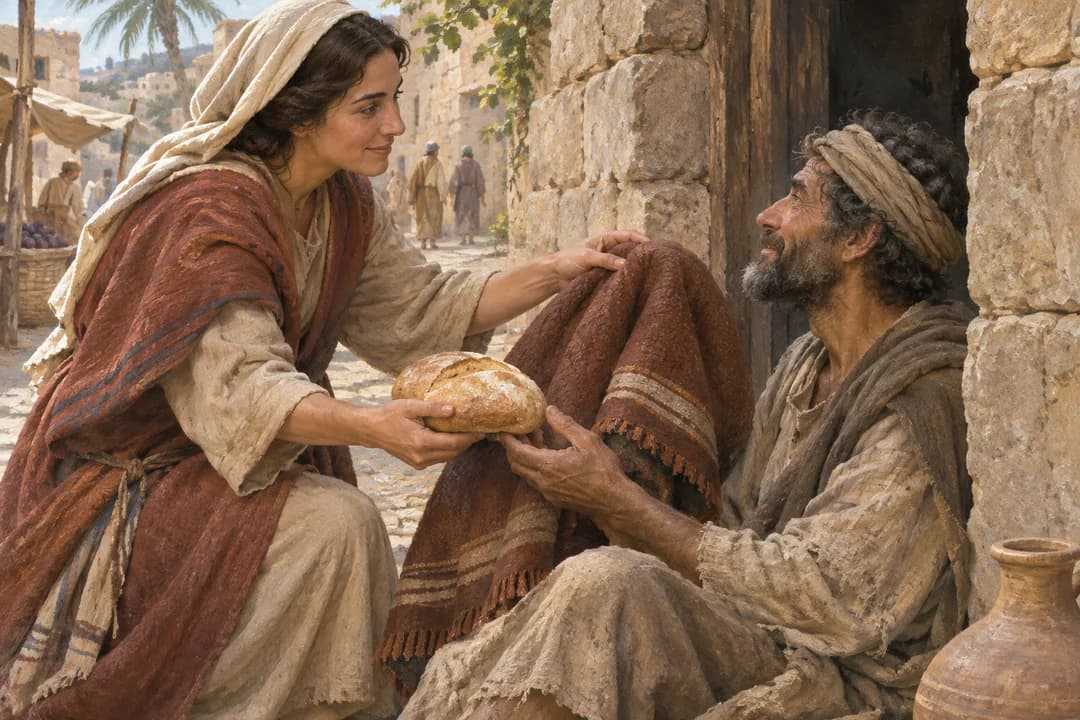
Verse 17. What does dead faith mean?
James draws the comparison directly: faith without works is dead, being alone. The following discussion in 2:18–26 develops the point through showing faith, Abraham's action, and Rahab's welcome. The passage calls for a trust whose life can be seen in conduct. Its image is stronger than saying that helping others is an optional improvement. The presence or absence of mercy reveals something consequential about the claimed faith itself.
How Christian traditions explain faith and works
Protestant traditions commonly distinguish justification received through faith from the good works that living faith produces. Catholic teaching emphasizes faith made living through love, and Orthodox teaching describes a faithful life of active cooperation with God's grace. These formulations have important differences, and this short example cannot settle the whole discussion of justification. Each gives a reason to take James's challenge to inactive belief seriously. Reading Ephesians 2:8–10 alongside James helps keep God's gracious gift and the good works of a renewed life in view.
Responding to the example James actually gives
Before turning the passage into an abstract debate, identify a neighbor's concrete need. Ask what help is fitting and what you can responsibly provide. That might mean sharing food, arranging practical support, or working with others to meet a need beyond your own resources. Pray for the willingness to act, then follow through. James gives readers a test close enough to daily life that the next response can begin with someone already within reach.