
James 5:16 · KJV
What Does James 5:16 Mean?
James 5:16 calls Christians to confess their faults and pray for one another within a community seeking healing. It describes a righteous person's earnest prayer as effective and immediately illustrates that claim through Elijah. The verse joins honesty, mutual care and confidence in God.
Confess your faults one to another, and pray one for another, that ye may be healed. The effectual fervent prayer of a righteous man availeth much.
James 5:16, KJV, excerpt

A community responding to suffering and sickness
James 5:13–15 addresses people who suffer, people who rejoice and people who are sick. It directs them toward prayer, praise and the care of church elders. The following verse brings the wider community into mutual confession and prayer.
The paragraph includes forgiveness alongside healing. It treats a person's life as something the community should care about before God. That setting makes the repeated “one another” in verse 16 significant. Readers are asked to share responsibility through truthfulness and intercession.
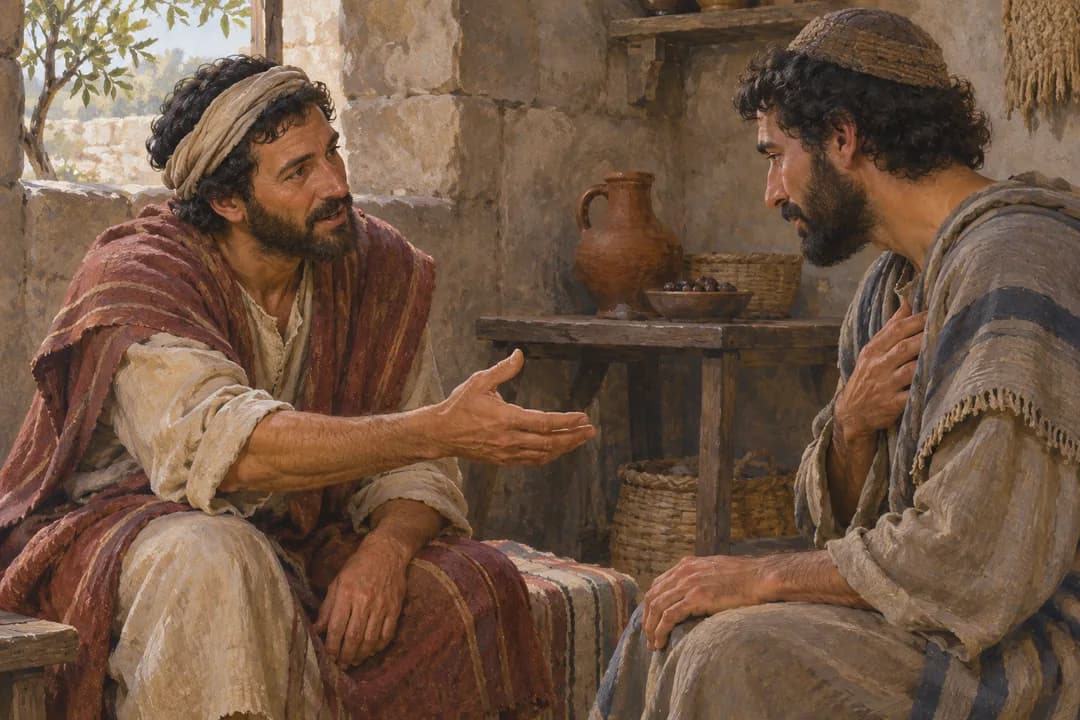
Verse 16. Confessing faults to one another
The command asks people to acknowledge their wrongdoing rather than preserve a false account of themselves. Mutual confession opens a way for prayer and reconciliation. It directs the community toward restored relationships before God.
Christian traditions place this practice differently within pastoral care and sacramental confession. The wording of this verse addresses mutual honesty among believers. A thoughtful application considers the person harmed, the people able to help and the setting in which disclosure can be made responsibly.
Verse 16. Prayer and healing
The purpose “that ye may be healed” continues the paragraph's concern for sickness and restoration. James gives prayer a real role in the community's care. He does not tell the reader to identify each illness with a particular person's hidden sin.
Confession can attend to an actual wrong while care attends to a sick person's needs. The community can pray, visit, share practical burdens and receive appropriate help. These responses can be held together as ways of bringing the person before God.
Verse 16. Why a righteous person’s prayer matters
The KJV describes the “effectual fervent prayer of a righteous man” as accomplishing much. Verses 17–18 supply the example. Elijah is described as sharing ordinary human experience, yet his prayers concern the stopping and return of rain.
The comparison directs confidence toward the God who hears. It encourages earnest prayer from a life turned toward him. Elijah's example gives the community a reason to continue praying without turning prayer into a technique for controlling when or how an answer must come.
A prayer to share with someone trustworthy
Read James 5:13–18 and consider one relationship in which an honest acknowledgment is needed. Where appropriate, name the wrong to the person affected and seek the support of someone trustworthy.
You can also pray for a person who is sick while offering practical care. God, help us speak truthfully, forgive what needs forgiving and attend to the needs before us. Receive our prayer and guide the help we can give.