
Luke 10:25–37 · KJV
What Does Luke 10:25–37 Mean?
Luke 10:25–37 teaches that love of neighbor takes the form of practical mercy toward a person in need, including someone across a deep social boundary. Jesus tells the Good Samaritan story in response to a lawyer’s question about who counts as a neighbor. His concluding question asks who acted as a neighbor to the wounded man.
And, behold, a certain lawyer stood up, and tempted him, saying, Master, what shall I do to inherit eternal life?
Luke 10:25, KJV, excerpt
Verses 25–29. Why ask who a neighbor is?
An expert in the law asks Jesus about inheriting eternal life. Jesus returns him to Scripture, and the man answers with love for God and love for a neighbor. Jesus affirms the answer and calls him to act on it.
The lawyer then seeks to justify himself by asking who his neighbor is. The question sets up the Good Samaritan story in Luke 10:25–37. It asks where the obligation of care extends, while the answer Jesus gives will direct attention toward the person who shows mercy.
Verses 30–32. What happens on the road?
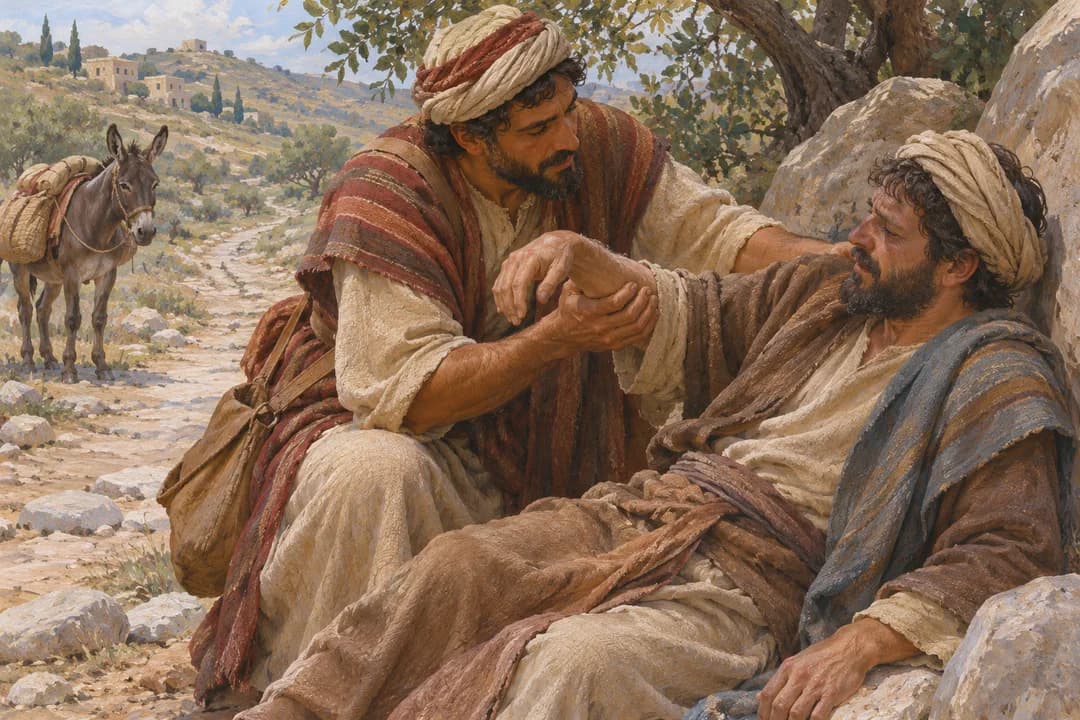
A man traveling from Jerusalem to Jericho is stripped, wounded, and left half dead by thieves. A priest sees him and passes on the other side. A Levite also sees him and passes by.
The story states their responses without supplying their private reasons. Its visible facts are enough to create the moral tension. A person lies in need, and people who see that need continue past him. The hearer is prepared for someone whose response will change the situation.
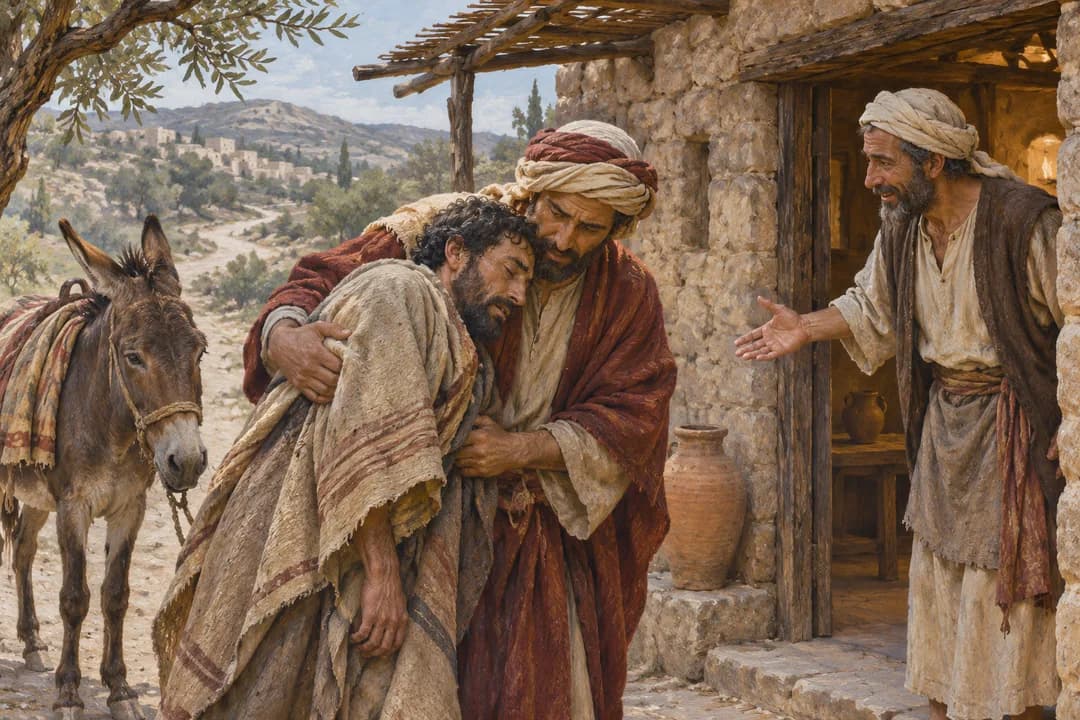
Verses 33–35. How does the Samaritan show compassion?
The Samaritan sees the wounded man and has compassion. He goes to him, treats his wounds, carries him on his animal, brings him to an inn, and cares for him. The following day he pays for continued care and promises to meet further expense.
The actions give mercy a concrete cost in time, resources, and responsibility. A person from a community divided from Jews becomes the one who protects the traveler’s life. The sequence lets the reader see love through what is actually done.
Verses 36–37. How does Jesus change the question?
Jesus asks which of the three was a neighbor to the man who suffered. The lawyer answers that it was the one who showed mercy. Jesus then tells him to go and do likewise.
The final instruction takes the reader from defining a category to practicing mercy. Ask whose need you have already seen and what response would help. Some needs call for immediate assistance, while others require sustained practical care. The story makes the wounded person’s good the center of the neighbor’s action.