
Luke 15:11–32 · KJV
What Does Luke 15:11–32 Mean?
Luke 15:11–32 shows a father welcoming a lost son home and pleading with an angry older son to share the joy. Jesus tells the story in response to complaints that he receives sinners. Both brothers matter to the meaning, because the father’s mercy challenges open rebellion and resentment of another person’s restoration.
And he said, A certain man had two sons:
Luke 15:11, KJV, excerpt

Why tell a story about two sons?
Luke 15 begins with tax collectors and sinners coming to hear Jesus while Pharisees and scribes complain about his welcome. The stories of the lost sheep and lost coin lead into the father and his two sons, told in Luke 15:11–32.
That setting makes the response to another person’s return a central issue. The younger son’s journey answers one part of the question, and the older son’s refusal to join the feast answers another. The father goes out to meet each son.
Verses 11–16. What does the younger son lose?
The younger son asks for his portion of the property, leaves for a distant country, and wastes what he has. A famine then deepens his need. He feeds pigs, longs for their food, and finds that nobody gives him anything.
The sequence moves from chosen departure to desperate hunger. His resources and his ability to sustain himself have run out. These details prepare the turn in which he remembers the abundance available even to his father’s hired workers.
Verses 17–21. What does coming to himself involve?
The son recognizes his condition and resolves to return. He prepares to confess that he has sinned against heaven and before his father, acknowledging that he is unworthy to be called a son. Then he gets up and goes.
His father sees him while he is still far away, feels compassion, runs to embrace him, and kisses him. The son speaks his confession within that welcome. The story joins the reality of his wrongdoing with the father’s active movement toward him.
Verses 22–24. Why a robe, ring, and feast?
The father orders a robe, ring, shoes, and a celebration. His explanation is that his son was dead and is alive, lost and found. The welcome restores the son to the household and publicly marks his return.
The joy belongs to the recovery of a person. The repeated language of loss and finding connects the scene to the earlier parables. Readers are invited to see why the father considers this a reason for celebration.
Verses 25–32. Why does the older brother stay outside?
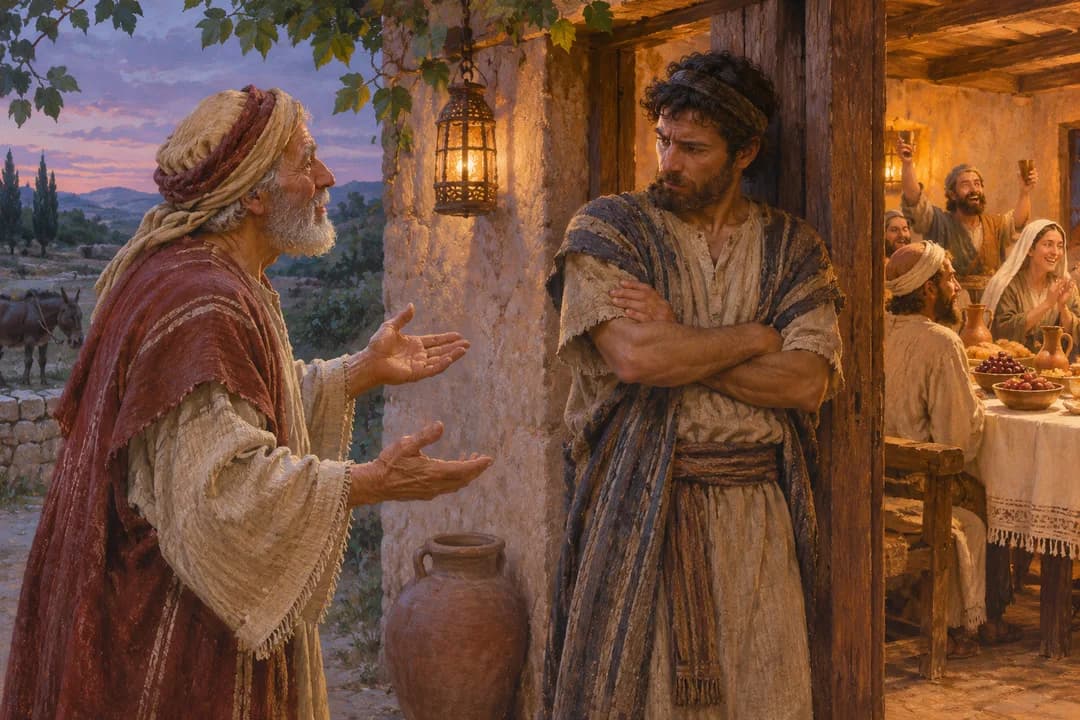
The older son hears the celebration, learns the reason, and becomes angry. He describes years of service and complains that his father has rewarded the brother who wasted his property. His resentment keeps him from entering the joy of the household.
The father comes out and appeals to him. He affirms their enduring relationship and tells him that celebration is fitting because his brother has been found. Jesus leaves the older son’s response open. The hearer must consider whether another person’s restoration can become a shared joy.