
Read the story
Context
Jesus tells this as a parable—a story that uses a familiar human situation to reveal spiritual truth. It centers on one father and two sons. The younger son’s decision creates the visible crisis, but the older son’s response becomes just as important. One son must decide whether to return; the other must decide how to respond when his brother does. The father’s actions toward both hold the story together.
Story
The younger son asked his father to give him his share of the family property. The father agreed and divided his property between his two sons.
Not many days later, the younger son gathered everything he had and left for a distant country. There he squandered his wealth in reckless living. Before long, all the money was gone.
Then a severe famine struck that country, and the young man became desperately needy. He went to work for a citizen of that land, who sent him into the fields to feed pigs. He was so hungry that he longed to eat the pods given to the pigs, yet no one gave him anything.
At last, he came to his senses. He remembered that his father’s hired workers had more than enough food, while he was starving. He decided to return home and confess that he had sinned against heaven and against his father. He no longer considered himself worthy to be called a son. He would ask to be treated as one of the hired workers instead.
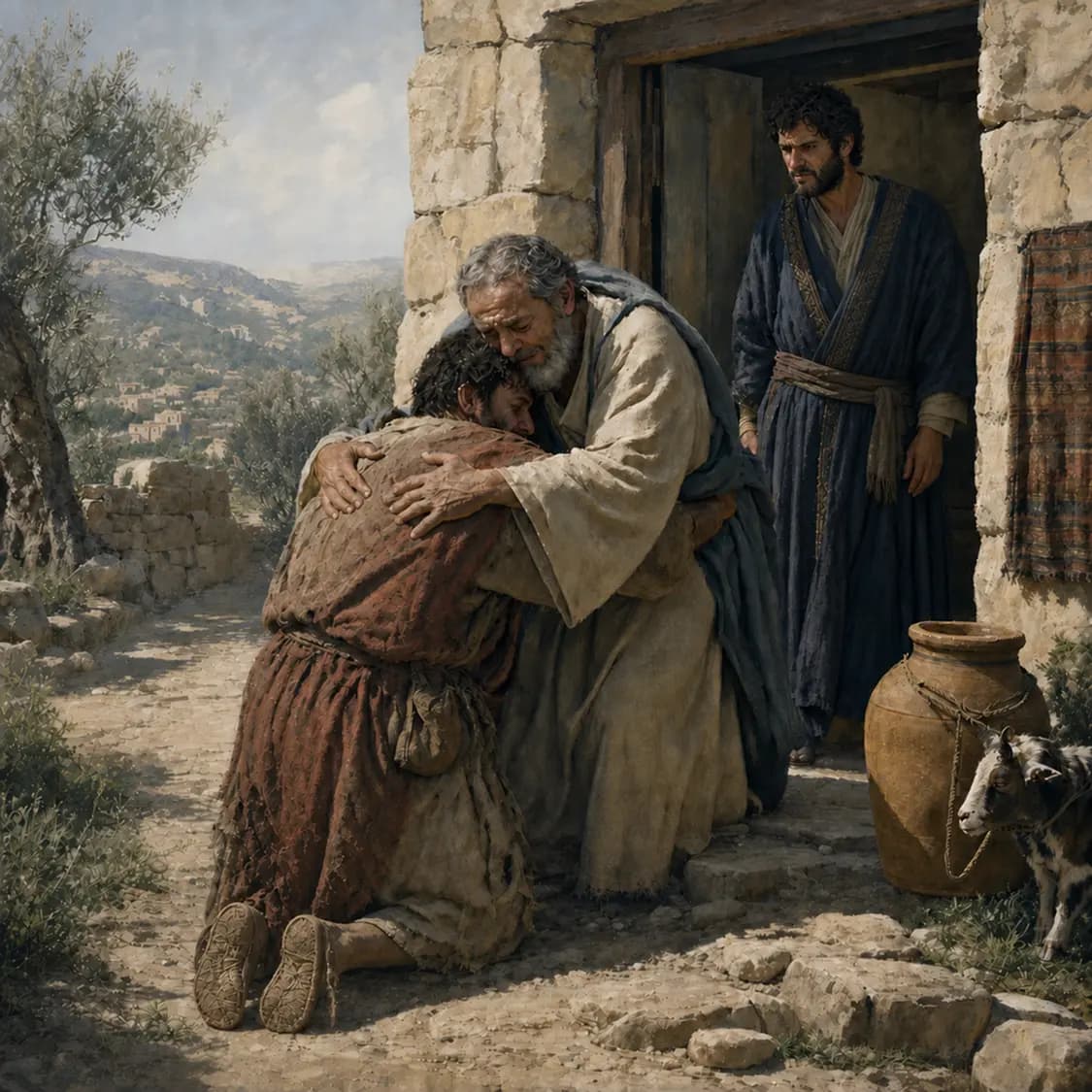
So he got up and started home. While he was still a long way off, his father saw him. Filled with compassion, the father ran to meet him, embraced him, and kissed him.
The son confessed that he had sinned against heaven and against his father and was no longer worthy to be called his son. The father turned to his servants and told them to bring the best robe and put it on him. They were to place a ring on his hand and sandals on his feet. Then they were to prepare the fattened calf for a feast.
The father explained why they must celebrate: this son of his had been dead and was alive again; he had been lost and was found. The celebration began.
Meanwhile, the older son was out in the field. As he approached the house, he heard music and dancing. He called a servant and asked what was happening. The servant told him that his brother had returned and that their father had prepared the fattened calf because he had received him back safe and well.
The older brother became angry and refused to go inside. His father came out and pleaded with him to join them.
But the older son protested. He said that he had served his father for many years and had never disobeyed a command, yet his father had never given him even a young goat so that he could celebrate with his friends. By contrast, he called the returned brother “this son of yours.” He accused him of wasting the family property with prostitutes, and now their father had prepared the fattened calf for him.
The father answered, “Son, you are always with me, and everything I have is yours.” Yet he said the celebration was fitting. The returned son was still the older son’s brother. He had been dead and was alive again; he had been lost and was found.
What We Learned
- Repentance involves both honest confession and action. The younger son recognized his sin, got up, and returned to his father.
- The father’s compassion gives a vivid picture of God’s grace. He ran to welcome the returning son before the son could earn back his place through service.
- The restoration of someone who was lost is a reason for shared joy, not reluctant tolerance.
- The older brother’s years of service did not protect him from resentment and comparison. Remaining near the father was not the same as sharing his heart.
- The father reached toward both sons—embracing the younger and pleading with the older—while reminding them that they still belonged to one family.
Story background
The Father and His Two Sons is read in Luke 15:11-32. Jesus tells of a younger son who asks for his share of his father’s property, wastes it in a distant country, and returns in hunger prepared to confess his sin and seek hired work. The account also draws attention to repentance and restoration. Its named people, setting, and sequence matter, while details not stated in the passage should remain open rather than being supplied from later retellings. Read the scene in its surrounding movement: notice what prompts the action, how the central figures respond, and what the final words leave with the hearer. This background keeps the story close to its explicit claims while making room for careful reflection on repentance, restoration, and the other themes named here. The passage can be revisited slowly, with its questions and tensions intact.
People in the story
- Father — Divides his property, receives the returning son with compassion, and appeals to the older son
- Younger son — Leaves, squanders his property, repents, and returns
- Older son — Resents the celebration and must face his father’s invitation
- Servants — Carry out the father’s welcome and explain the celebration
Themes to notice
Repentance
The passage brings repentance into focus through its named people, actions, and ending.
Restoration
The passage brings restoration into focus through its named people, actions, and ending.
The Father’s compassion
The passage brings the Father’s compassion into focus through its named people, actions, and ending.
Resentment and grace
The passage brings resentment and grace into focus through its named people, actions, and ending.
Questions for reflection
- What stands out to you about repentance in this passage?
- How do the people in the story respond to restoration?
- Which detail would you want to read again in its wider context?
- What question does this account leave you carrying?
Related stories


Carry the story with you
Save your reflections on the father and his two sons and revisit them as you continue through Scripture.