
Read the story
Context
Jesus’ followers were disciples—learners who looked to their teacher for a way of life, not only for information. Prayer already belonged to their world, and John had taught his own disciples to pray. It made sense, then, for Jesus’ disciples to ask what prayer should look like among those who followed him.
Their request carried two questions at once. What should they bring before God, and how should they approach him? Jesus answered both, drawing together God’s kingdom, ordinary human need, forgiveness, persistence, and the trust of a child toward a father.
Story
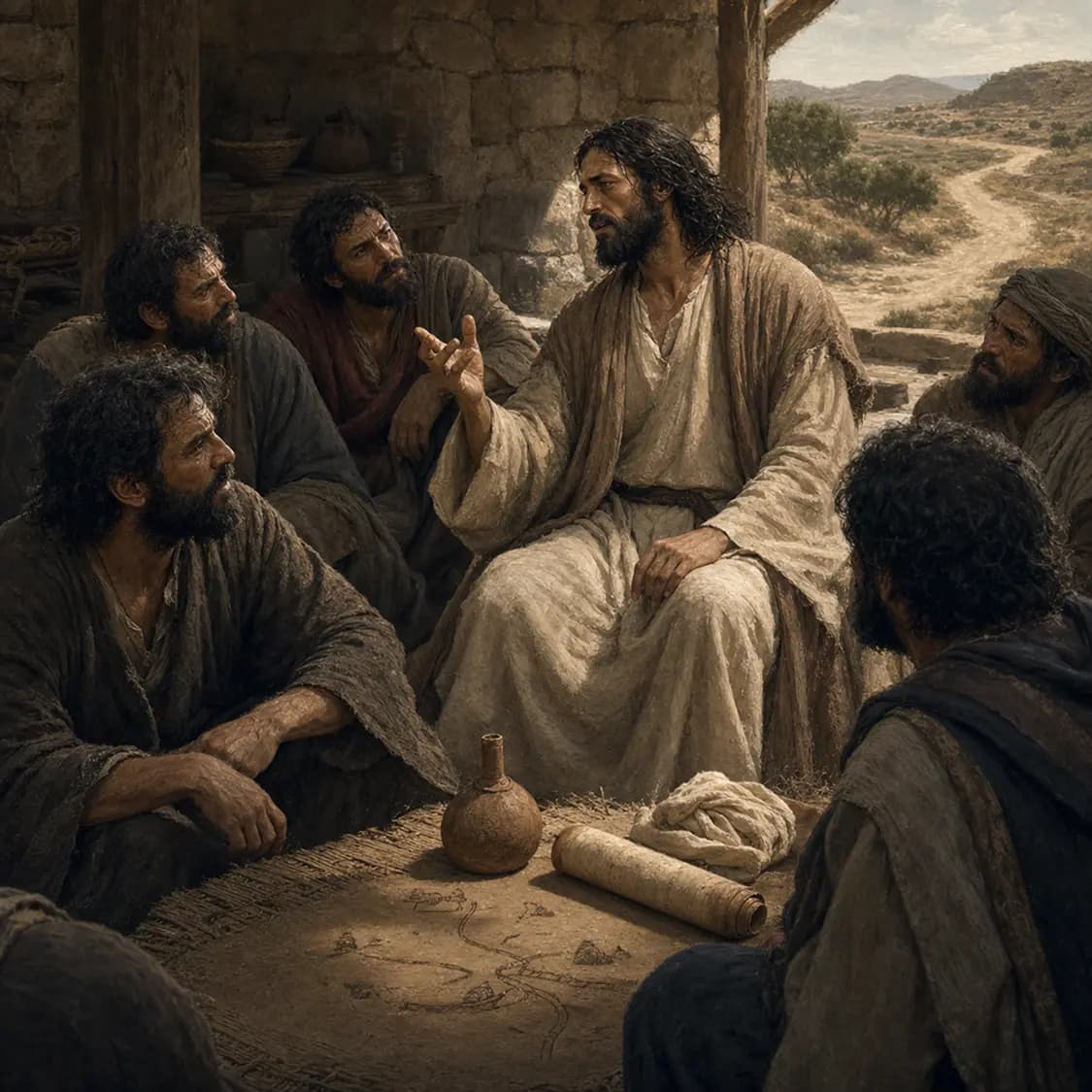
Jesus was praying in a certain place. When he finished, one of his disciples said, “Lord, teach us to pray, just as John taught his disciples.”
Jesus answered with a pattern they could use. They were to begin with God himself:
“Father, hallowed be your name. Your kingdom come.”
They were to ask for their daily bread, placing their ordinary needs before God one day at a time. They were to ask forgiveness for their sins while also forgiving those who sinned against them. And they were to ask God not to lead them into temptation.
The prayer held together honor for God’s name, longing for his kingdom, dependence on his provision, the need for mercy, and the desire for his guidance. Jesus was teaching his disciples to come before God as their Father with the whole of their lives.
Then Jesus gave them a scene from everyday life. Suppose someone went to a friend’s house at midnight. A traveler had arrived at his home, and he had nothing to offer him. So he called from outside and asked his friend to lend him three loaves of bread.
The answer came from behind the closed door: the house had already been settled for the night. The door was locked, the children were in bed, and the man did not want to get up.
Even if friendship alone did not move him to rise, Jesus said, the caller’s persistent boldness would. The man would get up and give him as much as he needed.
Jesus then told his disciples to bring that same readiness to prayer:
“Ask, and it will be given to you; seek, and you will find; knock, and the door will be opened to you.”
Those who ask receive. Those who seek find. And for those who knock, the door is opened. Prayer was not to be abandoned at the first difficulty or delay. The disciples could continue coming to God.
Jesus immediately turned from the picture of a neighbor behind a closed door to the relationship between parents and children. If a son asked his father for a fish, would the father give him a snake instead? If the child asked for an egg, would the father hand him a scorpion? A parent knows the difference between nourishment and harm.
Human parents are sinful, Jesus said, yet they still know how to give good gifts to their children. How much more, then, can the disciples trust the goodness of their heavenly Father? He gives the Holy Spirit to those who ask him.
What We Learned
- Prayer begins with God as Father, with concern for the honor of his name and the coming of his kingdom.
- Jesus welcomes dependence on God for daily provision, forgiveness, and help when facing temptation.
- Asking for forgiveness belongs alongside forgiving others; life before God cannot be separated from how we treat people who wrong us.
- The neighbor at midnight shows the place of persistent boldness in prayer: Jesus tells his disciples to keep asking, seeking, and knocking.
- Confidence in prayer rests on the Father’s goodness, and Jesus brings the teaching to its height with God’s gift of the Holy Spirit.
Story background
Jesus Teaches His Disciples to Pray is read in Luke 11:1-13. After Jesus prays, a disciple asks him to teach them to pray. The account also draws attention to prayer and God’s fatherly goodness. Its named people, setting, and sequence matter, while details not stated in the passage should remain open rather than being supplied from later retellings. Read the scene in its surrounding movement: notice what prompts the action, how the central figures respond, and what the final words leave with the hearer. This background keeps the story close to its explicit claims while making room for careful reflection on prayer, God’s fatherly goodness, and the other themes named here. The passage can be revisited slowly, with its questions and tensions intact.
People in the story
- Jesus — Teaches the disciples a pattern of prayer and encourages continued asking
- Disciples — Ask Jesus to teach them to pray
- Midnight host and friend — Figures in Jesus’ illustration of asking for bread for a traveler
- Human parents — Illustrate the contrast between ordinary parental generosity and the Father’s goodness
Themes to notice
Prayer
The passage brings prayer into focus through its named people, actions, and ending.
God’s fatherly goodness
The passage brings God’s fatherly goodness into focus through its named people, actions, and ending.
Forgiveness
The passage brings forgiveness into focus through its named people, actions, and ending.
Dependence
The passage brings dependence into focus through its named people, actions, and ending.
Questions for reflection
- What stands out to you about prayer in this passage?
- How do the people in the story respond to God’s fatherly goodness?
- Which detail would you want to read again in its wider context?
- What question does this account leave you carrying?
Related stories


Carry the story with you
Save your reflections on jesus teaches his disciples to pray and revisit them as you continue through Scripture.