
Matthew 7:7–11 · KJV
What Does Matthew 7:7–11 Mean?
Matthew 7:7–11 encourages Jesus’ disciples to ask their Father for what they need because he gives good gifts to his children. Asking, seeking, and knocking picture confidence in approaching him. Jesus explains the promise through parents who know how to feed a child and through the greater goodness of the heavenly Father.
Ask, and it shall be given you; seek, and ye shall find; knock, and it shall be opened unto you:
Matthew 7:7, KJV, excerpt
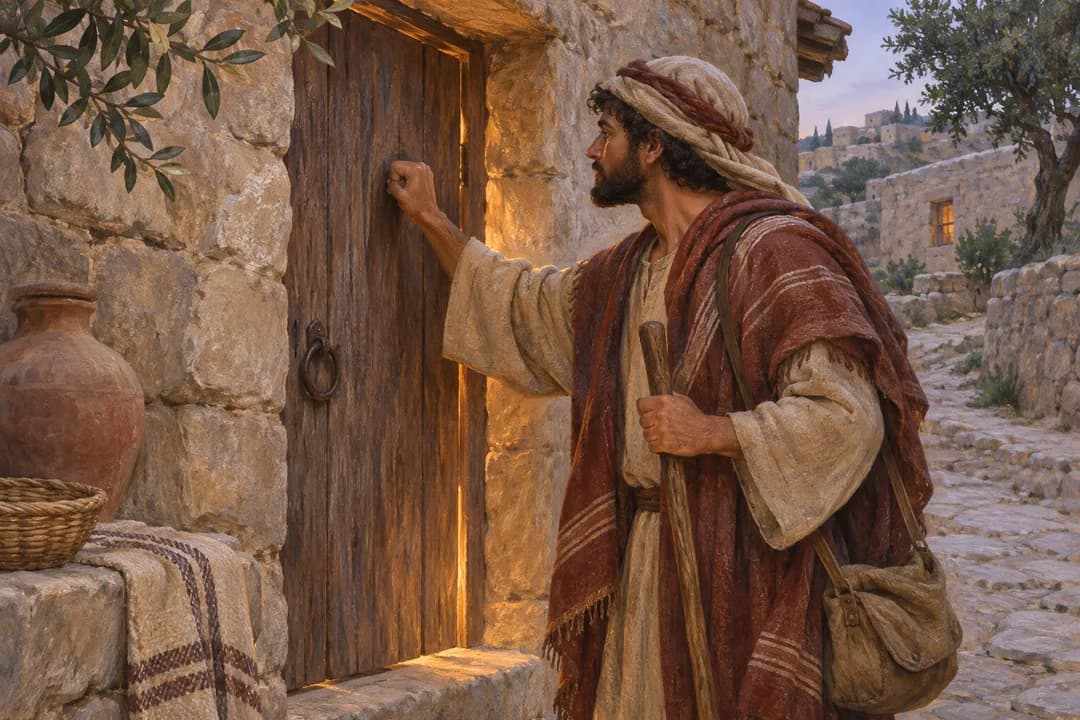
Verses 7–8. Why ask, seek, and knock?
The three verbs picture a person approaching with a real need. Asking makes a request, seeking looks for what is needed, and knocking seeks an opened door. Jesus repeats the assurance in verse 8, giving the disciple reason to approach with confidence.
The passage belongs within a sermon that has already taught the disciples to pray to their Father. The invitation therefore rests in a relationship. The hearer is encouraged to bring a need to someone whose character Jesus will explain in the next illustration.
Verses 9–10. What do bread, a stone, a fish, and a serpent show?
Jesus asks his hearers to imagine a child asking a parent for food. A stone would frustrate the request for bread, and a serpent would endanger the child who asked for fish. The ordinary expectation is that a parent will respond with something good.
The examples make the promise concrete. Jesus places the disciple’s asking beside a child’s need for nourishment. The illustration directs attention to the giver and to the kind of response consistent with the giver’s care.
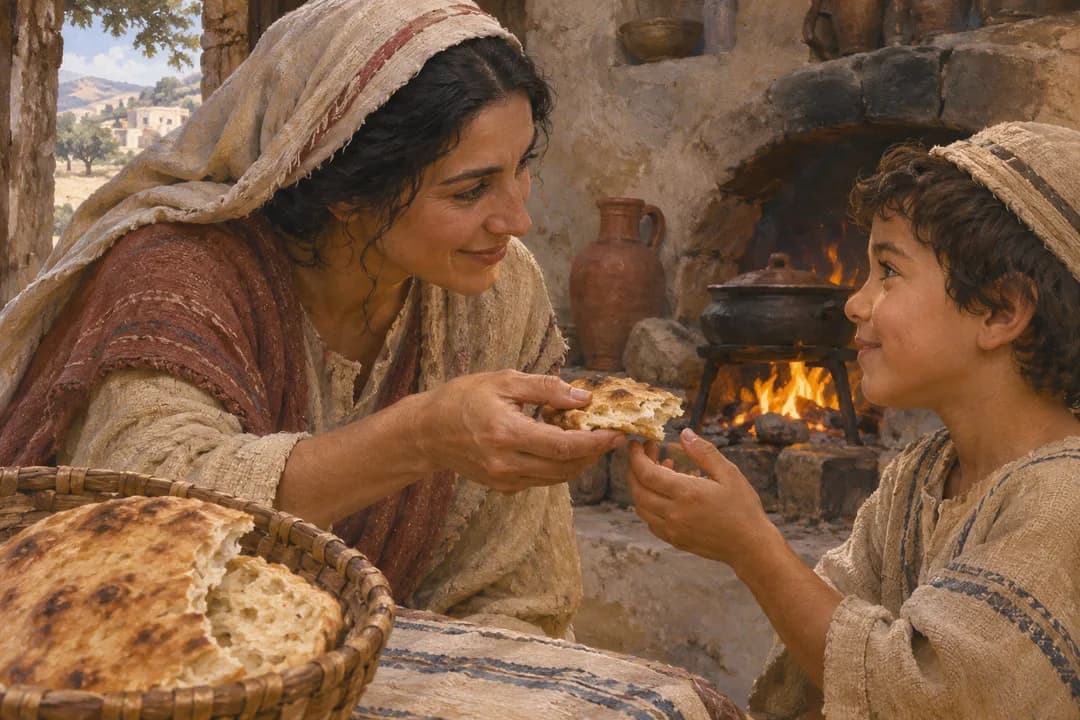
Verse 11. What are the Father’s good gifts?
Jesus reasons from imperfect human parents to the heavenly Father. If people with moral failings can give good gifts to their children, the Father can be trusted all the more. The conclusion specifies that he gives good things to those who ask him.
That phrase keeps the giver’s wisdom within the promise. A person’s immediate request and their lasting good may require patient understanding. The surrounding sermon’s prayer for God’s will helps readers approach with both honesty about need and trust in the Father’s judgment.
How can you pray with this passage?
Name a request clearly, then read the parent-and-child illustration again. Ask what it tells you about the character of the Father you are addressing. You may also need to pray for patience, for help to recognize provision, or for courage to receive a response you did not expect.
The passage encourages approach. Let that shape one honest prayer today, bringing your need into the relationship Jesus describes. As the next verse turns toward doing good to others, consider how a received gift could also meet a neighbor’s need.