
Matthew 7:24–27 · KJV
What Does Matthew 7:24–27 Mean?
Matthew 7:24–27 means that hearing Jesus’ teaching must lead to doing it. Jesus compares obedient hearing to building on rock and unresponsive hearing to building on sand. Both houses face a storm, but their foundations determine what happens. The picture closes the Sermon on the Mount with a call to act on what has been heard.
Therefore whosoever heareth these sayings of mine, and doeth them, I will liken him unto a wise man, which built his house upon a rock:
Matthew 7:24, KJV, excerpt
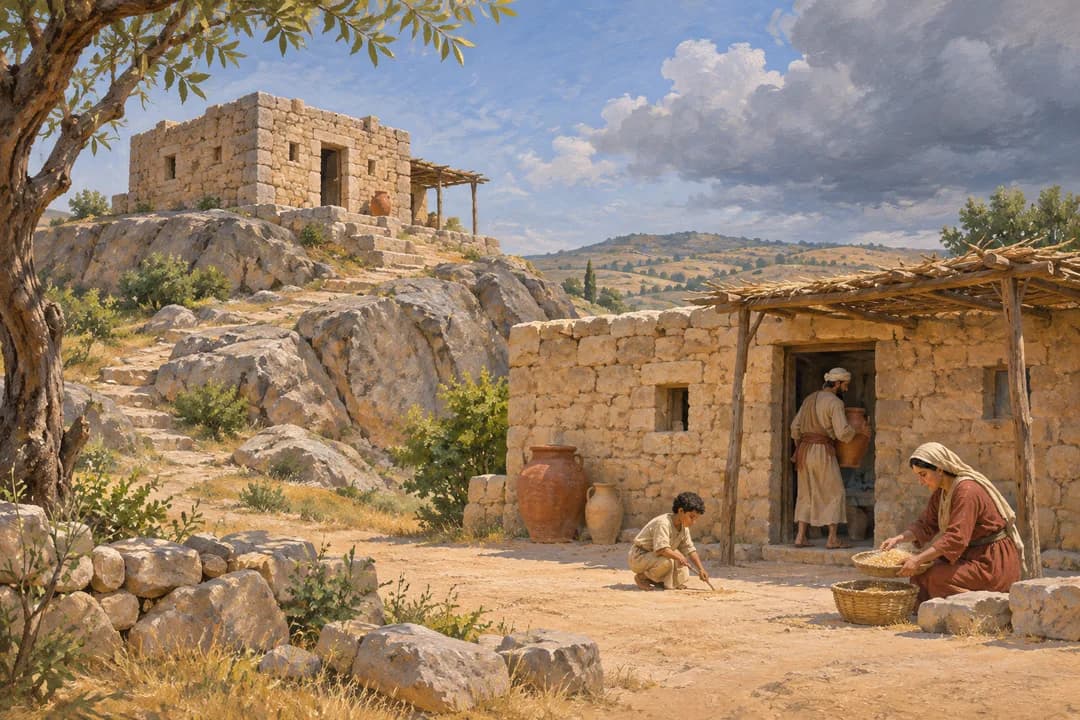
Why does Jesus end the sermon with two builders?
The opening word “therefore” links the picture to the teaching that has preceded it. Jesus has spoken about righteousness, prayer, possessions, relationships, and the Father’s will. The conclusion asks how the hearer will respond to those sayings.
The story uses an everyday task to make that response visible. Each builder wants a house and completes a structure. Their choice about the foundation reveals something that the finished appearance alone may hide.
Verses 24–25. What does building on rock mean?
Jesus identifies the wise builder as the person who hears his words and does them. The rock represents the stable foundation supplied by receiving his teaching in obedient practice. When rain, floodwater, and wind strike the house, it remains standing.
The storm reaches this house too. The picture therefore gives the obedient hearer grounds for endurance amid testing. Its security comes from the foundation already laid. The sermon’s conclusion directs the reader back toward the choices through which hearing becomes action.

Verses 26–27. Why does the house on sand fall?
The foolish builder also hears the sayings. The difference lies in the lack of corresponding action. When the storm arrives, the unsupported structure falls, and Jesus emphasizes the greatness of the fall.
The paired scenes make familiarity with the words an urgent responsibility. A reader may recognize the sermon, admire it, or repeat it while leaving a daily habit untouched. Jesus invites that reader to consider what such a life is being built upon.
What would laying a foundation look like today?
Choose one teaching from the sermon and identify the response it calls for. You might begin a reconciliation, bring a concealed resentment into prayer, or change how a financial decision reflects your priorities. Keep the step specific enough to know whether you have taken it.
Then read the two houses again. Ask how doing that saying could shape a stable pattern over time. The conclusion is addressed to a hearer who has received the teaching and now has an opportunity to build with it.