
Matthew 11:28–30 · KJV
What Does Matthew 11:28–30 Mean?
Matthew 11:28–30 invites weary people to come to Jesus, receive rest, and learn from him. Taking his yoke means accepting his teaching and direction. Jesus describes himself as meek and lowly in heart, giving the burdened a reason to approach him. The passage joins relief with the ongoing work of being his disciple.
Come unto me, all ye that labour and are heavy laden, and I will give you rest.
Matthew 11:28, KJV
Where this invitation fits
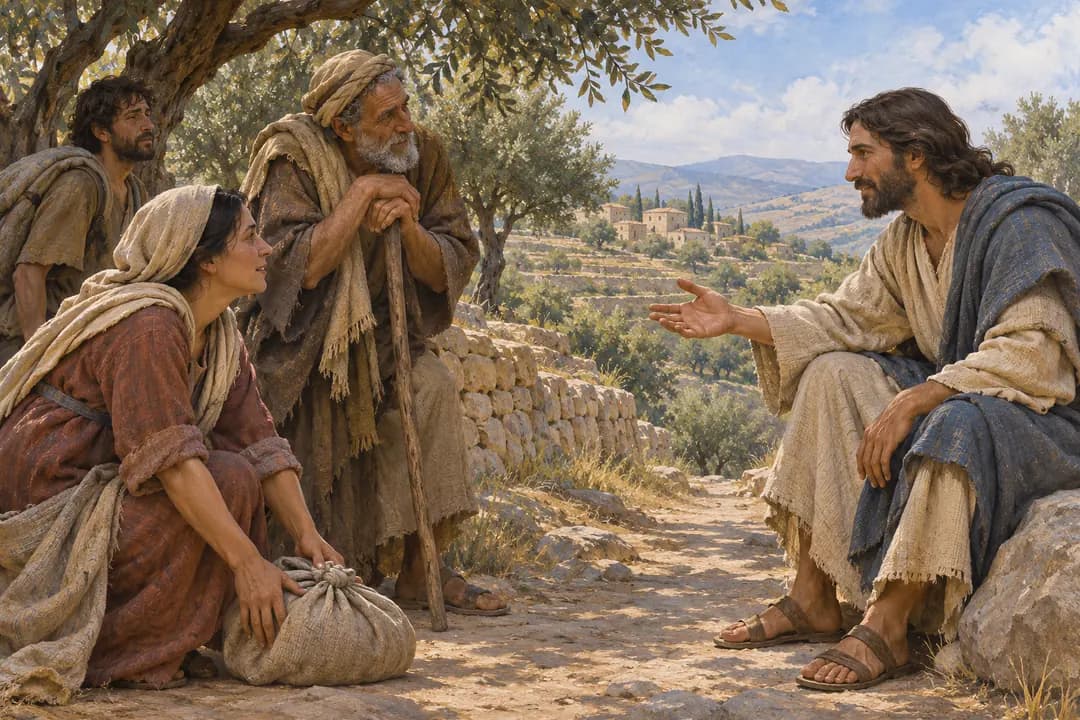
Just before these verses, Jesus thanks the Father for revealing what the self-assured can miss. He then speaks about the close knowledge shared by Father and Son and his own role in making the Father known (Matthew 11:25–27). That setting gives “come unto me” its force. The invitation comes from the one who has just spoken about revealing God.
Matthew's next chapter turns to disputes about Sabbath observance. Questions of work, rest, mercy, and authority remain close to this invitation. Read the three verses together to see how the person offering rest also describes the life into which he calls people.
Verse 28. Who is invited to rest?
Jesus addresses those who labour and are heavy laden. The picture is of people worn down by work and loaded with weight. It is an open invitation to bring that weariness to him. He names himself as the one who gives rest.
Verse 29 specifies “rest unto your souls,” so the promise reaches into a person's inner life. Physical rest matters, and the passage also speaks to the burden of trying to live before God. The invitation asks a tired person to begin by coming to Jesus, with room to admit how heavy life feels.
Verse 29. What does taking Jesus' yoke mean?
A yoke is a wooden implement used to direct animals at work. Here the image sits beside “learn of me.” That connection helps explain the request. Taking Jesus' yoke means accepting his teaching and learning to live under his direction.
The description of the teacher matters as much as the image. In the KJV, “meek” and “lowly in heart” describe his gentleness and humility. The weary can approach a teacher who tells them this about himself. Learning may involve correction and change, while his character gives them a reason to trust him through it.
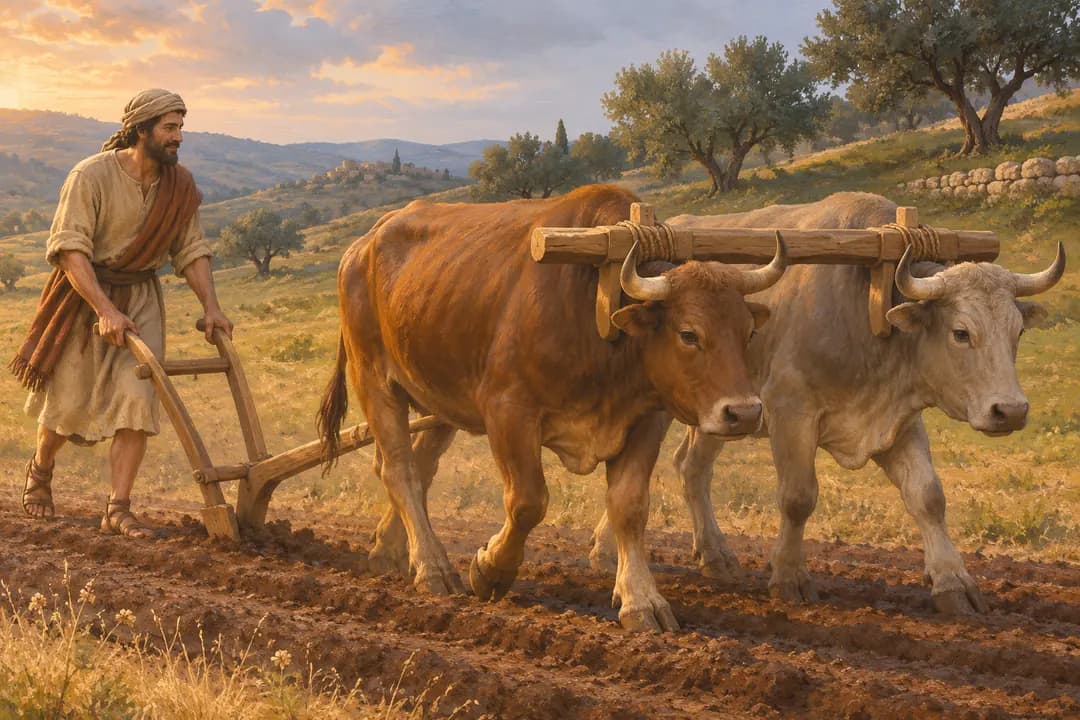
Verse 30. Why are his yoke easy and his burden light?
Verse 30 explains the invitation by returning to the yoke and burden. Read alongside verse 29, it points to the kind of direction Jesus gives and the character with which he gives it. His followers learn from someone gentle and humble.
Matthew also records Jesus calling disciples to take up their cross (Matthew 16:24). Following him can include sacrifice and hard choices. The promised rest can therefore accompany a demanding life. These verses offer a way to carry that life with trust in Jesus, and they leave the timing of relief from particular circumstances open.
Bringing one burden to Jesus today
Name one thing that has been weighing on you. Then ask what you can learn from Jesus in the middle of it. That may involve telling the truth, accepting help, showing mercy, or setting aside a demand that has become more important than love.
Jesus, I bring you this burden. Help me receive your gentleness and learn your way of living. Give me the courage to take the next faithful step. Amen.
Related passages
- Jeremiah 6:16 connects walking in a good way with finding rest for the soul.
- Matthew 12:1–14 follows this invitation with questions about Sabbath rest and mercy.