
Matthew 5:3–12 · KJV
What Does Matthew 5:3–12 Mean?
Matthew 5:3–12 announces God's blessing on people marked by need, mercy, integrity, peacemaking and faithfulness under persecution. These opening sayings of the Sermon on the Mount join present belonging to God's kingdom with promises of future comfort and fullness. They give Jesus' disciples a picture of the life he calls blessed.
Blessed are the poor in spirit: for theirs is the kingdom of heaven.
Matthew 5:3, KJV, excerpt
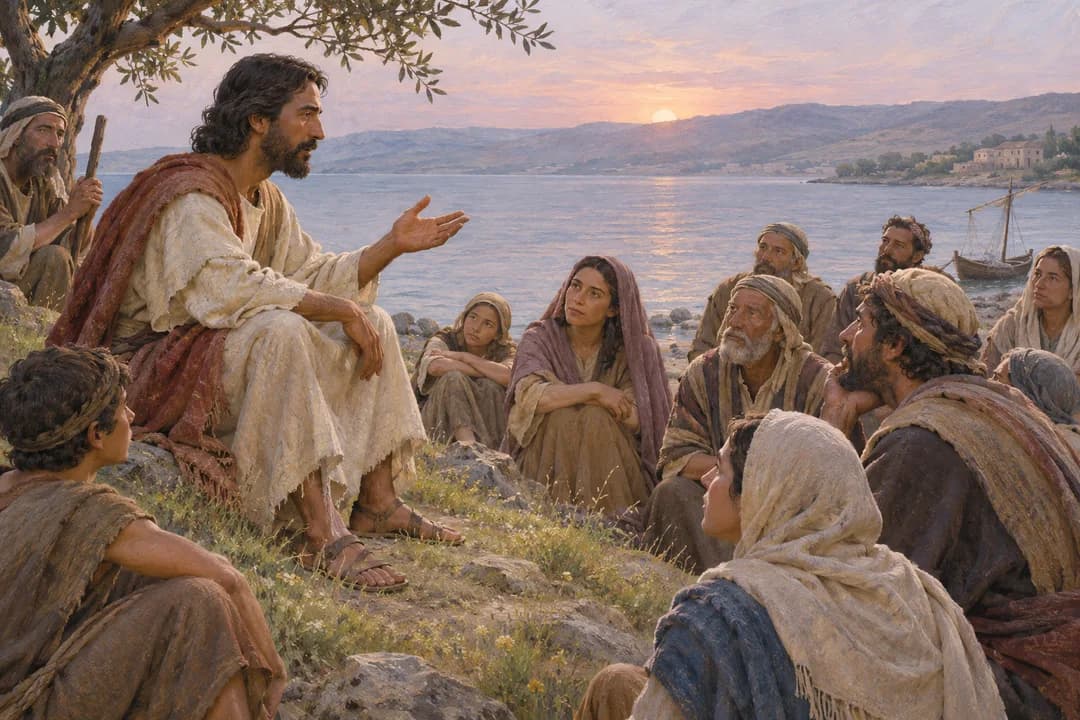
Why the sermon begins with blessing
Matthew 5:1–2 places Jesus with his disciples as he begins to teach, with crowds around the scene. The sayings that follow announce blessing and give a reason for it. Their promises often look ahead, while the kingdom belongs to the people named at the opening and closing of the group.
That pattern holds present difficulty and future hope together. The sayings describe the people Jesus calls blessed and the future God gives them. The rest of the sermon develops the life of this kingdom through concrete teaching.
The story of Jesus teaching about blessing, salt and light follows Matthew 5:1–16 from the opening teaching scene through the blessings and into the next images.
Verses 3–6. Need, sorrow, gentleness and hunger
Verse 3 blesses the poor in spirit and gives them the kingdom of heaven. Verse 4 speaks of mourning and promised comfort. The opening sayings bring need and grief into the company of those receiving God's promise.
Verse 5 names the meek and the inheritance of the earth. Verse 6 names hunger and thirst for righteousness and promises satisfaction. These images give longing a direction toward the good God intends. They invite readers to recognize dependence, grief, gentleness and desire for what is right within the life of discipleship.
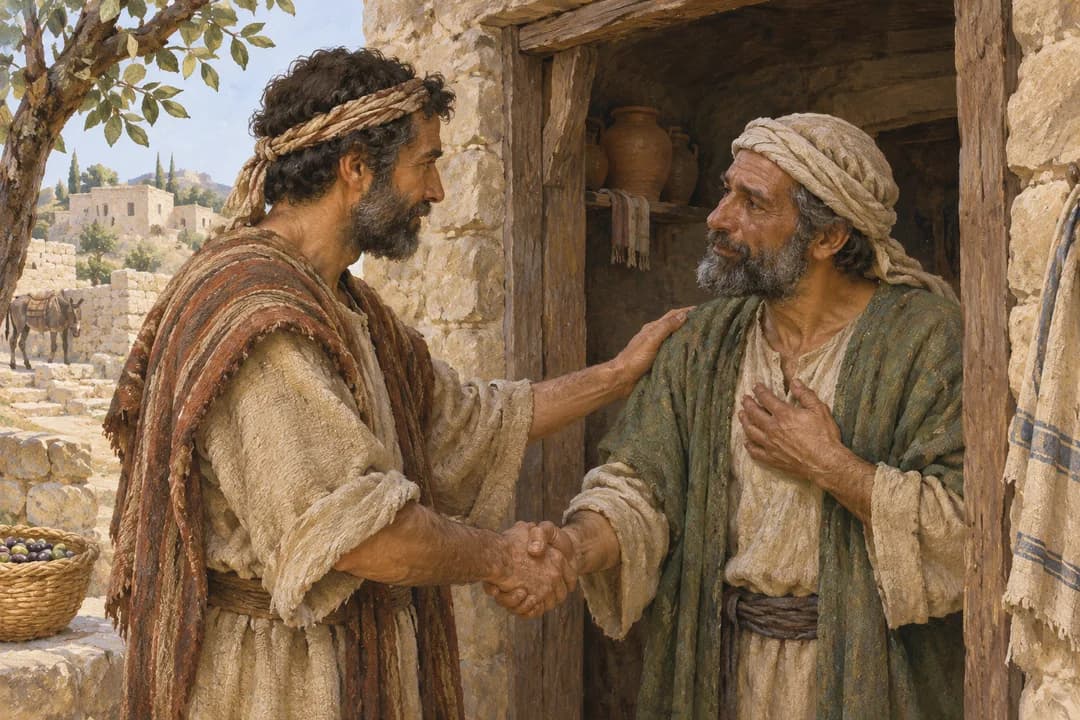
Verses 7–9. Mercy, purity and peacemaking
Verse 7 joins showing mercy with receiving mercy. Verse 8 links purity of heart with seeing God. Verse 9 calls peacemakers children of God. The sayings turn attention toward a life whose inner integrity and treatment of others reflect God's character.
Peacemaking names an active task, while mercy asks how another person's need is met. Purity of heart reaches the motives behind what is visible. These qualities belong together in the portrait Jesus gives, shaping the relationships of the community that hears him.
Verses 10–12. Faithfulness when it brings opposition
Verse 10 promises the kingdom to those persecuted for righteousness. Verses 11–12 speak directly to disciples who are insulted, persecuted and falsely accused for Jesus' sake. The reason for their suffering is part of the saying.
Jesus places them alongside the prophets and points toward a heavenly reward. The promise gives faithfulness a horizon beyond present hostility. It also keeps the reader attentive to the distinction between suffering for righteousness and facing consequences for a wrong one has actually done.
Reading the sayings as one portrait
Choose one saying and read the promise attached to it. Ask what receiving that promise might make possible in a present relationship. A response may take the form of admitting need, showing mercy or working patiently toward peace.
The following salt-and-light passage asks how this community becomes visible in the world. Reading the two sections together lets the character described in the blessings lead into the public witness of good works.