
Psalm 46 · KJV
What Does Psalm 46 Mean?
Psalm 46 is a song of confidence in God's presence amid a world shaken by natural upheaval and war. It moves from roaring waters to the city of God and then to nations whose weapons God breaks. Its repeated refrain gives the singers their reason for courage, the God of Jacob is with them.
To the chief Musician for the sons of Korah, A Song upon Alamoth. God is our refuge and strength, a very present help in trouble.
Psalm 46:1, KJV, excerpt
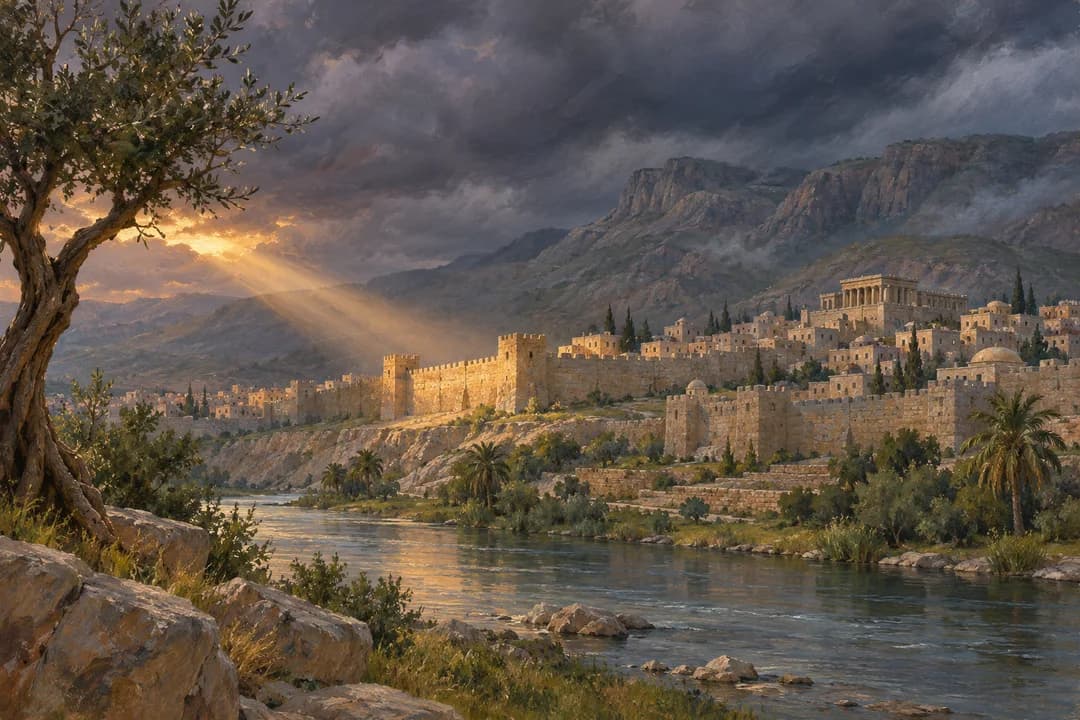
Verses 1–3. Refuge when the earth seems to give way
Verse 1 names God as refuge, strength and present help in trouble. Verses 2–3 immediately imagine mountains moving into the sea, waters roaring and the world shaking. The poem makes the scale of the threat large enough to include the things that usually seem most stable.
The confidence is spoken while those images remain in view. God is called a refuge in trouble, and the singers say they will not fear because of who he is. The opening gives readers a pattern for praying about upheaval without having to minimize what frightens them.
Verses 4–7. A city held by God’s presence
Verse 4 introduces a river whose streams bring gladness to God's city. Verse 5 gives the reason the city is secure, God is in her midst and helps her. The quiet river scene follows the roaring water of the opening.
Verse 6 brings nations and kingdoms into the disturbance. God's voice is set beside their rage and the earth's shaking. Verse 7 then gives the refrain, the LORD of hosts is with the singers and the God of Jacob is their refuge. The poem locates its confidence in that presence amid conflict.
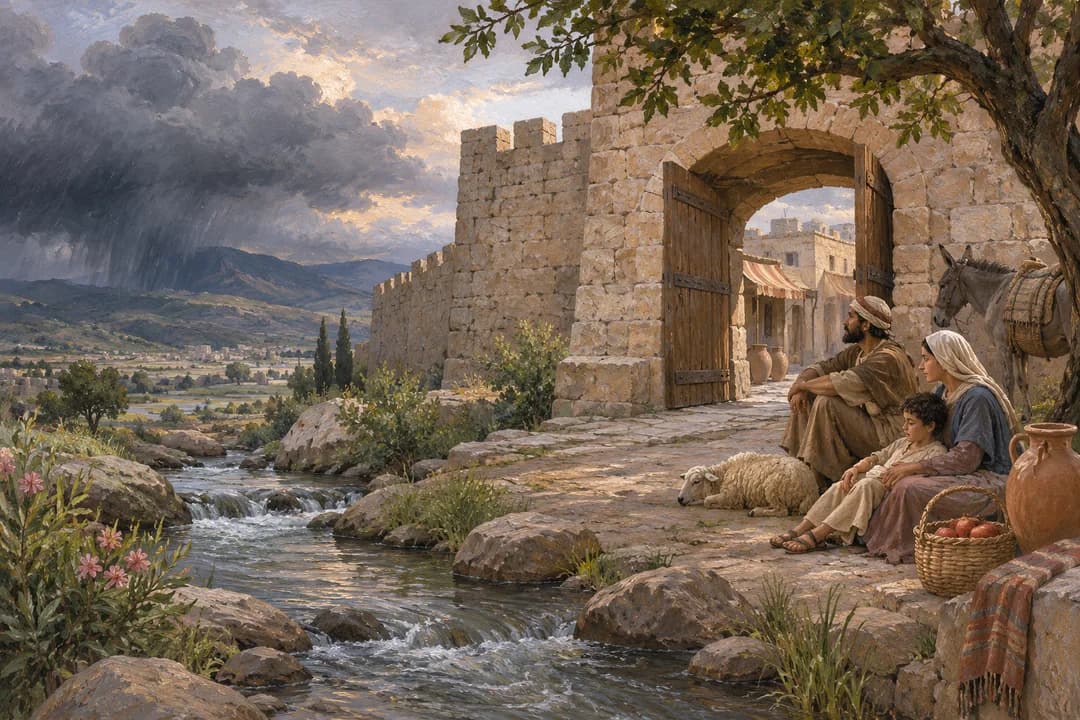
Verses 8–11. Weapons broken and God exalted
Verses 8–9 invite hearers to behold God's works, particularly his ending of wars and destruction of weapons. Verse 10 then speaks the command to be still and know that he is God, followed by the promise of his exaltation among the nations and throughout the earth.
Verse 11 repeats the refrain. The public reach of God's rule returns to the singers' personal confession of refuge. The detailed Psalm 46:10 page concentrates on the command in that setting. The whole psalm shows how the command follows earth, city and nations before resting again in God's presence.
How to read the three scenes together
Read the psalm slowly and pause at its scene changes. Name what seems unstable in the first section, what gives the city joy in the second and what God does to weapons in the third. Then read the refrain aloud.
A prayer can grow from those observations. God, you are our refuge in trouble. Help us face what is shaking, receive the good your presence brings and seek peace in the part of the conflict before us.