
Psalm 1 · KJV
What Does Psalm 1 Mean?
Psalm 1 describes two ways of life and where they lead. A person who welcomes God's instruction is pictured as a tree rooted beside water, growing fruit in its season. The ungodly are compared to chaff carried away by wind. Across all six verses, the question is what forms your choices and whether the path you follow can endure God's judgment.
his delight is in the law of the Lord; and in his law doth he meditate day and night.
Psalm 1:2, KJV, excerpt
Why Psalm 1 opens with two ways
This opening psalm prepares the reader to hear the prayers, laments, and praises that follow in the book. It describes a pattern of living through the familiar images of a path, a tree, and a harvest. Its six verses move from the advice a person accepts to the lasting direction of that person's life.
The word blessed describes a life worthy of being called fortunate. The poem gives that life a source and a direction. The Lord's instruction becomes something the person loves and returns to.
Verses 1–2. What shapes your judgment?
Verse 1 names counsel, a way, and a seat. These images help you notice advice you accept, conduct you join, and a place where you settle. The scornful make a home in contempt. Psalm 1 asks whose voices have earned that kind of influence over you.
Verse 2 gives the person a positive practice. To delight in God's law is to welcome his teaching as good. To meditate is to keep attending to it, returning to its words and considering how to live them. “Day and night” describes an enduring habit. A few words read carefully can stay with you through a conversation, a decision, or a difficult task.
Verse 3. Why a tree beside water?
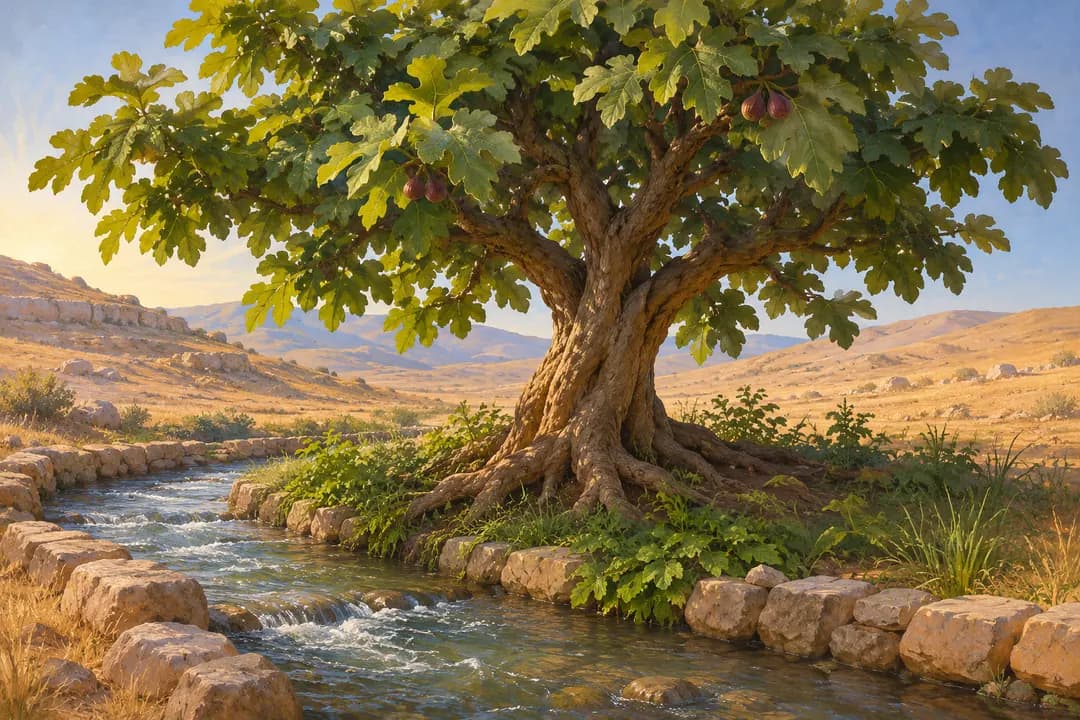
The tree receives a steady supply of water. Its roots hold it in place, its leaves remain alive, and its fruit comes “in his season.” Growth takes time. The picture allows room for patient formation and for fruit that becomes visible gradually.
The line about prospering belongs to this whole picture. It describes a life sustained and made fruitful under God's instruction. The poem gives no timetable for income, recognition, or relief from trouble. Read alongside the laments later in Psalms, its confidence can sustain a person through suffering and unanswered questions.
Verses 4–6. Chaff, judgment, and the known way
Chaff is the light husk separated from grain at harvest. A gust carries it away. After the rooted tree, that image gives the ungodly way a disturbing lack of substance. What seems convincing today may leave a person with nothing that endures.

Verse 5 brings the contrast into judgment and the congregation of the righteous. The choices described earlier have consequences before God. Verse 6 closes with the Lord knowing the way of the righteous. Their path is within his attentive care. The ungodly way reaches its end in perishing, giving the reader a reason to examine the direction of ordinary habits now.
A practice for your next reading
Choose one sentence from this psalm to carry through today. Notice one decision where it challenges familiar advice. At day's end, ask what you acted on and what you need to reconsider.
Lord, teach me to delight in your instruction. Help me hear it patiently and let it shape what I do. Give my life roots that will hold and fruit that serves others. Amen.