
Psalm 121 · KJV
What Does Psalm 121 Mean?
Psalm 121 declares that help comes from the Lord who made heaven and earth and who keeps his people without sleeping. The poem follows a traveler from looking toward the hills to the promise of care over all going out and coming in. It gives the journey a horizon of continuing trust.
I will lift up mine eyes unto the hills, from whence cometh my help.
Psalm 121:1, KJV, excerpt
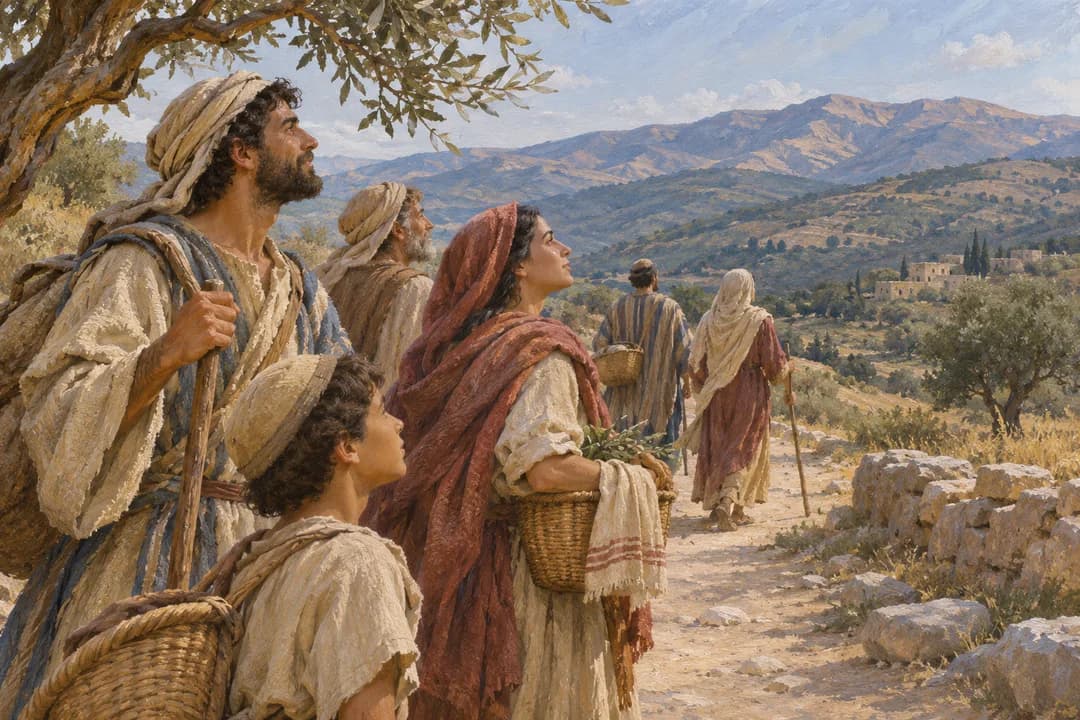
Verses 1–2. Where does help come from?
The heading calls this a Song of degrees, part of the Songs of Ascents. The speaker looks toward the hills and then names the source of help: the Lord, Maker of heaven and earth. The KJV punctuation can make the hills sound like the source. Many translations render the line as a question, answered in verse 2. In either case, the poem explicitly places trust in the Creator whose authority reaches beyond the landscape before the traveler.
Verses 3–4. The keeper who never sleeps
The image moves to a foot that might slip along the way. The repeated assurance is that the keeper does not slumber. Verse 4 widens the view from the individual traveler to Israel. The same care surrounds the people as a whole. A human companion can become tired or lose attention, but the poem pictures God's watchfulness as continuous. This gives its promises their ground as the traveler moves through uncertain terrain.
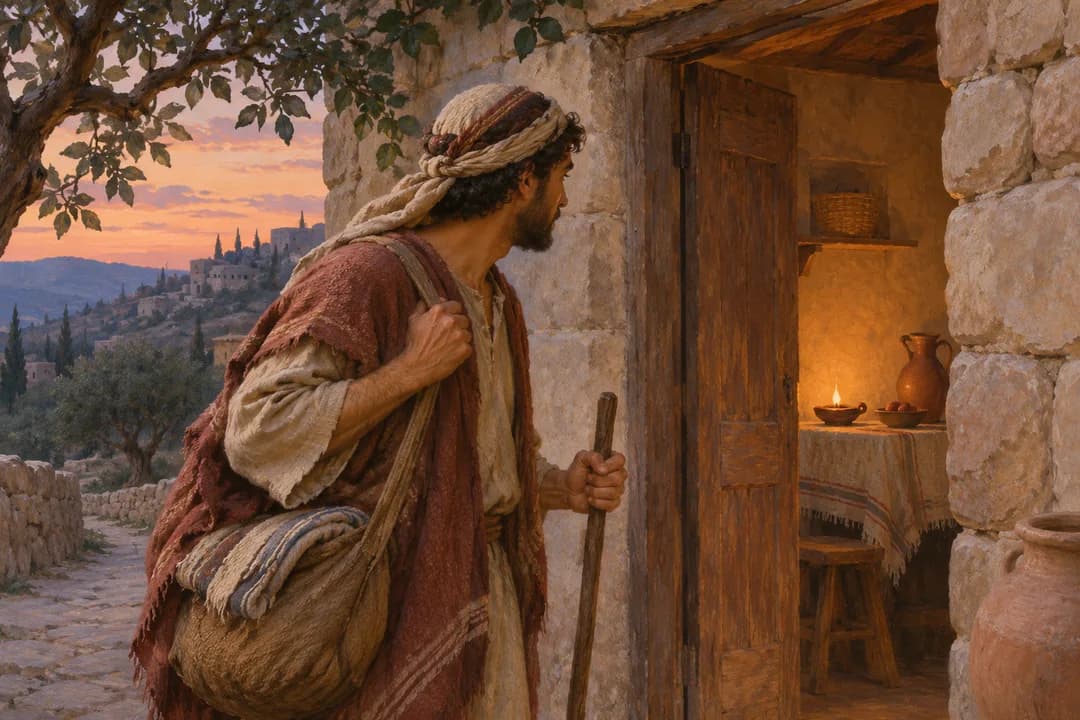
Verses 5–6. Shade beside the traveler
The Lord is the keeper and the shade at the traveler's right hand. The image places protection close at hand in a landscape where heat matters. Sun by day and moon by night bring the whole daily cycle into view. Interpreters discuss the cultural associations behind harm from the moon, but the poem's movement is clear. It encompasses both daylight and darkness within the Lord's care, using the alternating hours of a journey.
Verses 7–8. A promise wider than one trip
The final lines speak of preservation from evil, care for the person's life, and protection over going out and coming in. The time extends from now into the future. These strong assurances invite a life of reliance and should be read alongside biblical prayers that openly face danger and suffering. The psalm's purpose is to place the traveler within God's attentive care. Before a journey or a change in life, use its closing words to pray for wise steps and continuing trust.