
Psalm 23 · KJV
What Does Psalm 23 Mean?
Psalm 23 is a song of trust in God’s care. It begins with God as a shepherd who provides and guides, passes through a valley where danger is real, and ends with God as a host who welcomes the psalmist to a table. The turning point is verse 4. In the valley, the psalmist stops talking about God and speaks directly to him: “thou art with me.”
The LORD is my shepherd; I shall not want.
Psalm 23:1, KJV
Where Psalm 23 fits
The heading identifies it as a psalm of David. The poem does not name a specific moment in David’s life. It speaks in the first person, and its scenes move from pasture to valley to table. The repeated emphasis is on what God does for the speaker: gives rest, leads, restores, stays near and welcomes.
Verses 1–3. A shepherd who provides and guides
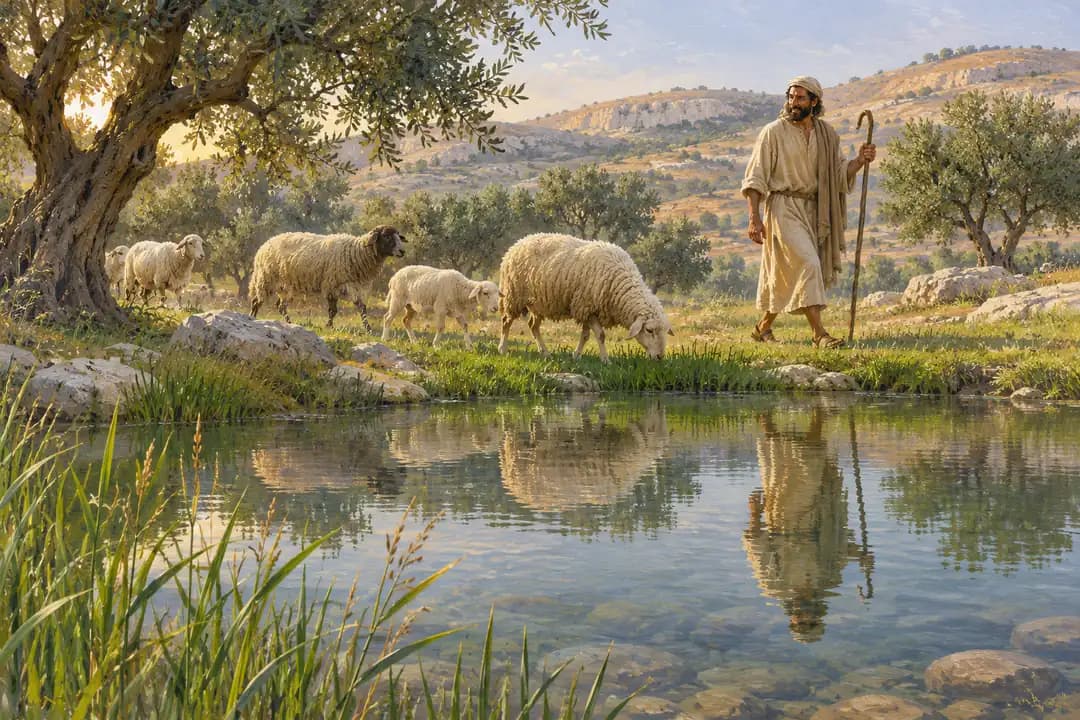
In older English, want here means lack. The opening line is a statement of confidence in the shepherd’s care. Green pastures and still waters show what that care looks like: food, water and a place to rest. When the psalmist describes being restored and led along right paths, the image moves beyond provision. The shepherd also gives direction when the way ahead is unclear.
Verse 4. God is present in the valley
The path runs through danger. The valley stands between the pasture and the table, so the psalm gives it a place within the life of trust. The rod and staff belong to the shepherd’s work of guiding and protecting the flock. They are comforting because of who holds them. The reason the speaker gives for facing the valley is God’s presence, expressed in the direct address “thou art with me.”
Verses 5–6. God makes room at the table
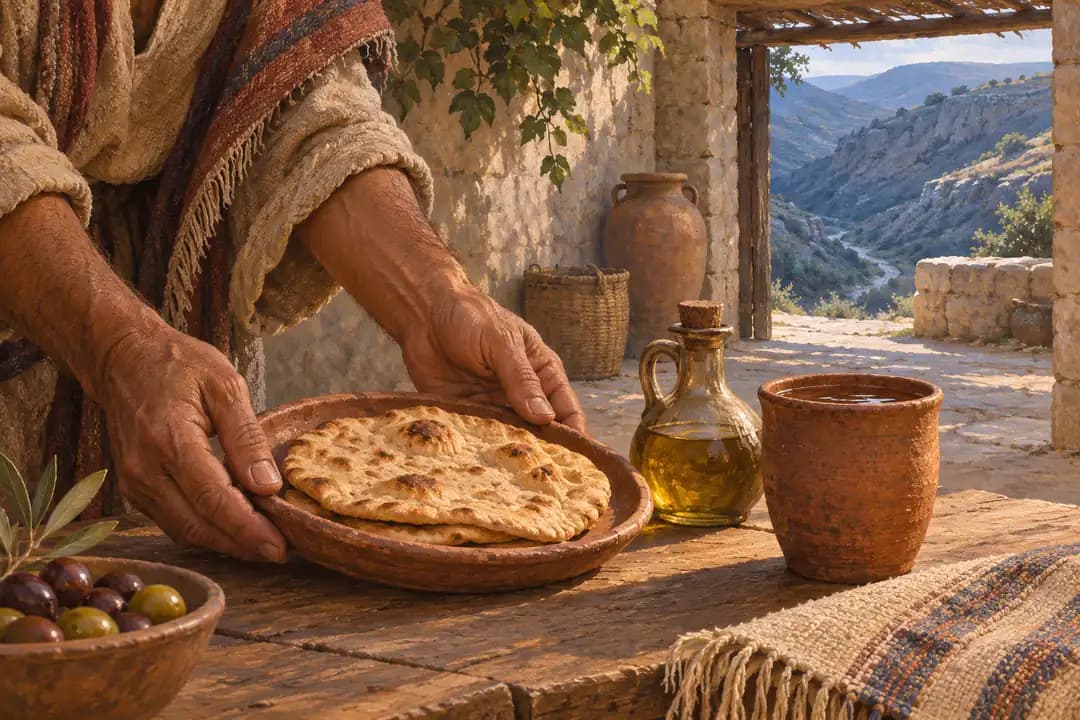
The image changes from shepherd to host. God prepares a table while enemies are still present. Oil and a full cup picture generous hospitality. The final verse extends that confidence beyond a single meal: the psalmist looks ahead to God’s goodness and mercy throughout life and to dwelling in God’s house. In verse 4 the speaker walks through a valley. In verse 6 God’s goodness and mercy follow the speaker. The poem ends with that care still in motion and a place to belong.
Does Psalm 23 promise an easy life?
The valley and enemies are part of the poem. Its assurance is that God’s care continues in those circumstances. Read verse 1 alongside verse 4. The same person who trusts the shepherd to provide also expects to walk through a place of fear. That makes Psalm 23 a prayer for ordinary uncertainty as well as a source of comfort in grief.
A question for your next reading
Read verses 1–4 aloud. Where does the speaker switch from “he” to “thou”? If you were turning that line into a prayer today, what would you ask God to help you face or do next?
Related passages
- Psalm 121 extends the theme of God’s care to the dangers of a journey.
- Ezekiel 34:11–16 develops the shepherd image as God searches for and tends his scattered people.
- John 10:11–18 shows how Jesus uses the shepherd image when describing his relationship with his followers.