For Catholic reading, start with the practice in front of you: Scripture and formation, daily prayer, or deeper reference study. Bible Note is our first study companion when a Catholic reader wants to ask about a passage, keep a question, or revisit an authorized homily. Ascension remains the Catholic Bible-and-formation pick based on its current US iOS publisher listing; Amen fits prayer and daily readings, while Verbum fits a larger study library. Bible Note is not a Catholic-approved Bible edition or lectionary. Check your parish calendar and the exact edition before relying on any app for Mass preparation.
How we evaluated these apps
We used Semrush search data and Catholic app comparisons to identify the decisions readers face, then checked official product information for the options listed. We grouped the tools by purpose: Catholic Bible reading, Mass readings, prayer, study-library access, or follow-up after permitted teaching. The strongest fit depends on the edition, the parish calendar, and the resources available in your account. Check those details with your parish or study leader and in the current app; a publisher description cannot establish local liturgical accuracy or ecclesial approval.
Quick picks
Bible Note: passage questions, notes and permitted homily or class review; use the parish's chosen Bible edition and calendar beside it.
Ascension: Catholic Bible and formation path; confirm the exact edition and local calendar.
Amen: Catholic daily readings and recorded prayers.
Verbum: Catholic commentaries, owned library and reference study.
YouVersion: flexible reading after checking the Catholic edition and plan.
First identify the Catholic task
A Catholic reader may mean four different things by ‘Bible app.’ The first is a Catholic Bible edition for personal reading, including the books and translation the reader expects. The second is the day's Mass readings, which follow a liturgical calendar and may differ by country or local observance. The third is a study library with commentaries, catechetical resources, and owned books. The fourth is prayer, a question about the passage, or homily follow-up. Bible Note can support the question and notes, while the Catholic edition, lectionary and doctrinal judgment come from appropriate Church sources. Start by naming which of these you need this week; a general reader may do the first job for some people and still fail the second.
For a Sunday parish discussion, check the date and readings against the parish bulletin or an official local lectionary source before sharing an app screen. Open the cited passage in the edition your group has agreed to use. If the app includes a reflection, ask which part of the passage supports it. If a homily or class is recorded, obtain permission and keep the recording separate from confidential pastoral conversations. That sequence protects both the text and the people in the room.
Product reviews
Bible Note
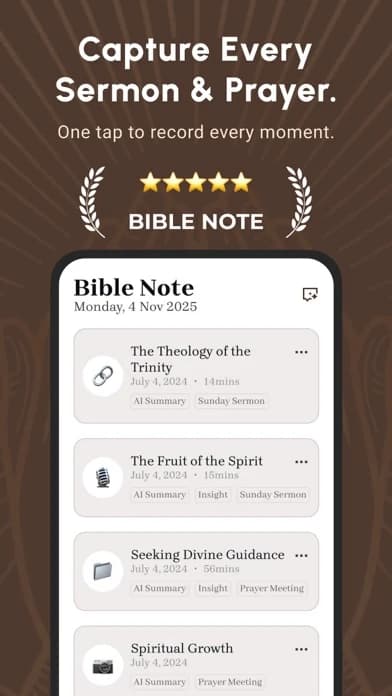
Best for: a Catholic reader who has the parish's chosen text open and wants to hold a passage question or revisit permitted homily or class teaching.
What the evidence supports: Bible Note's first-party study tools accept a reference or scanned printed passage and offer questions, verse notes, highlights and version comparison. Its daily devotional includes Scripture, reflection, prayer and audio; authorized teaching can become timestamped notes, recognized references and later review material. Bible Study Chat describes the question path, and sermon notes covers teaching follow-up. These tools are not a Catholic lectionary, approved commentary or guarantee that a particular Catholic edition is available.
How to use it with a parish text: Open the assigned reading in the edition named by the parish. If a phrase is unclear, enter the reference or scan the printed page and ask a bounded question about the surrounding paragraph. Treat the response as a prompt to examine the text and approved Catholic teaching, not a ruling on doctrine. After a permitted homily, locate the cited passage in the transcript, write your own question and bring it to the priest or study leader if interpretation is disputed. A devotional may support private reflection, but its generated prayer does not replace the day's Mass readings.
Strengths: It can connect a question from today's reading to a saved note and, when permitted, the homily that raised it. This makes it useful during the week even when no recording is made. Flashcards or note-based follow-up may help a reader return to the passage without treating AI output as ecclesial authority.
Limitations and conditions: Bible Note does not establish the Catholic canon of an edition, local feast calendar, resource entitlement, or Church approval. Verify deuterocanonical coverage and the assigned translation in the actual Bible source, and compare Mass readings with the parish bulletin. Recording a homily or group requires permission; keep private pastoral conversations out of uploads. Check the present device and feature access.
Fit verdict: First pick for question-led study and permitted teaching follow-up alongside an appropriate Catholic Bible; choose Ascension or another verified Catholic source for the required edition and readings.
Ascension
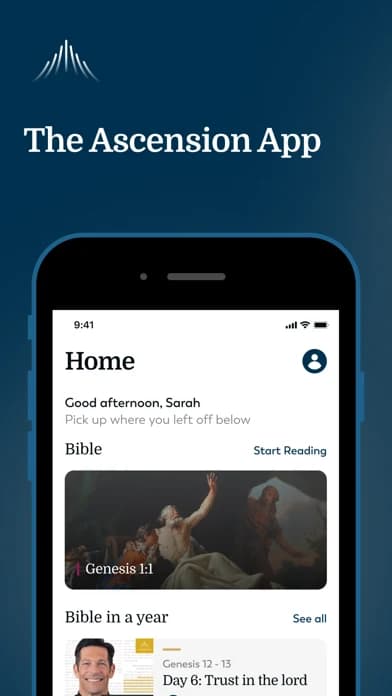
Best for: Catholic reading, prayer, and formation resources.
What the evidence supports: Ascension Publishing Group’s current US iOS listing names the Great Adventure Catholic Bible, Bible Timeline learning system, rosary recordings, and Catholic formation resources. Its own “#1” claim is marketing language, not an independent ranking.
Strengths: Ascension’s current US iOS listing brings its Catholic Bible, rosary recordings, and Bible Timeline learning path into one app. That makes it the closest fit when the next session is tied to a Catholic reading or parish rhythm.
Limitations and conditions: The US iOS listing says Bible/Catechism text, daily Mass readings, and Rosary are available without charge, while all programs include optional subscription access. It does not certify a local liturgical calendar or Android parity; verify the edition and date with your parish.
Fit verdict: Category pick for Catholic Bible reading and formation, supported by the current publisher listing; verify the precise edition, calendar, and access tier.
Amen
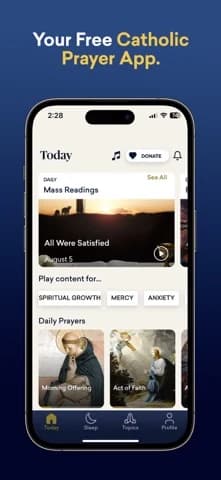
Best for: Catholic Bible and prayer listening.
What the evidence supports: The current US iOS listing from Augustine Institute describes Catholic daily readings, Mass recordings, Scripture passages, rosary, and recorded prayers.
Strengths: The official US iOS capture identifies a Catholic Bible and prayers product, making it a plausible fit for readers who want Scripture and prayer in one Catholic-branded place. The capture does not establish every feature.
Limitations and conditions: The screenshot proves a listing capture, not every feature, free tier, or Android parity. Verify current details.
Fit verdict: Choose it when the Catholic Bible-and-prayer combination matches the session; verify current content, free tier, and platform parity.
Verbum
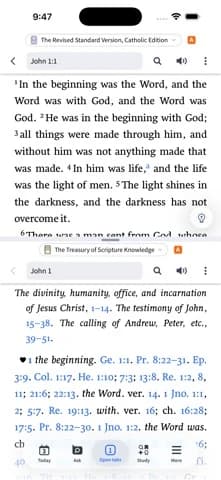
Best for: a deeper Catholic study library.
What the evidence supports: The current US iOS Verbum listing describes Bible and Catholic commentaries side by side, saved books for offline study, notes, reading plans, Catechism access, and Church Fathers resources.
Strengths: A deeper library is useful when the question requires commentaries, notes, editions, or research tools alongside the biblical text. It suits study preparation more than a quick daily reading habit.
Limitations and conditions: Library depth depends on the account and owned or accessible resources. The current US iOS listing requires iOS 18.6 or later; check device support and resource licenses before treating it as a study-library replacement.
Fit verdict: Category pick for reference-heavy Catholic study; inspect the exact library and resource licenses before committing.
YouVersion
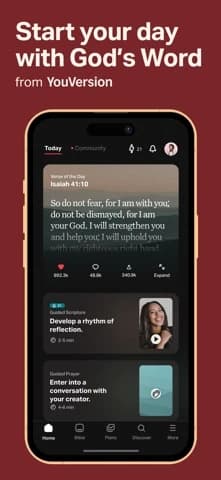
Best for: a broad reading plan, listening, highlights, bookmarks, and notes.
What the evidence supports: Life.Church’s current US iOS listing describes reading plans, audio Bibles, notes, highlights, bookmarks, and downloads of selected Bible versions.
Strengths: A general reader can provide a simple passage, audio, plan, and notes workflow, but the Catholic fit depends on the exact translation and plan rather than the app label.
Limitations and conditions: The publisher’s broad version catalogue does not establish that the particular Catholic edition or daily Mass sequence your parish uses is available. Check those on the device before adopting a plan.
Fit verdict: Choose YouVersion for a flexible personal rhythm after confirming the edition and Catholic plan; do not treat it as a complete liturgical resource.
The edition, calendar, and library checks that change the pick
For a passage question and a note to revisit, begin with Bible Note alongside the Catholic edition your parish uses. For the edition itself and formation material, Ascension is the strongest fit in this list based on its current publisher description: the Great Adventure Catholic Bible, Bible Timeline resources, daily Mass readings, and related formation. That is not a claim that every resource is included in every tier or that the app follows every local calendar. Confirm the exact edition and access level on your device. If your main practice is listening to prayers and daily reflections, Amen may be a better first screen. It is a prayer-centered choice, not automatically the best reference Bible.
A catechist or parish study leader may need a different tool. Verbum's publisher describes a Catholic study library, side-by-side Bible and commentary reading, and a lectionary among its resources. Check which books are actually in the signed-in account and whether any required Catechism or commentary volume must be bought or separately licensed. A large catalogue is not the same as an owned library. If a specific resource is absent, Ascension or a physical edition may be more useful for that session. If the task is a quick general reading habit, YouVersion may work after confirming the selected Catholic edition and plan. If it lacks the edition or liturgical sequence the reader needs, that recommendation reverses.
Bible Note also becomes relevant after an authorized homily, class, or parish presentation. It can help revisit a speaker's words and Scripture references, yet its generated notes do not establish Catholic doctrine and it is not a lectionary. Recording permission, confidentiality, and the accuracy of a transcript matter more than convenience. When permission is absent, keep a private passage reference and written question instead.
A parish-use checklist
Before a group adopts an app, open the same date in the parish bulletin and the proposed app. Compare the readings, translation, and any local feast or observance. Confirm whether the app shows the entire passage or only an excerpt, and which edition is being read. Check that every participant can access the required resource without an unexpected subscription or account restriction. For study, open the exact commentary or Catechism section the leader intends to use. These checks are practical; an app listing cannot certify local liturgical accuracy or ecclesial endorsement.
Does a Catholic app need all the deuterocanonical books?
If the app is to be the group's Catholic Bible, the chosen edition should contain the books the group expects to read. A Catholic-themed plan or a generic “Bible” label does not establish the canon of the particular translation selected in the app. This matters when a study assigns a passage from a deuterocanonical book or members bring different editions to the same meeting.
Ask the parish or leader which edition the group will use, then open that edition's table of contents on the actual device. Locate an assigned book and passage before the study begins. An app can still be useful for prayer or study resources if its reader does not meet that need, but the group should know where its common biblical text will come from.
Are daily Mass readings the same as a personal reading plan?
No. A personal plan can lead you through a book or theme at your own pace. Daily Mass readings belong to a liturgical schedule, and the readings for a local feast or observance may differ from what a general app displays. The distinction matters when someone prepares to read aloud or lead a parish discussion on a particular date.
Ascension and Amen describe daily Catholic readings, but their listings cannot settle your parish's calendar. For parish use, compare the app's date and readings with the parish bulletin or another approved local source. If they differ, use the parish sequence for the meeting; keep the personal plan for private reading. A plan and a lectionary can serve the same person without doing the same job.
Is Verbum's library included when I install it?
Do not assume every resource in the catalogue arrives with the installation. Verbum's listing describes a starter set alongside account-linked and owned books. For a study leader, the question is whether the exact resource needed for the next session opens in the signed-in account.
Check the items the session will actually use:
Bible edition: open the assigned passage in the edition the group expects.
Study resource: open the particular commentary or Catechism section the leader plans to discuss.
Account access: if a book appears in the catalogue but will not open, find out whether another account or purchase is required before assigning it.
If the needed item is unavailable, provide that reading another way or adjust the lesson. A large library is valuable when its relevant books are accessible; its size alone cannot carry a session.
Summary: Match the edition and Catholic task
Use Bible Note first for a question or permitted teaching note that you will take back to the parish's chosen text; Bible Study Chat shows the study route. For the Catholic Bible edition, local Mass readings, prayer or a licensed study library, choose the resource that actually supplies that task, with Ascension, Amen and Verbum serving different needs. Keep the Church's calendar and the people using the resource in view.
Editorial status
Written and edited by Hans Keller for Bible Note. Sources, Scripture context, dates, and practical limitations are checked before publication.

About the author
Hans Keller
Editorial & Content Lead
Bible Study & Sermon Learning Content Editor
Hans helps Christians turn sermons and Scripture study into clear notes, thoughtful questions, and faithful next steps.
His work helps listeners and group leaders carry a sermon or study beyond the meeting: back to the passage, into clearer questions, and toward one practical response for the week.
Read with Scripture open
Use this guide alongside the full biblical passage and the practices of your local church. Interpretive details can differ across Christian traditions.
See more Bible Note on Google
Add Bible Note as a preferred source to help find our Bible study guides more easily in Google Search.