
Read the story
Context
Revelation records a series of visions given to John. By the closing chapters, those visions have passed through rebellion, suffering, and God’s judgment. Now a final question comes into view: What will God’s completed work look like when the old order has ended?
John is shown the answer through images rooted in the Bible’s whole story: creation, a wedding, a holy city, the people of Israel, the apostles, and the tree of life first seen in Eden. Throughout Revelation, Jesus is called the Lamb, a title that joins his sacrifice to his victory. With these images in view, John watches God’s promised future unfold.
Story
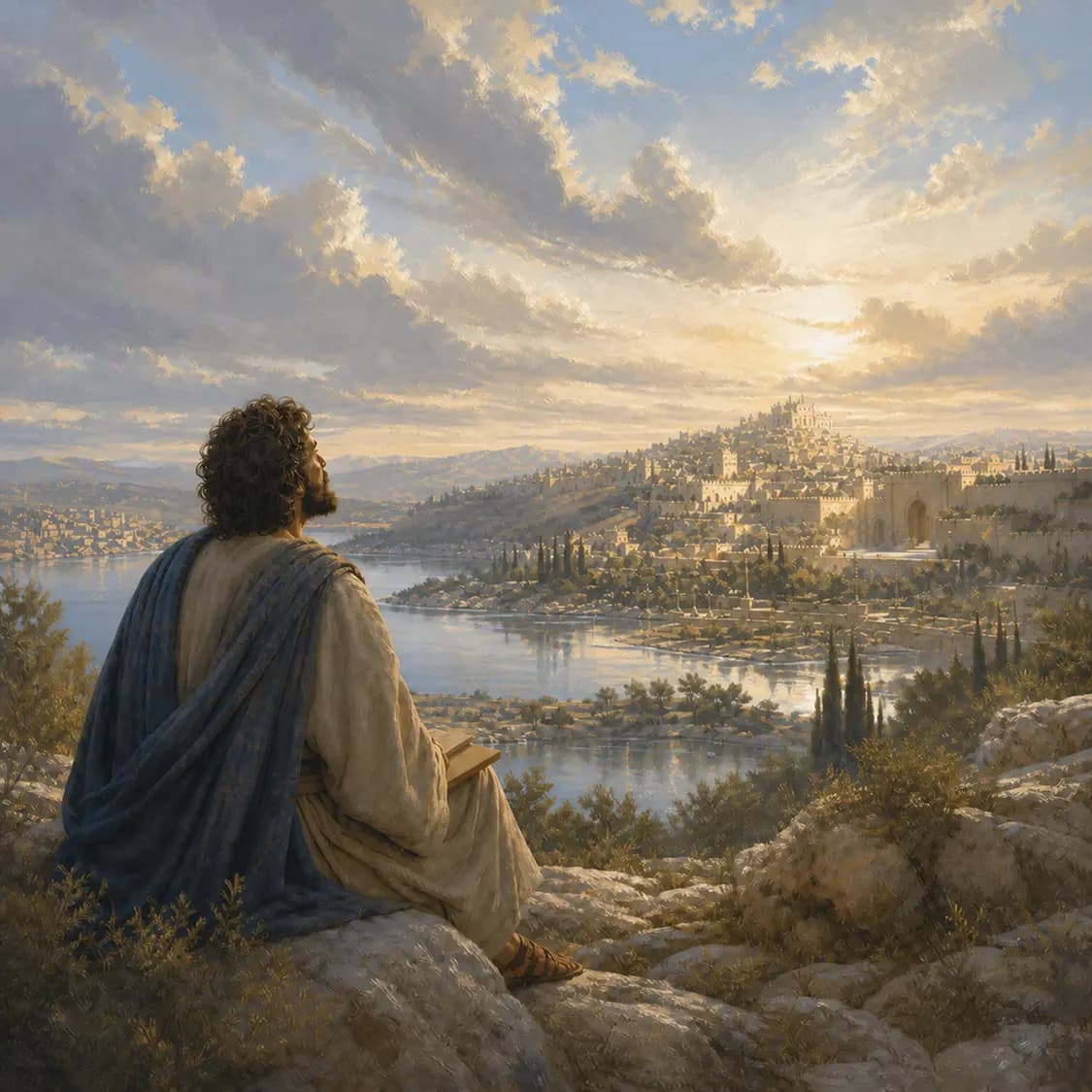
John saw a new heaven and a new earth. The former heaven and earth had passed away, and the sea was no more. Then the holy city, New Jerusalem, came down out of heaven from God. It was ready like a bride beautifully dressed for her husband.
A loud voice announced that God’s dwelling was now with humanity. They would be his people, and God himself would be with them as their God. He would wipe every tear from their eyes. Death would be no more. Grief, crying, and pain would be gone because the former order had passed away.
The one seated on the throne spoke:
“I am making everything new.”
He told John to write this down because these words were trustworthy and true. He declared that it was done. God is the beginning and the end, and he promised to give the water of life freely to anyone who thirsts. Those who overcome would inherit these things. God would be their God, and they would belong to him as his children.
Alongside the promise stood a solemn warning. The cowardly and unbelieving, those who practice what is detestable, murderers, the sexually immoral, those involved in occult practices, idolaters, and liars faced the lake of fire, which John called the second death.
One of the angels who had carried the bowls of the final plagues came to John and offered to show him the bride, the wife of the Lamb. In the Spirit, the angel carried John to a great, high mountain. There he saw the holy city descending from God, shining with God’s glory. Its brilliance was like a precious stone, clear as crystal.
The city had a great wall with twelve gates. Three gates faced each direction, and an angel stood at every gate. The names of Israel’s twelve tribes were written on them. The wall rested on twelve foundations bearing the names of the Lamb’s twelve apostles.
The angel measured the city with a golden rod. It was laid out as a square, with its length, width, and height equal. Its scale was immense. The wall looked like jasper, while the city itself was pure gold, clear as glass. Every foundation was decorated with precious stones in a wide range of colors. Each gate was made from a single pearl, and the city’s street was pure gold, transparent like glass.
Yet John saw no temple there. The Lord God Almighty and the Lamb were its temple. The city did not need the sun or moon to shine on it, because God’s glory filled it with light, and the Lamb was its lamp.
The nations walked by that light, and the kings of the earth brought their glory into the city. Its gates were never closed, and there was no night. The honor of the nations was brought inside, but nothing unclean, detestable, or false could enter. The city belonged to those whose names were written in the Lamb’s book of life.
Then the angel showed John the river of the water of life. It was clear as crystal and flowed from the throne of God and the Lamb. The tree of life stood along the river, reaching to both sides. It produced twelve crops of fruit, yielding fresh fruit every month, and its leaves were for the healing of the nations.
The curse was gone. The throne of God and the Lamb was there, and God’s servants worshiped and served him. They saw his face and bore his name on their foreheads. Night was no more. They needed neither lamps nor sunlight, because the Lord God gave them light.
And they would reign forever and ever.
What We Learned
- God’s promised future is a work of renewal: heaven and earth are made new, and the holy city comes from him.
- The city’s greatest gift is God’s presence. He lives with his people, wipes away their tears, and becomes their temple and light.
- The tribes named on the gates, the apostles named on the foundations, and the nations walking in the light show God gathering a people across the whole biblical story.
- Hope does not erase moral seriousness. Murder, idolatry, sexual immorality, occult practices, and falsehood have no place in God’s holy city.
- Life flows freely from God’s throne. The curse is gone, the nations receive healing, and God’s servants see his face and reign forever.
Story background
A New Heaven and a New Earth is read in Revelation 21:1-27, Revelation 22:1-5. In a vision, John sees a new heaven and new earth and the New Jerusalem coming down from God like a bride. The account also draws attention to new creation and God's presence. Its named people, setting, and sequence matter, while details not stated in the passage should remain open rather than being supplied from later retellings. Read the scene in its surrounding movement: notice what prompts the action, how the central figures respond, and what the final words leave with the hearer. This background keeps the story close to its explicit claims while making room for careful reflection on new creation, God's presence, and the other themes named here. The passage can be revisited slowly, with its questions and tensions intact.
People in the story
- John — Receives and records the vision of renewal and the holy city
- God, the one on the throne — Makes all things new and dwells with his people
- The Lamb — Is the city's temple and lamp; the city's people are those whose names are written in the Lamb's book of life
- Angel — Shows John the bride-city and the river of the water of life
- God's servants and the nations — Belong within the city's renewed life, worship God, and receive light and healing
Themes to notice
New creation
The passage brings new creation into focus through its named people, actions, and ending.
God's presence
The passage brings God's presence into focus through its named people, actions, and ending.
The Lamb's glory
The passage brings the Lamb's glory into focus through its named people, actions, and ending.
Healing and holiness
The passage brings healing and holiness into focus through its named people, actions, and ending.
Questions for reflection
- What stands out to you about new creation in this passage?
- How do the people in the story respond to God's presence?
- Which detail would you want to read again in its wider context?
- What question does this account leave you carrying?
Related stories
Carry the story with you
Save your reflections on a new heaven and a new earth and revisit them as you continue through Scripture.