
Read the story
Context
Jerusalem’s temple stood at the center of Israel’s public worship. People came there to pray and honor God. The chief priests held responsibility for temple worship, and the scribes were respected teachers of Scripture. What happened within the temple therefore carried great spiritual weight.
At stake was a basic question: What belonged in a place set apart for God? The scene would bring that question into the open.
Story
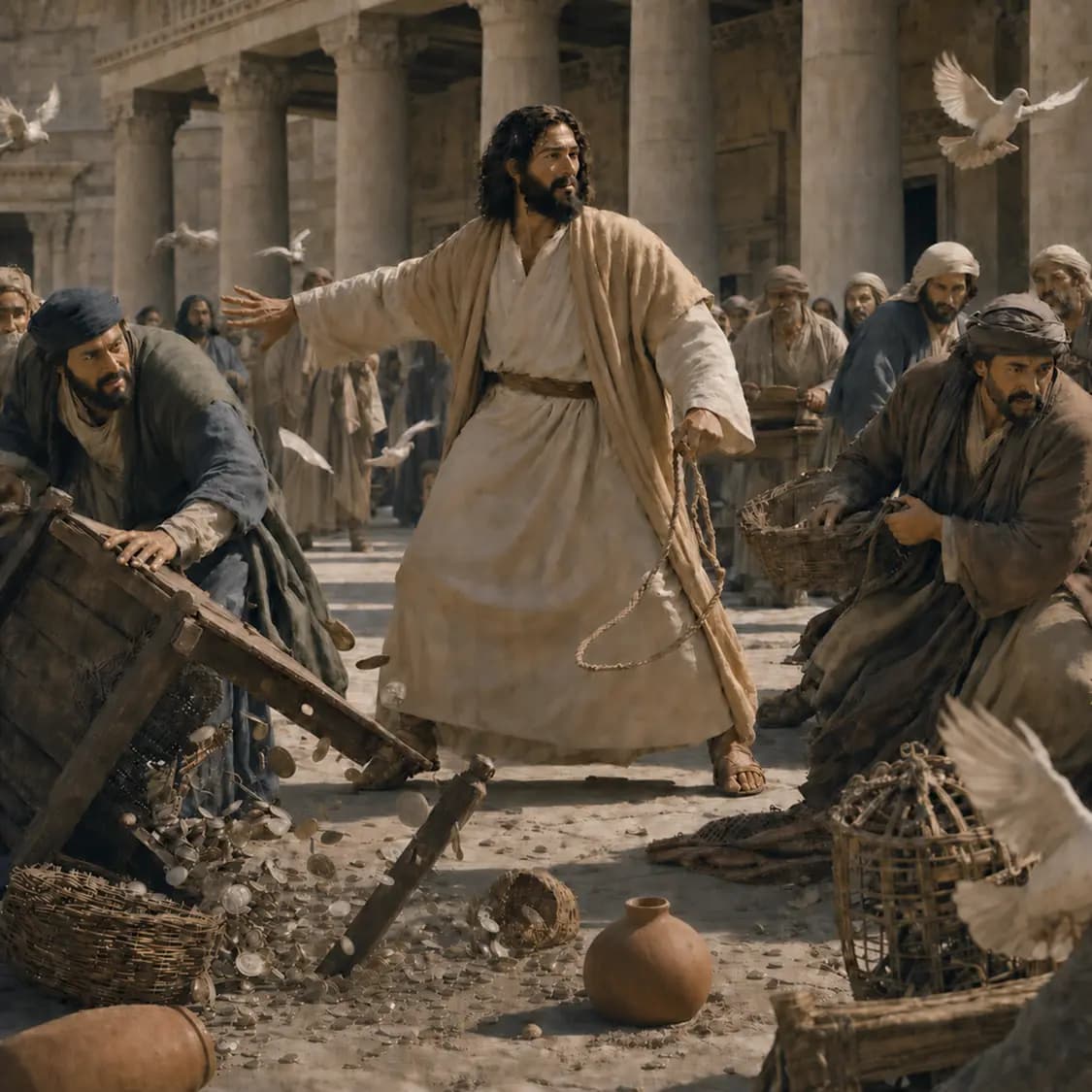
When Jesus entered the temple, people were buying and selling within its courts. He drove out everyone taking part in the trade. He overturned the tables of the money changers and the seats of those selling doves.
Jesus then explained his action by drawing on Scripture:
“My house will be called a house of prayer, but you are making it a den of robbers.”
His words exposed a profound corruption. A place meant for prayer had become what he called a refuge for robbers.
Then people who were blind or unable to walk came to Jesus in the temple, and he healed them. In the same place where he had confronted wrongdoing, those in need approached him and received mercy.
The chief priests and the teachers of the law saw the remarkable things Jesus was doing. They also heard children calling out in the temple:
“Hosanna to the Son of David!”
The children were openly honoring Jesus with a royal title connected to Israel’s hope. But the religious leaders were indignant. They asked Jesus whether he heard what the children were saying.
Jesus answered that he did. He did not silence the children. Instead, he reminded the leaders that Scripture itself speaks of praise coming from the mouths of children and infants.
After this exchange, Jesus left them. He went out of Jerusalem to Bethany and stayed there for the night.
What We Learned
- Jesus treated worship seriously. A place meant for prayer must not be used to shelter corruption.
- His authority appeared in both confrontation and compassion: he drove out what dishonored God’s house and healed those who came in need.
- Seeing remarkable works does not guarantee a faithful response. The children praised Jesus, while the religious leaders became indignant.
- Jesus affirmed that the praise of children matters in God’s purposes; age and status do not determine whose worship is worthy.
Story background
Jesus Cleanses the Temple is read in Matthew 21:12-17. Jesus enters the temple courts and drives out those buying and selling. The account also draws attention to worship and prayer. Its named people, setting, and sequence matter, while details not stated in the passage should remain open rather than being supplied from later retellings. Read the scene in its surrounding movement: notice what prompts the action, how the central figures respond, and what the final words leave with the hearer. This background keeps the story close to its explicit claims while making room for careful reflection on worship, prayer, and the other themes named here. The passage can be revisited slowly, with its questions and tensions intact.
People in the story
- Jesus — Confronts trade in the temple, heals people there, and affirms children’s praise
- Buyers, sellers, money changers, and dove sellers — People whose activity Jesus drives from the temple courts
- Blind and lame people — Come to Jesus in the temple and are healed
- Children — Praise Jesus as Son of David
- Chief priests and teachers of the law — Object to the remarkable acts and children’s praise
Themes to notice
Worship
The passage brings worship into focus through its named people, actions, and ending.
Prayer
The passage brings prayer into focus through its named people, actions, and ending.
Justice
The passage brings justice into focus through its named people, actions, and ending.
Jesus’ authority
The passage brings Jesus’ authority into focus through its named people, actions, and ending.
Questions for reflection
- What stands out to you about worship in this passage?
- How do the people in the story respond to prayer?
- Which detail would you want to read again in its wider context?
- What question does this account leave you carrying?
Related stories
Carry the story with you
Save your reflections on jesus cleanses the temple and revisit them as you continue through Scripture.