
John 4:23–24 · KJV
What Does John 4:23–24 Mean?
John 4:23–24 means that the Father seeks worshipers whose worship is in spirit and in truth. Jesus gives this answer when a Samaritan woman asks about the right place to worship. His coming changes how the question of access to God is understood, with the Father himself at the center.
But the hour cometh, and now is, when the true worshippers shall worship the Father in spirit and in truth: for the Father seeketh such to worship him.
John 4:23, KJV, excerpt
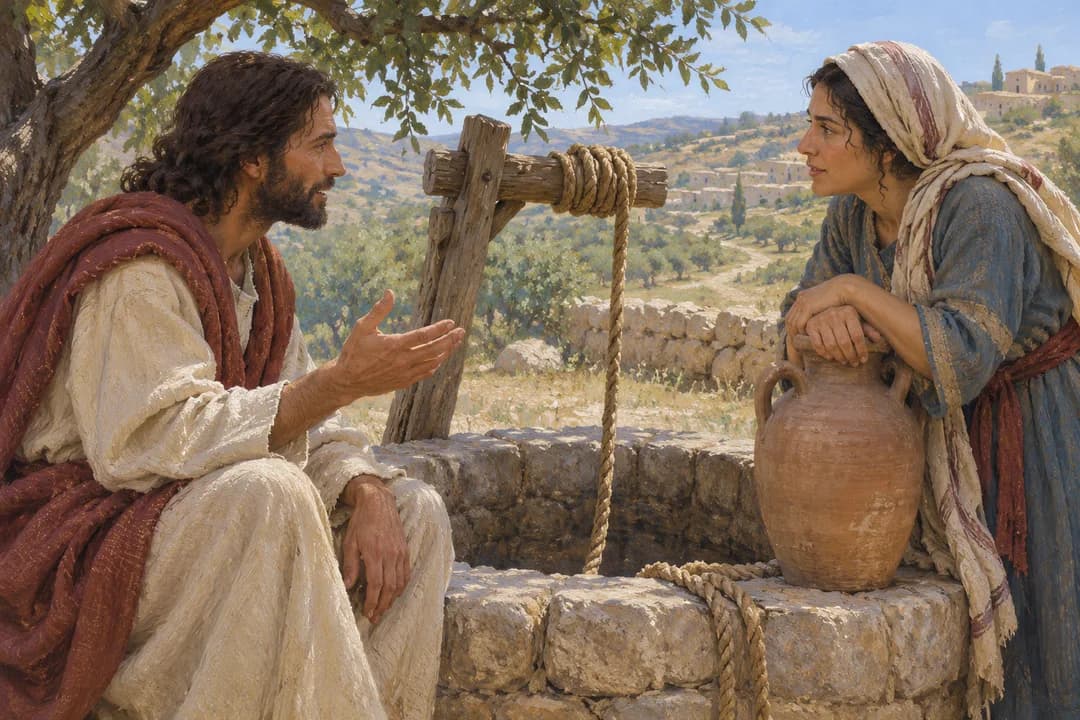
Why is the woman asking about worship?
In John 4:1–42, the Samaritan woman’s conversation with Jesus takes place at Jacob’s well. After recognizing him as a prophet, she asks about the rival worship claims associated with her ancestors’ mountain and Jerusalem.
Jesus replies that an hour is coming when worship will be tied to neither location in the same way. He also affirms the Jewish setting of salvation in verse 22. His answer takes her question seriously while announcing a new situation through his own coming.
Verse 23. What changes when the hour comes?
Jesus says that the hour is coming and already is. The true worshipers will worship the Father in spirit and in truth, and the Father seeks such people. The description places the character of worship and its relationship to God at the center.
John repeatedly associates the decisive hour with Jesus’ work. Here the announcement is already taking shape in a conversation that crosses a deep social and religious divide. The woman will soon hear Jesus identify himself as the Messiah.

Verse 24. What does “God is a Spirit” explain?
Jesus grounds the manner of worship in who God is. God’s presence and worth cannot be confined to the competing sacred locations in the woman’s question. Worship must correspond to his nature.
Christians differ in how closely they connect the word spirit here with the work of the Holy Spirit or with the inward life of the worshiper. Both approaches need to account for the whole phrase and for Jesus’ revelation of the Father. The passage calls for worship grounded in God’s reality and truth.
How do spirit and truth shape worship today?
In John, truth belongs closely to the revelation brought by Jesus. Worship involves responding to God as he is made known, with the worshiper’s life engaged. Sincerity and truthful knowledge of the Father belong together.
Before worshiping, read the conversation through verse 26. Ask whom you are addressing and what Jesus reveals about him. Then bring a truthful prayer, including what you have been hiding or avoiding. The Father who seeks worshipers is the one to whom the response is directed.