
John 1:1–5 · KJV
What Does John 1:1–5 Mean?
John 1:1–5 introduces the Word as already present with God at the beginning and involved in the making of everything. Life belongs to him and shines as light in human darkness. The opening prepares for verse 14, where John says that the Word became flesh.
In the beginning was the Word, and the Word was with God, and the Word was God.
John 1:1, KJV, excerpt

Verses 1–2. Who is the Word?
John begins with “In the beginning,” language that recalls Genesis 1. The Word is already there. Verse 1 says both that the Word was with God and that the Word was God. Verse 2 repeats his presence with God at the beginning.
These statements establish the identity of the one whose story the Gospel will tell. The later declaration that the Word was made flesh in verse 14 connects this opening to Jesus. Christians have drawn on the relationship and divine identity expressed here in explaining the Trinity. The immediate task is to follow what John's sentences affirm about the Word.
Verse 3. The Word and everything made
Verse 3 says that all things were made through him and repeats the point from the other direction. Nothing that was made came into being apart from him. The scope includes the whole created world.
The repetition places the Word on the creator's side of the account. John will later describe him coming into a world made through him, a world that does not recognize him (1:10). That tension begins here, where the Word's relation to every created thing is made explicit.
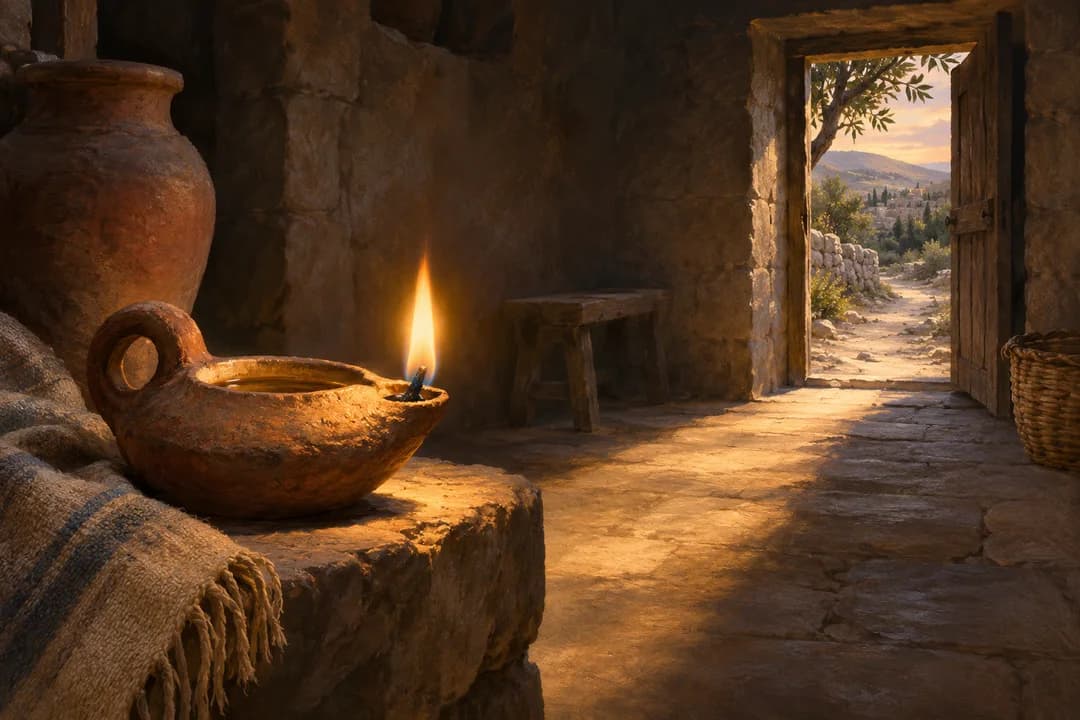
Verses 4–5. Life and light in darkness
Verse 4 joins life and light. The life in the Word is light for human beings. Verse 5 pictures that light shining in darkness. The imagery will develop as people encounter Jesus and respond to him throughout the Gospel.
The KJV ends verse 5 with “the darkness comprehended it not.” The older wording can raise a question about grasping or overcoming the light. At this point in the text, the firm statement is that light shines while darkness fails in its encounter with it. Later passages develop both the failure to recognize Jesus and the persistence of his light. A lexical argument requires more evidence than the English wording alone.
How the opening leads into the Gospel
The next verses introduce John the Baptist as a witness to the light. John 1 then moves toward receiving the Word, his becoming flesh and the first disciples coming to Jesus. The opening five verses supply the identity behind those encounters.
Read verses 1–5 once more and list each claim made about the Word. Then read verse 14. Notice how the one associated with the beginning is described dwelling among people. The whole John 1 study follows that movement across the chapter. Here the question is how creation, life and light prepare the reader to meet Jesus.