
John 3:16 · KJV
What Does John 3:16 Mean?
John 3:16 explains God's love through a gift. God gives his Son so that people who believe in him may have everlasting life. The verse connects love, giving, trust, and rescue. Its promise becomes clearer within the conversation about new birth and the image of the Son of Man being lifted up.
For God so loved the world, that he gave his only begotten Son
John 3:16, KJV, excerpt
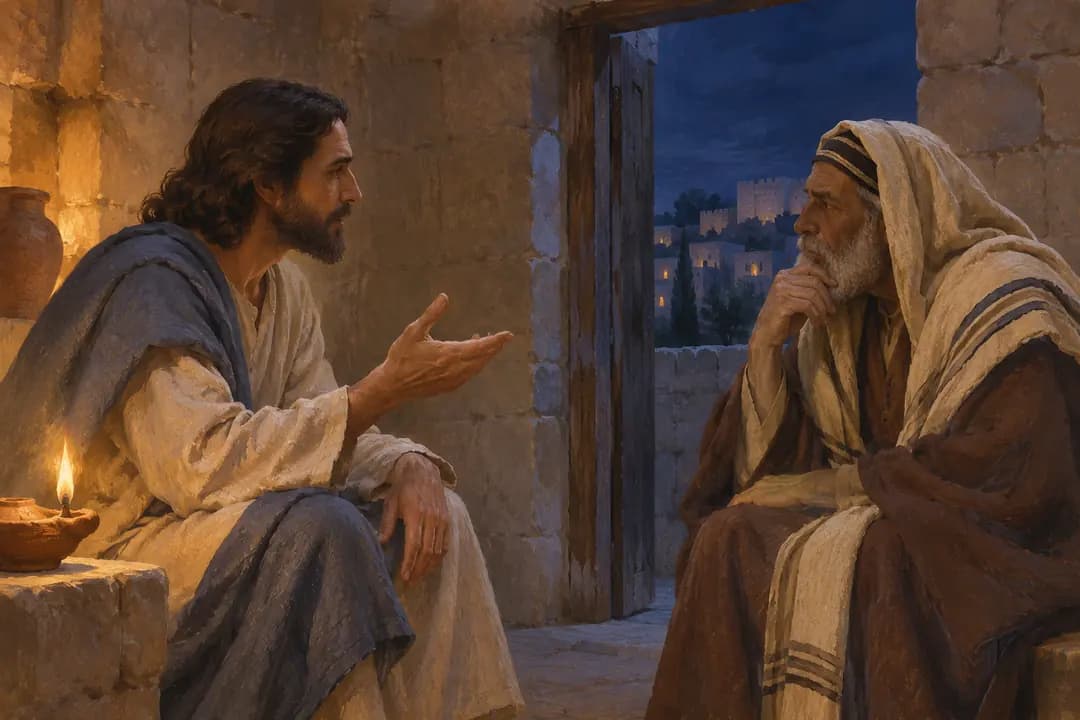
The conversation around John 3:16
In John 3:1–2, a Pharisee named Nicodemus came to Jesus at night. He recognizes signs of God's presence in Jesus' work, but the conversation takes him beyond the question of whether Jesus is a teacher. Jesus speaks about being born again and receiving life from the Spirit.
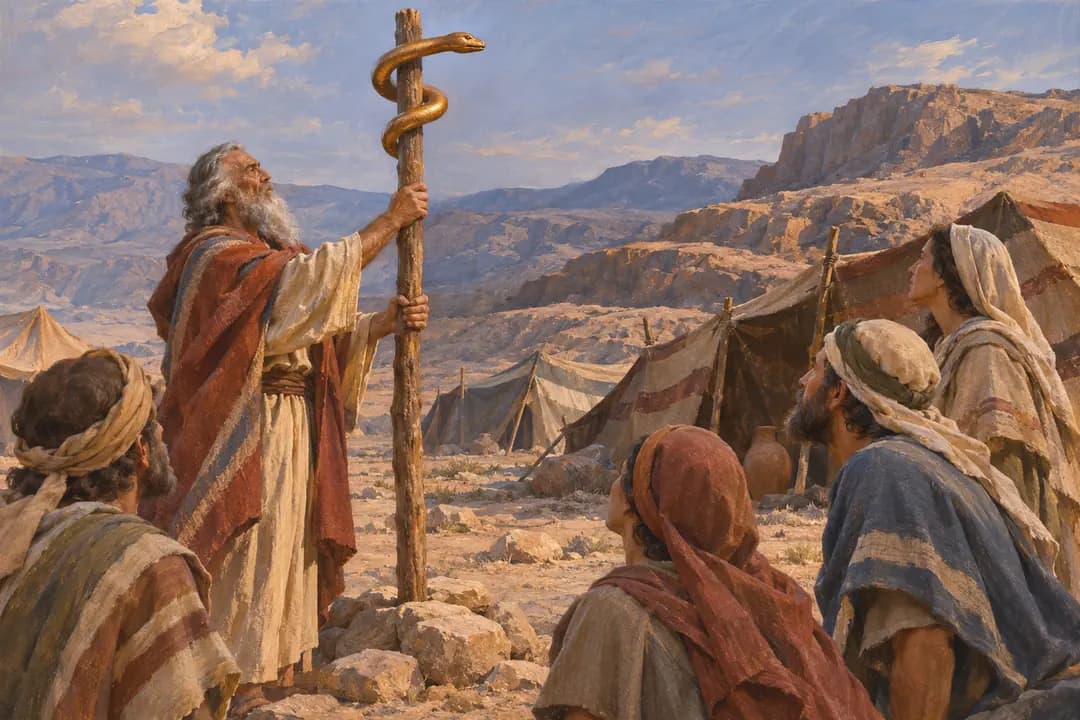
Verses 14–15 then recall Moses lifting up the serpent in the wilderness. Numbers 21:4–9 describes people suffering after rebellion and being given a way to live. John uses that remembered event to introduce the Son of Man being lifted up. In the wider Gospel, Jesus connects being lifted up with his death (John 12:32–33).
What does it mean that God loved the world?
The sentence shows love taking action. The words that follow “so loved” tell us what God did: he gave his Son. Readers are invited to understand God's love by looking at this gift and its purpose.
“The world” gives that purpose a wide human scope. The people who need life include Nicodemus, despite his learning and standing. The following verses also describe people turning toward darkness, making God's love a response to real human need. The movement begins with God giving.
Why does the verse say “only begotten Son”?
The KJV phrase identifies the special relationship between God and his Son. John has already described the Son as making the Father known (John 1:18). The gift is therefore personal and costly. God sends the one through whom the Gospel presents his character and gives life.
Reading verse 16 alongside the lifted-up image also gives “gave” depth. The Gospel's account will carry the Son's mission through suffering and death. John 3:17 names the purpose of his coming as the world's salvation.
Believing, perishing, and everlasting life
“Whosoever believeth in him” directs the response toward the Son. In this context, believing means trusting him and receiving the life he offers. Nicodemus's religious position gives him a reason to ask questions, while the invitation to believe reaches every reader.
The contrast between perishing and everlasting life gives that response weight. Verses 17–18 continue to speak about salvation, belief, and judgment. Later, John 17:3 describes eternal life in terms of knowing the Father and Jesus Christ. Together these passages connect the promised life with a relationship that endures.
A question to carry into prayer
Read the verse slowly and notice its order. God loves, gives, and offers life to those who believe. Where do you most need to receive that gift with trust today?
Father, help me understand your love through the gift of your Son. Teach me to trust him and let that trust shape how I treat the people you love. Amen.
Related passages
- Numbers 21:4–9 supplies the wilderness scene recalled immediately before this verse.
- John 17:3 connects eternal life with knowing God and Jesus Christ.