
John 14:6 · KJV
What Does John 14:6 Mean?
John 14:6 identifies Jesus himself as the way to the Father, the truth and the life. He says it in response to Thomas, whose question follows Jesus' promise to prepare a place for his disciples. The statement directs their troubled attention toward the person they already know and are being asked to trust.
Jesus saith unto him, I am the way, the truth, and the life: no man cometh unto the Father, but by me.
John 14:6, KJV, excerpt
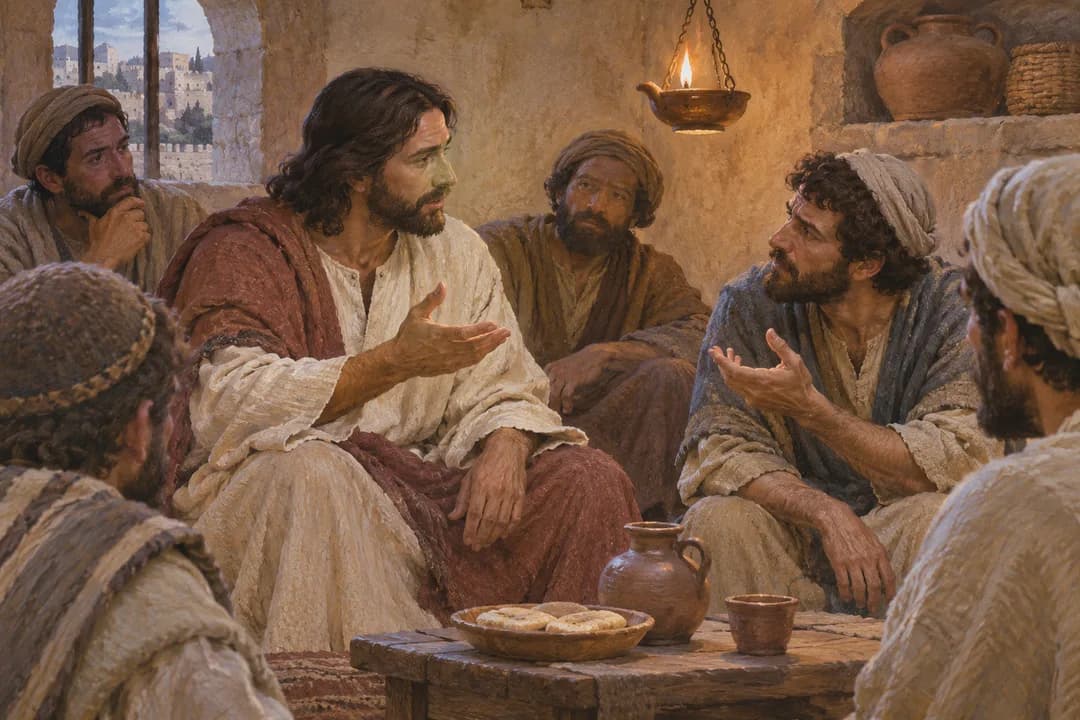
Thomas asks about the way
John 14 opens with Jesus addressing troubled hearts. He speaks of his Father's house, a place for the disciples and his intention to receive them to himself. Thomas then asks how they can know the way when they do not know where he is going.
Verse 6 answers that question. The disciples are facing Jesus' departure, and the language of a journey gives shape to their uncertainty. Jesus directs them to himself as the way to the Father. Reading his answer beside the promise keeps it connected to the relationship he is offering.
Verse 6. The way
Jesus makes the way personal. His answer leads Thomas back to the one speaking with him. The final clause explains the destination and the claim, coming to the Father is through Jesus.
Within John's Gospel, that claim belongs with Jesus making the Father known and giving life. It gives Christian faith its particular center. The verse asks readers to consider who Jesus is, the relation to the Father he reveals and the trust he calls from his disciples.

Verse 6. The truth and the life
The three descriptions belong together. Truth concerns the revelation of God present in Jesus, while life is a repeated theme throughout the Gospel. John has already described life in the Word and has recorded Jesus speaking of resurrection and life to Martha.
Verses 7–9 continue the answer through knowing and seeing the Father in Jesus. Philip's request to see the Father prompts a further explanation. The surrounding conversation therefore guides the meaning of truth and life toward God's self-disclosure in the Son.
Receiving the claim in its setting
“No man cometh unto the Father, but by me” is a strong claim about Jesus' unique role. It stands inside a conversation meant to sustain disciples who are afraid. A careful reading attends to both that claim and the care expressed through the promise of a place with him.
Read John 14:1–9 and notice the questions Thomas and Philip actually ask. You can bring your own uncertainty into a prayer for understanding and trust, then consider what following the Jesus portrayed in this Gospel would ask of your next choice.