
John 10:11–18 · KJV
What Does John 10:11–18 Mean?
John 10:11–18 means that Jesus cares for his people as a shepherd who willingly gives his life for his sheep. His knowledge of them, his gathering of other sheep, and his authority to lay down and take up his life explain what makes him the good shepherd. His care reaches through danger into the life he gives.
I am the good shepherd: the good shepherd giveth his life for the sheep.
John 10:11, KJV, excerpt
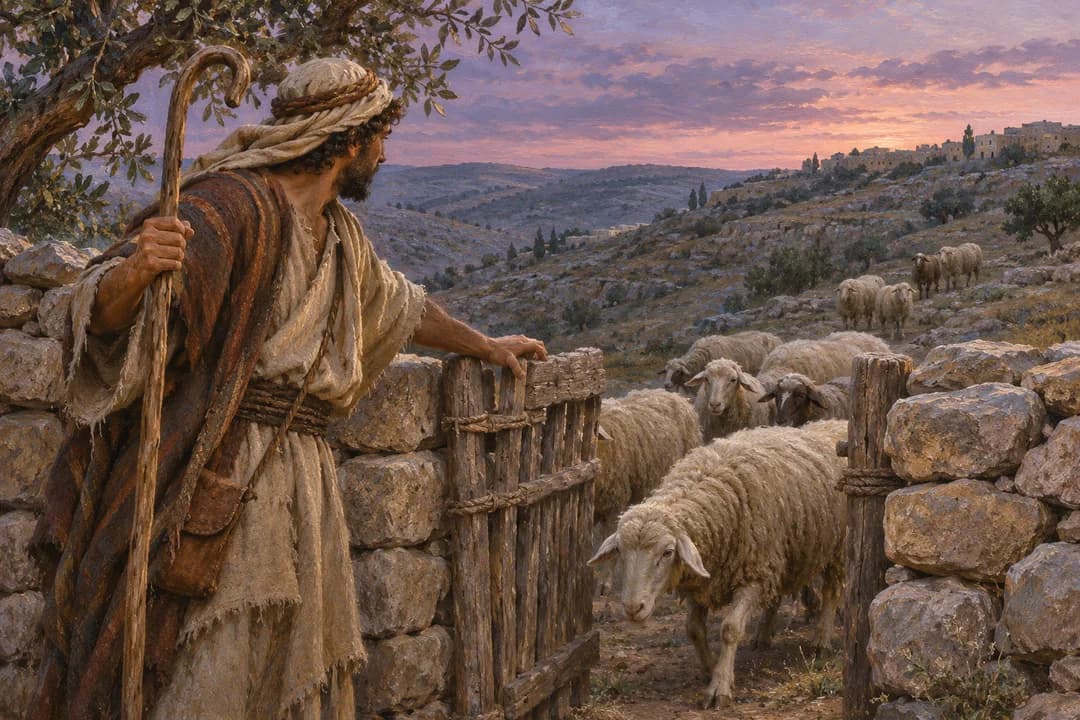
Verses 11–13. Why does the hired worker run?
Jesus begins with the act that defines his care. The good shepherd gives his life for the sheep. The hired worker sees a wolf, abandons the flock, and saves himself. Verses 12–13 explain his decision by his lack of concern for the sheep.
The contrast follows the healing and exclusion of a blind man in John 9. That setting raises the question of who will care for people when their needs become costly. Jesus describes a shepherd whose commitment lasts when the danger arrives.
Verses 14–15. What does it mean that Jesus knows his sheep?
Knowing the sheep describes a relationship in which the shepherd and the flock recognize one another. Jesus connects that relationship with his knowledge of the Father. The image includes personal attention and trust, then returns immediately to his willingness to lay down his life.
A reader can understand this alongside the earlier picture of sheep hearing the shepherd’s voice in verses 3–4. The shepherd’s direction belongs within a relationship of care. People follow someone who knows them and remains committed to their good.
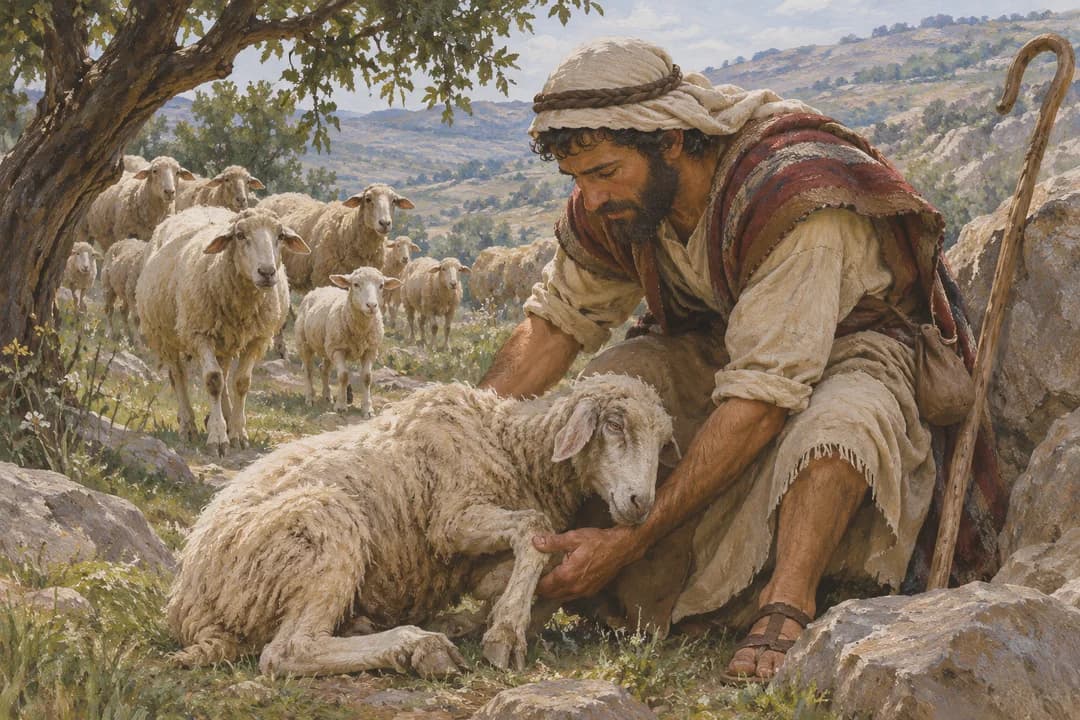
Verse 16. Who are the other sheep?
Jesus says he has other sheep beyond the fold he is addressing and will bring them too. They will hear his voice and share one shepherd. Read within John’s wider concern for the world, this points toward a gathering that reaches beyond the immediate Jewish audience.
The emphasis falls on the shepherd who gathers and on the unity of the resulting flock. The verse gives readers reason to welcome the breadth of Jesus’ mission. The image welcomes a broad gathering united by their response to his voice.
Verses 17–18. How does Jesus give and take up his life?
Jesus describes his death as willing action within the Father’s command. He has authority to lay down his life and to take it again. These words anticipate his death and resurrection while explaining them through the shepherd’s commitment to the sheep.
The passage therefore carries the shepherd image beyond the comfort of green fields. The care Jesus promises has a cost that he freely accepts. For someone reading in fear, a useful question is what his willingness to remain faithful reveals about the character of the one they are learning to trust.