
John 15:1–8 · KJV
What Does John 15:1–8 Mean?
John 15:1–8 compares Jesus to a vine, the Father to its cultivator and the disciples to branches. Fruit grows through their continuing relation to Jesus and his words. The passage calls them to abide, presents both pruning and a warning about separation and ends with the Father's glory in fruitful discipleship.
I am the true vine, and my Father is the husbandman.
John 15:1, KJV, excerpt
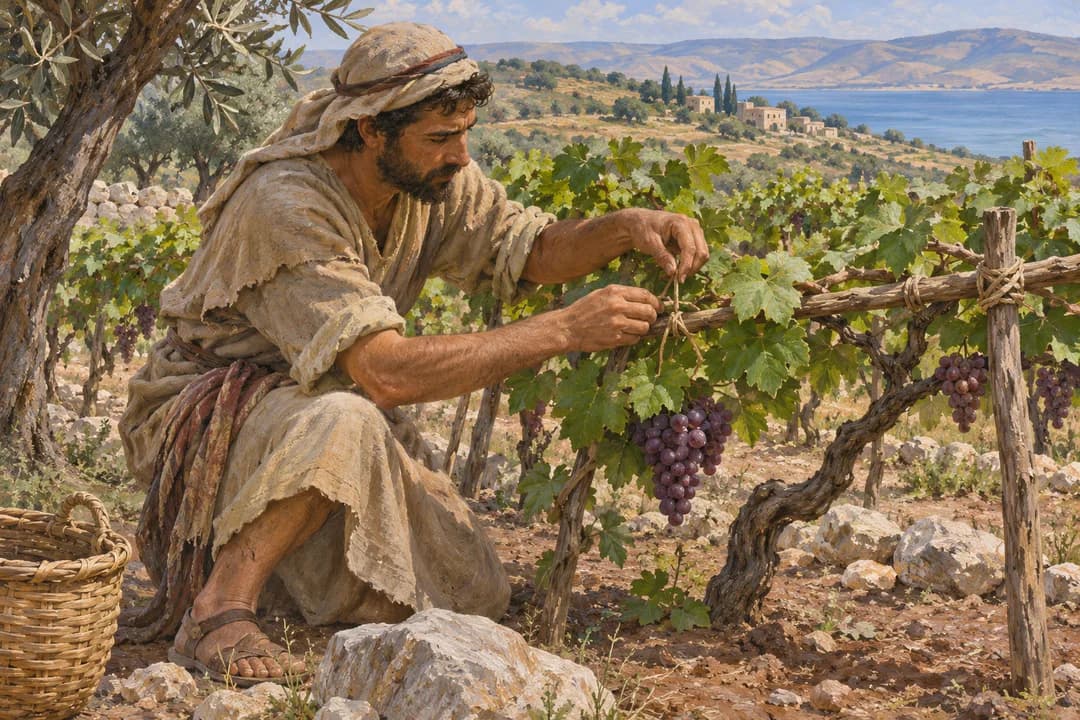
Verses 1–3. The vine and the Father’s care
Jesus names himself the true vine and his Father the husbandman, the one who tends it. Verse 2 describes removing a branch that bears no fruit and pruning a fruitful branch so it bears more. The image gives the Father an active role in the life of the vine.
Verse 3 then tells the disciples they are clean through Jesus' spoken word. The sequence joins the gardening image to his relationship with them and the effect of his teaching. The scene belongs to his farewell conversation with disciples who will need to continue after his departure.
Verses 4–5. What does it mean to abide?
A branch bears fruit through remaining in the vine. Jesus applies that relation to himself and the disciples, saying that apart from him they can do nothing. Abiding describes the continuing dependence from which fruitful discipleship grows.
Verse 7 brings his words into the description, and verses 9–12 develop abiding through love and obedience. These surrounding statements make the image practical. Remaining with Jesus involves receiving his teaching and continuing in the love he commands among his followers.
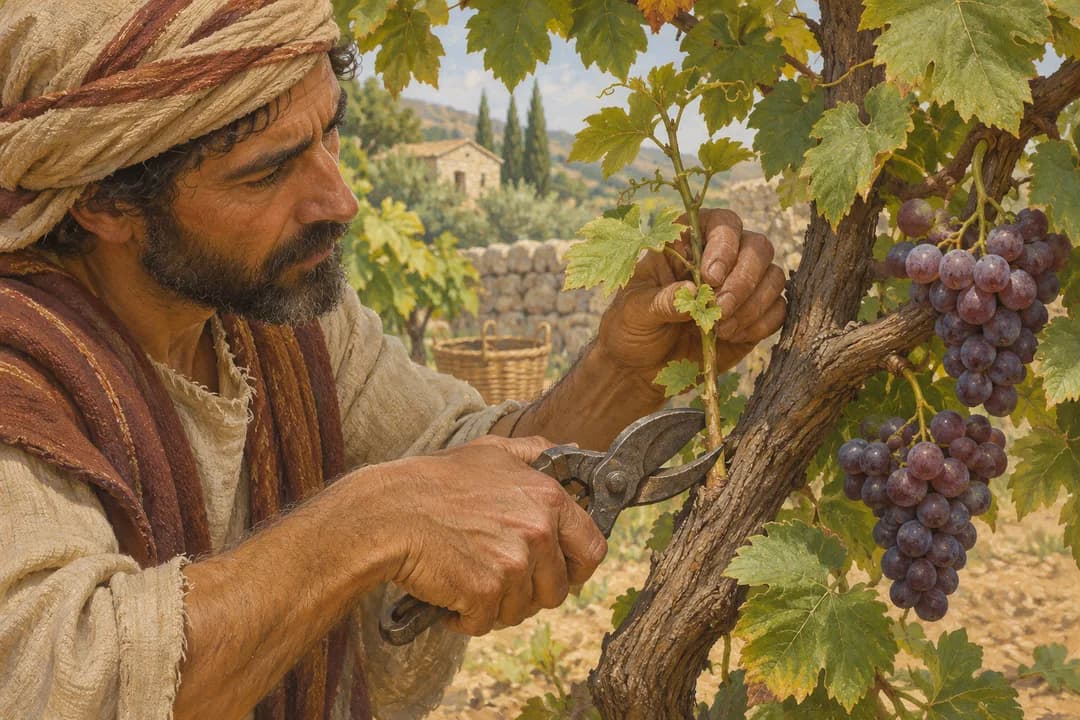
Verse 6. The warning about a separated branch
Verse 6 pictures a branch cast out, withered and burned when someone does not abide. The warning is serious and belongs beside the promise of fruitfulness. The image presents life and fruit as dependent on a continuing relation to Jesus.
Christian traditions explain the warning's relation to genuine faith and perseverance differently. Some understand it as exposing a merely outward attachment, while others see a warning of the danger of abandoning faith. A close reading can preserve the force of Jesus' call to abide before choosing a wider account of perseverance.
Verses 7–8. Prayer, fruit and the Father’s glory
Verse 7 joins asking to abiding in Jesus and having his words abide in the disciples. Prayer is situated within a relationship shaped by his teaching. The promise should be read with those conditions, giving attention to what his words teach people to desire.
Verse 8 names the Father as the one glorified when disciples bear much fruit. The following verses emphasize love and obedience, giving direction to what such fruit looks like. Read John 15:1–12 and choose one way to stay attentive to Jesus' words today, then let your prayer and one act of love grow from it.