
John 1 · KJV
John 1 Summary
John 1 introduces Jesus as the eternal Word who became flesh and made God known. The chapter then follows John the Baptist's witness and the first disciples' encounters with Jesus. Its movement is from the Word's identity at the beginning to people hearing, coming, seeing and following.
In the beginning was the Word, and the Word was with God, and the Word was God.
John 1:1, KJV, excerpt
Verses 1–5. The Word, creation and light
John begins with the Word already present with God. He identifies the Word as God and says everything made came into being through him. Life and light belong to this opening description, and the light shines in darkness.
These five verses establish the identity behind the story about to unfold. The separate John 1:1–5 study examines each claim closely. Within the whole chapter, their role is to prepare the reader for the Word coming into the world and encountering human responses.
Verses 6–13. Witness, rejection and receiving
Verses 6–8 introduce John as a witness sent to point to the light. Verses 9–11 describe the true light coming into the world he made and the failure to recognize or receive him. The opening identity now meets the reality of human rejection.
Verses 12–13 turn to those who do receive him and believe in his name. They are given the standing of God's children, with a birth described as God's work. Receiving Jesus becomes a central question for the people the Gospel will portray.
Verses 14–18. The Word becomes flesh
Verse 14 brings the opening into human life. The Word becomes flesh and dwells among people, and his glory is described through grace and truth. Verse 15 returns to John's witness that the one coming after him has priority before him.
Verses 16–18 speak of fullness, grace, Moses and Jesus Christ. The closing declaration says the Son makes the unseen God known. Read the sequence as a claim about revelation, the way God is encountered through the one whose life the Gospel records.
Verses 19–28. John explains his calling
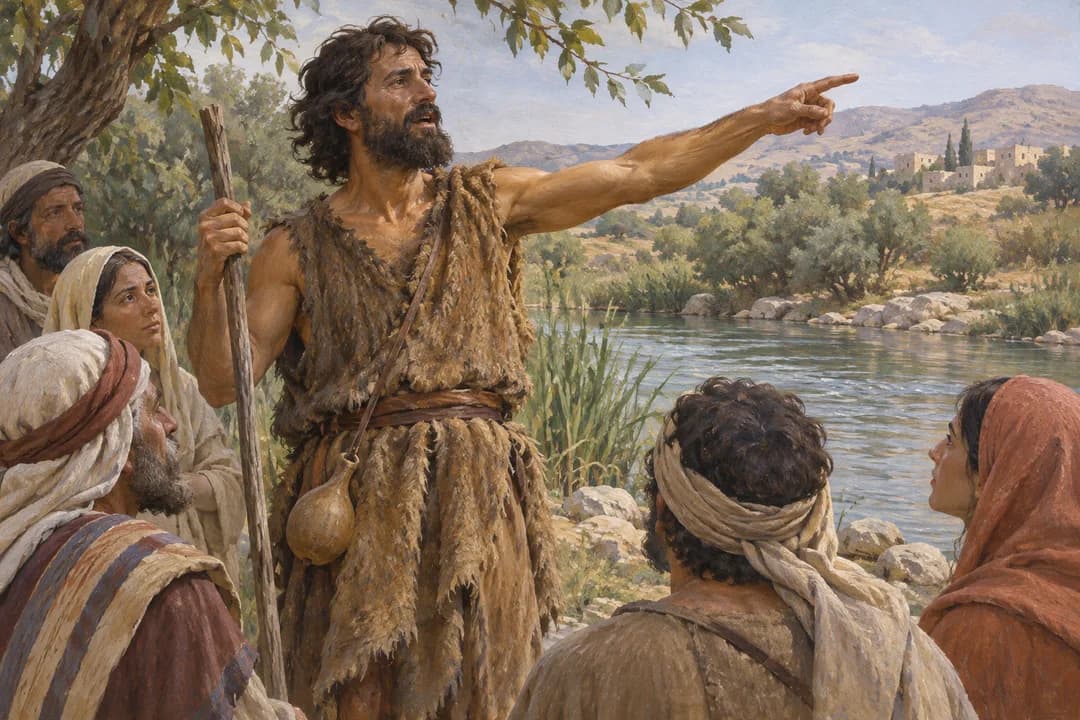
A delegation asks John who he is. In verses 19–23, he denies being the Christ and identifies his calling through the wilderness voice preparing the Lord's way. Verses 24–28 turn to his baptism and the one standing among them whom they do not yet know.
John's response keeps attention moving toward Jesus. He describes his own task while recognizing the greatness of the one to come. The setting beside the Jordan places this witness in a public encounter where questions of identity are already pressing.
Verses 29–34. The Lamb of God
John sees Jesus and identifies him as the Lamb of God who takes away the world's sin. He recalls his role in making Jesus known to Israel and describes seeing the Spirit descend and remain on him.
The witness reaches its conclusion in verse 34, where John identifies Jesus as the Son of God. The chapter has moved from the Gospel's opening declaration to testimony within the story. Readers now hear why John directs others toward this particular person.
Verses 35–42. Come and see
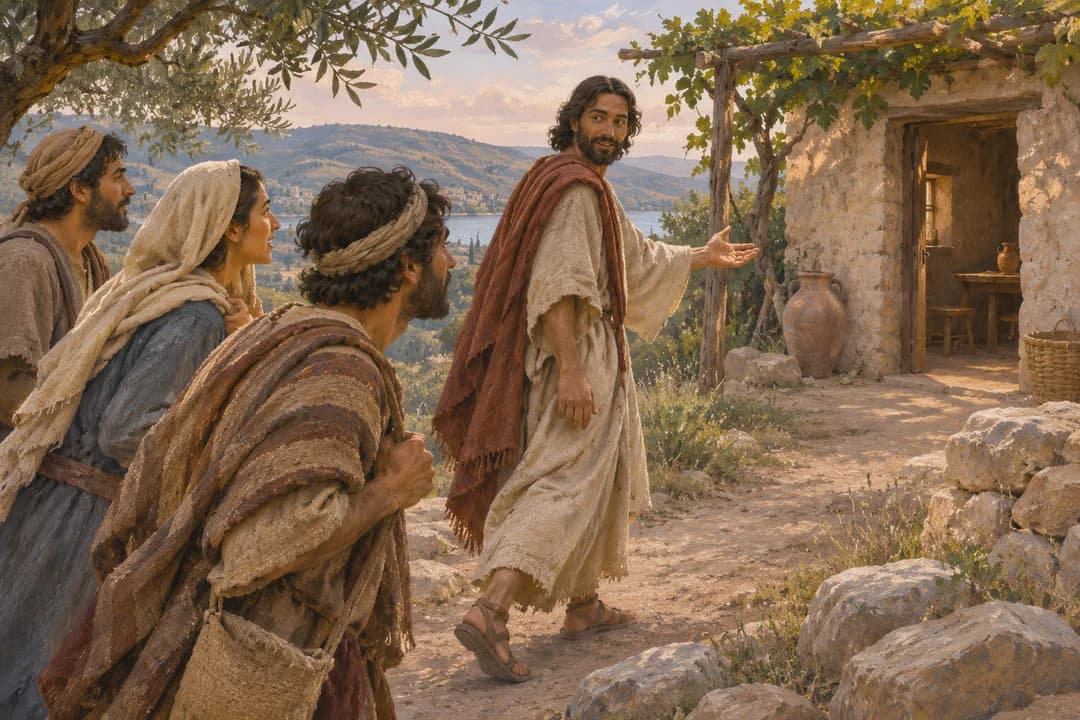
Two disciples hear John point to Jesus and follow him. Jesus asks what they seek, and his invitation leads them to stay with him. Andrew then finds his brother Simon and announces that they have found the Messiah.
Andrew brings Simon to Jesus, who gives him the name Cephas. The sequence shows witness becoming an invitation and a personal encounter. Following begins through hearing another person and then coming to see for oneself.
Verses 43–51. Philip, Nathanael and greater things
Jesus calls Philip, who finds Nathanael and connects Jesus with Moses and the prophets. Nathanael raises a question about Nazareth, and Philip answers with an invitation to come and see. Jesus' knowledge of Nathanael leads to his confession of Jesus as Son of God and King of Israel.
Verses 50–51 promise a greater sight, with heaven opened and angels ascending and descending upon the Son of man. The chapter closes by opening toward more of Jesus' story. Read it again and follow how each witness gives another person a reason to approach him.