
John 11:25–26 · KJV
What Does John 11:25–26 Mean?
John 11:25–26 means that resurrection and lasting life depend on Jesus himself. Speaking to Martha after Lazarus has died, Jesus promises life to those who believe in him and asks whether she trusts him. The coming raising of Lazarus gives that promise a visible sign within a scene of real grief.
Jesus said unto her, I am the resurrection, and the life: he that believeth in me, though he were dead, yet shall he live:
John 11:25, KJV, excerpt
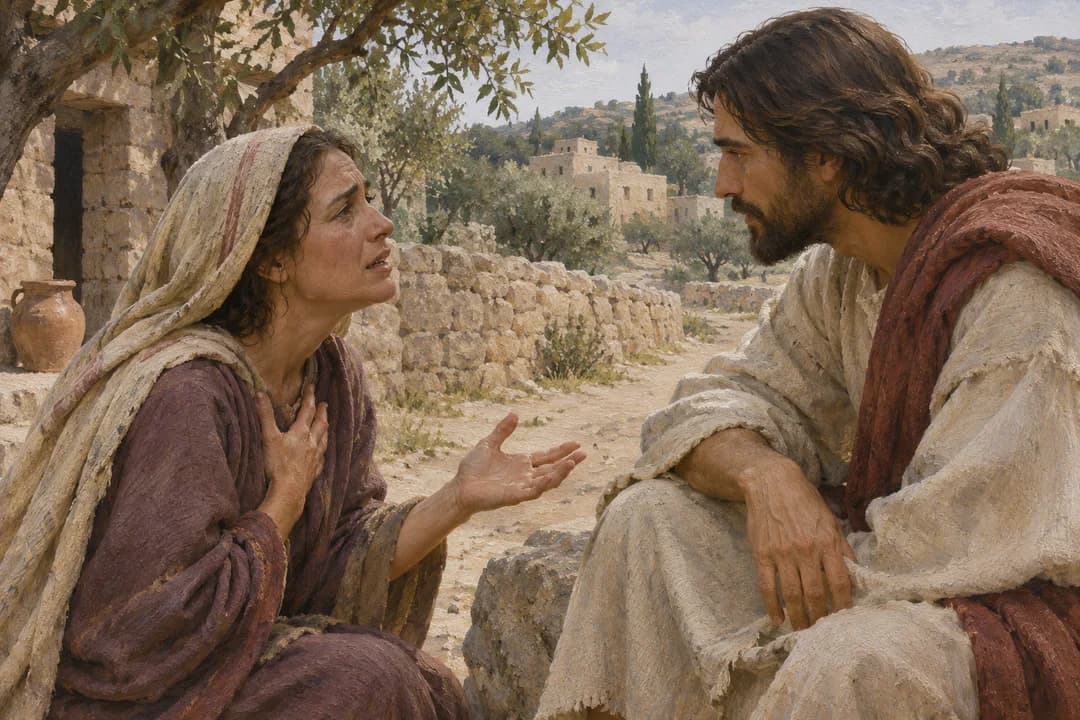
Why does Jesus say this to Martha?
Martha meets Jesus after her brother has been in the tomb four days. She tells him that Lazarus would have lived if Jesus had been there. Jesus says her brother will rise again, and she replies that she knows about the resurrection at the last day.
The exchange places verses 25–26 inside both grief and hope. Martha already believes in a future resurrection. Jesus brings her attention to his own identity and to the person standing before her. Her loss remains real throughout their conversation.
Verse 25. What does “I am the resurrection, and the life” mean?
Jesus identifies himself as the source of the life Martha hopes for. He joins that identity to a promise about the believer who dies and will live. Physical death can occur within the life of someone who trusts him. It does not have the final word over that person’s future.
This is the setting for the story of Jesus raising Lazarus, told in John 11:1–44. The sign displays his authority over death. Lazarus returns to ordinary embodied life, while Jesus’ words reach further toward the enduring life he promises his followers.
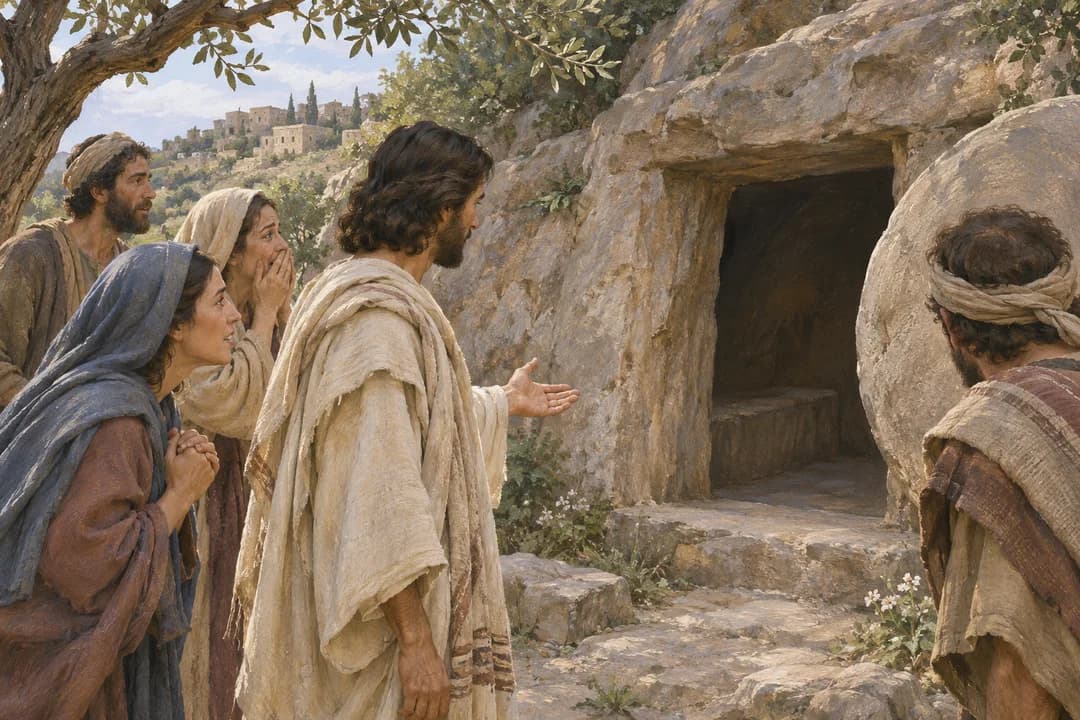
Verse 26. How can a believer never die?
Verse 26 speaks of the person who lives and believes in Jesus. Reading it with verse 25 keeps both parts of the promise together. Jesus acknowledges bodily death and also speaks of a life whose relationship with him endures beyond it.
The same chapter describes Jesus weeping with the mourners. The promise leaves room for grief and for the pain of separation. Martha receives hope through the presence and power of Jesus while she is still facing her brother’s tomb.
What is Jesus asking when he says “Believest thou this?”
Jesus turns an explanation into a personal question. Martha answers in verse 27 by confessing that he is the Christ, the Son of God who comes into the world. Her response focuses on who he is before she sees Lazarus emerge.
When reading the passage, name what the conversation says about Jesus and what it says about death. Then consider the question he asks Martha. A prayer can be as simple as asking for help to trust him with a grief you cannot resolve today.